 Historical Figure MBTI
#342 · 3-31-26 · The Habsburg Court
Maria Carolina
Archduchess · Queen of Naples and Sicily · The Power Behind the Throne
1752 — 1814
7 min read
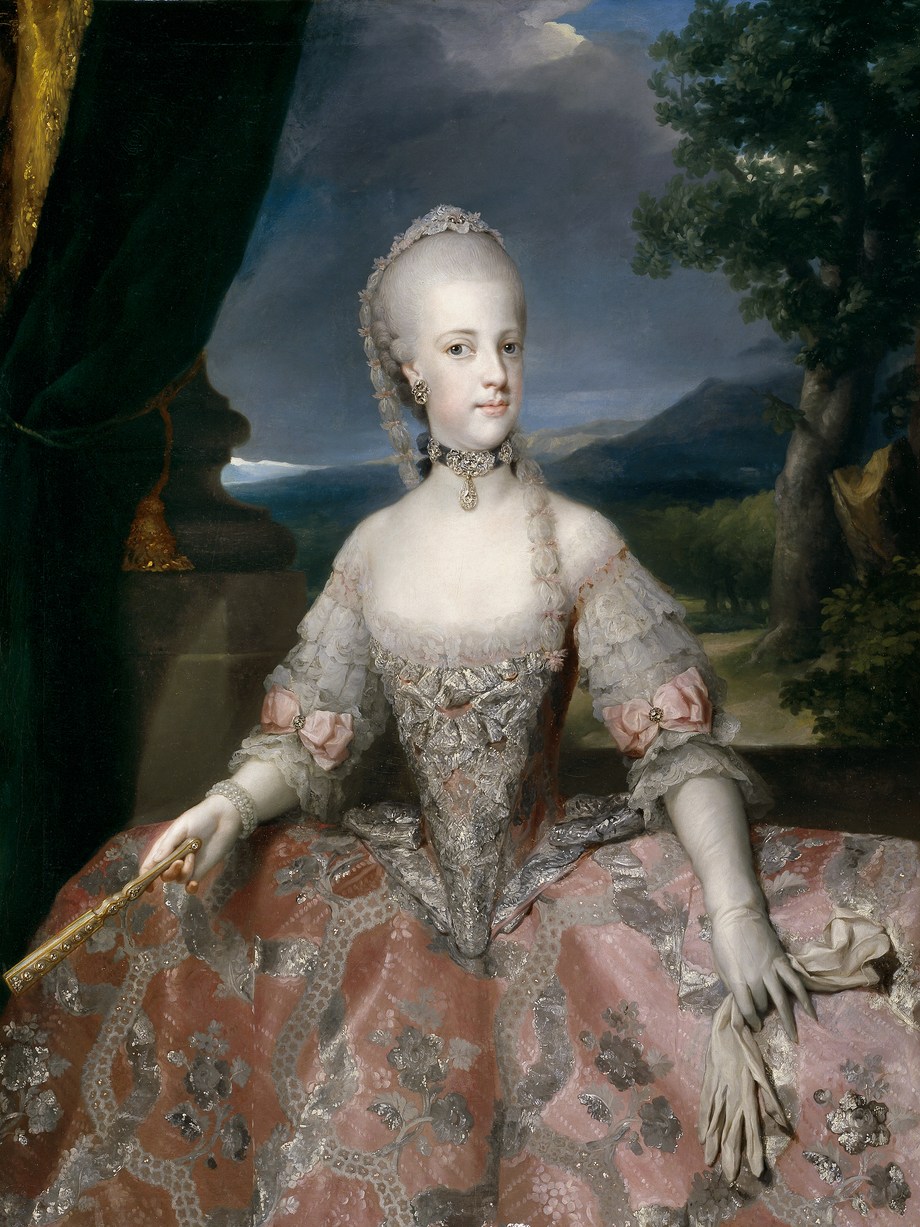
Portrait of Maria Carolina
The Sister Who Actually Ruled
History remembers the wrong Habsburg daughter. The one everyone knows is Marie Antoinette, who reigned at Versailles and governed nothing. Three years older was Maria Carolina— same mother, same dynasty, sent south to Naples rather than west to France—who proceeded to do the one thing the famous sister never managed: take power, hold it, and run a kingdom in person for thirty years.
The daughter of Maria Theresa, Carolina was the one who inherited the iron. Married in 1768 to Ferdinand IV—a boorish king who preferred hunting to governing—she outworked him at every turn. Her mother had inserted a clause: once the queen produced a male heir, she would take a seat on the council of state. In 1775 Carolina bore that heir, claimed her seat, and from that moment the husband reigned while the wife ruled. She raised Sir John Acton, modernized the army and navy, and wrenched the kingdom out of the Spanish Bourbon orbit and into the Austrian one.
The mind beneath this was the ENTJ's: dominant Te that bent a state apparatus to its will; auxiliary Ni that gave that will a decades-long strategic horizon; tertiary Se that surfaced in the appetite for immediate, tangible control; and inferior Fi that broke loose after her sister's execution into a vengefulness that turned her later years cruel. Where Marie Antoinette could not see the storm, Maria Carolina saw it coming, named her enemy, and spent her life ruthlessly trying to destroy it first.
Maria Carolina was the ENTJ on a throne she made her own—a dominant Te that seized and ran an entire government by force of will, fused to an auxiliary Ni whose long anti-revolutionary vision gave that will three decades of relentless, unbending direction.
The Government She Took by Hand
Te — dominant
The council seat was not, to Carolina, a courtesy; it was a lever, and she put her whole weight on it the instant a son made it hers. She dominated Ferdinand not by manipulation but by simple capability—he was incurious and lazy, she was tireless and decisive —and the vacuum he left she filled completely. She found in Sir John Acton an executor for her ambitions, raised him to the kingdom's most powerful minister, and together they overhauled the army, rebuilt the navy, and reformed the bureaucracy. The function's signature: not having opinions about governance, but seizing the apparatus and making it work. She did not advise a government. She became one.
Where Marie Antoinette's tertiary Te could organize a fete and never a budget, Maria Carolina's dominant Te organized armies, treaties, and a war. The same Habsburg drilling in duty had reached both sisters; only in Carolina did it land on a temperament built to convert duty into administration and administration into power.
The Enemy She Saw Coming
Ni — auxiliary
Auxiliary Ni fixes on a single vision of where things are tending and holds it with tenacity that can look like obsession. In Maria Carolina it took the form of a long, unwavering strategic picture: Naples dangerously exposed unless it anchored itself to Austria and, when the rupture came, to British sea power. She held this orientation for decades through reversals that would have broken a less fixed mind—the precise inverse of her sister's inferior Ni. Where Marie Antoinette could not feel the future at all, Maria Carolina could feel almost nothing else.
The French Revolution was the test. While much of Europe debated whether Paris was a passing disorder, Carolina grasped early that revolutionary France was an existential threat to every throne on the continent. Her sister's execution in 1793 converted strategic conviction into something closer to a holy war, but the conviction had preceded the grief. Ni had already named the enemy; the guillotine only confirmed the verdict. From that point she made the Two Sicilies a fierce British ally, courted Nelson's fleet, and threw the kingdom repeatedly into the coalition wars—a commitment so absolute it eventually cost her the throne. She had seen the shape of the age correctly, and she wagered everything she ruled on the seeing.
The Taste for Power in the Hand
Se — tertiary
Tertiary Se gives the ENTJ its appetite for the concrete present: control exercised now, visibly, in the room. Carolina did not want influence in the wings; she wanted the council chamber, the dispatches, the fleets in the bay, the apparatus of a court that answered to her. She could seize an opening fast—raise a favorite, strike at a faction, commit the kingdom to an alliance on a present advantage—and this tactical quickness served her well when events moved quickly.
Under pressure it turned harsh. When Neapolitan republicans proclaimed the Parthenopean Republic in 1799, Carolina's response was not cold strategy but something visceral: a hunger to crush the thing that threatened her in the flesh. The reprisals that followed —executions, proscriptions, the breaking of the amnesty—carried the mark of Se fused to a wound the inferior function could not process any other way. She wanted the enemy not merely defeated in principle but destroyed in person, where she could see it done.
The Grief That Curdled Into Vengeance
Fi — inferior
Inferior Fi is the ENTJ's least examined function: the private valuing, the personal attachment, kept far from the Te surface. In the ordered years of Carolina's rule it stayed mostly out of sight. The eruption had a date: the morning her younger sister's head fell in the Place de la Révolution.
Inferior Fi cannot mourn cleanly; it converts loss into something it can act on. What it converted the loss into was hatred. Her opposition to France became personal, absolute, and unappeasable—a private vendetta wearing the clothes of statecraft. The savagery of the 1799 reprisals, the relentlessness toward anyone suspected of Jacobin sympathy: inferior Fi run amok. The supremely capable queen became consumed by what she could not forgive, and it cost her the clear-eyed command that had been her greatest strength. Even Napoleon called her the only real man in Naples—a tribute to a woman whose ruin was not her strength but the buried feeling that strength had never learned to carry.
Why ENTJ Over INTJ
Why not INTJ?
The INTJ shares the same Ni–Te pairing, and her anti-French strategy was coherent enough to make the case tempting. But the INTJ prefers to architect from behind the scenes rather than occupy the chair itself. Carolina did the opposite: she walked into the council and ran it, in person, dominating her husband and ministers by sheer outward force. She did not advise a government from the shadows. She became one.
Everything Carolina did was outward and commanding: she turned a council seat into a throne, raised ministers in person, marshaled armies and fleets by the constant application of her own will. Set beside her sister—the ESFP who merely reigned, who fled the council chamber for the play-village—the contrast is unmistakable. She ruled the way an ENTJ rules: from the front.
Connected Figures
Further Reading
- Maria Carolina of Austria: Queen of Naples and Sicily — Desmond GregoryThe most focused English-language study of her reign and political methods.
- The Habsburg Monarchy 1618–1815 — Charles W. IngraoEssential context for the dynasty's marriage strategy and the world Maria Theresa built for her daughters.
- Marie Antoinette: The Journey — Antonia FraserThe definitive biography of the famous sister — the contrast with Carolina runs throughout.
- Naples in the Time of Enlightenment: The Tanucci Correspondence — Harold ActonActon's study of the Neapolitan court illuminates the political world Carolina inherited and then dominated.
- The Bourbons of Naples (1734–1825) — Harold ActonThe fullest account in English of the Two Sicilies under Ferdinand and Carolina.
