 Historical Figure MBTI
#343 · 3-31-26 · The Habsburg Court
Maria Christina
Archduchess · Duchess of Teschen · 'Mimi,' the Favorite Daughter
1742 — 1798
6 min read
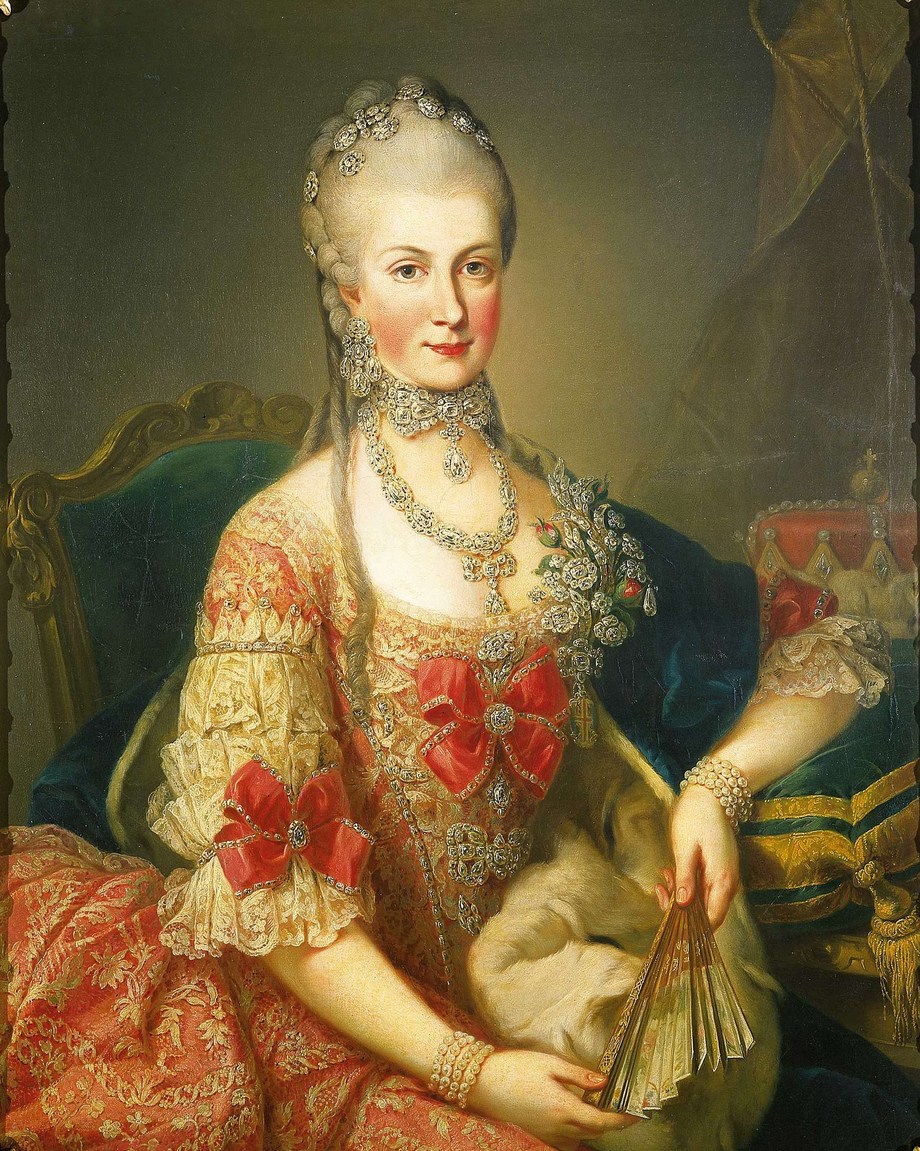
Portrait of Maria Christina
The Favorite Who Painted Her Gilded World
Of the sixteen children Maria Theresa bore to Francis Stephen of Lorraine, only one was permitted to marry the person she loved. Maria Christina—“Mimi”—was born in 1742 on her mother's own birthday, a coincidence the empress treasured and never let the other children forget. While Maria Carolina was shipped to Naples and Marie Antoinette sent to Versailles, Mimi alone wed for love—Prince Albert of Saxony, a penniless younger son whose sole recommendation was her own attachment. The resentment this bred never healed.
Her delicate gouaches of Habsburg domesticity remain among the most intimate records we have of the court at home; the collection she built with Albert became the Albertina. The governorship of the Austrian Netherlands was another matter: tone-deaf to a restive province, she was driven out by the Brabant Revolution of 1789. The personality beneath the favoritism and the paintbrush is the ISFP—dominant introverted feeling anchored in the certainty of being specially loved; auxiliary extraverted sensing giving her the artist's eye; inferior extraverted thinking that left her helpless before a province sliding out of control.
The ISFP in a palace—a dominant introverted feeling living in the private certainty of being specially loved, served by an extraverted sensing that caught the vivid surface of court life in paint and gathered the beautiful into a great collection.
The Certainty of Being Loved
Fi — dominant
Dominant introverted feeling builds the self around a private architecture of values, held close and rarely explained. Born on her mother's birthday and singled out from the cradle, Maria Christina absorbed a conviction most of her siblings never enjoyed: the felt, unspoken certainty of being specially and securely loved. Its most dramatic expression was the marriage: where every other archduchess was a piece on the dynastic board, Mimi held out for Albert of Saxony, a landless younger son of no strategic use; to introverted feeling, the wanting was reason enough.
But dominant Fi has a shadow. The same inwardness that made her devoted to her mother made her the family informer—she reported her siblings' doings back to the empress, trading on privileged access to deepen it further. The love she guarded was real, but narrow, turned toward the one relationship that flattered and secured her. It cost her the affection of nearly everyone else in a very large family.
The Artist's Eye for the Present Moment
Se — auxiliary
Auxiliary extraverted sensing is the ISFP's window onto the world—an alert attention to the concrete and immediately present. Maria Christina was, before anything else, a person who saw. Her gouaches painted the world around her—family gatherings, a saint's-day feast, her parents at their ordinary occupations—with an eye for the fall of light on a table, the precise look of a moment that would otherwise have vanished. They remain among the most charming glimpses we have of the Habsburg court at home.
The same sensing eye drove the great collaborative project of her life. With Albert she gathered prints and drawings with a discernment that produced the Albertina, one of the supreme collections of works on paper in the world. Collecting of that order is extraverted sensing in the service of private feeling: a connoisseur's responsiveness to the quality of a line, exercised not for prestige but because the beautiful thing was loved for itself.
The Foresight That Never Arrived
Ni — tertiary
Tertiary introverted intuition in the ISFP is present in flickers but never reliable. In Maria Christina it remained undeveloped, and its absence is written across the public part of her life. Posted to Brussels, she and Albert presided over a province seething against the reforms of Joseph II and read the situation badly. When the Brabant Revolution broke in 1789, the governors were swept out by a population whose mood they had failed to anticipate. She had feeling in abundance. She could not see a revolution forming under her own windows.
No Grip on the Machinery of Power
Te — inferior
Inferior extraverted thinking is the ISFP's weakest register—the impersonal logic of organization and efficient control. In Maria Christina it was conspicuously absent. Joint rule of the Austrian Netherlands demanded exactly the strengths she lacked: impersonal command of policy, management of a provincial bureaucracy, firm handling of factions whose interests she did not share. Tactless where tact was the whole job, she presided helplessly over the collapse of her own authority.
It is the classic shape of the ISFP misplaced into a role built for a Te-dominant. She loved deeply, saw beautifully, built a collection of enduring greatness—and failed at the cold governance of strangers toward an end she did not personally feel. The mismatch marks, as clearly as anything could, the inferior position of extraverted thinking in her stack.
Why ISFP Over ESFP
Why not ESFP?
The shared SeFi pairing makes ESFP a tempting reading for a painter at a glittering court. But the ESFP leads with extraverted sensing: outward, expansive, hungry for the crowd. Maria Christina was the opposite—reserved, inward, guarded, her sensibility running to the private and the intimate. Her paintings are small, domestic, observed in quiet; her one great loyalty was held close and defended rather than broadcast. That inward orientation, the self organized around a hidden core of feeling, is dominant introverted feeling, not dominant extraverted sensing.
An ESFP feeds on the live exchange of the moment; Mimi needed only the secure certainty of being loved by one person and the quiet rooms in which to paint and collect. Her secret reporting on her siblings is an inward, self-protective maneuver, not extravert sociability. Her intimate domestic gouache is the work of someone watching the world from a guarded remove. She was the ISFP.
Connected Figures
Further Reading
- Maria Theresa: The Great Empress — Barbara Stollberg-RilingerThe definitive modern biography of Maria Theresa, with extensive coverage of her children and the favoritism she showed Mimi.
- The Habsburg Monarchy, 1618–1815 — Charles IngraoEssential background on the dynasty's structure, the Austrian Netherlands, and the reform programs that culminated in the Brabant Revolution.
- Marie Antoinette: The Journey — Antonia FraserCovers the Habsburg siblings in detail — including Maria Christina's privileged status and the resentments it bred among her sisters.
- The Albertina: History of a Collection — Klaus Albrecht SchröderCatalogue history of the Albertina museum, tracing the collection Maria Christina and Albert of Saxony assembled over decades.
