 Historical Figure MBTI
#339 · 3-31-26 · The Habsburg Court
Francis Stephen of Lorraine
Duke of Lorraine · Holy Roman Emperor · Maria Theresa's Consort
1708 — 1765
6 min read
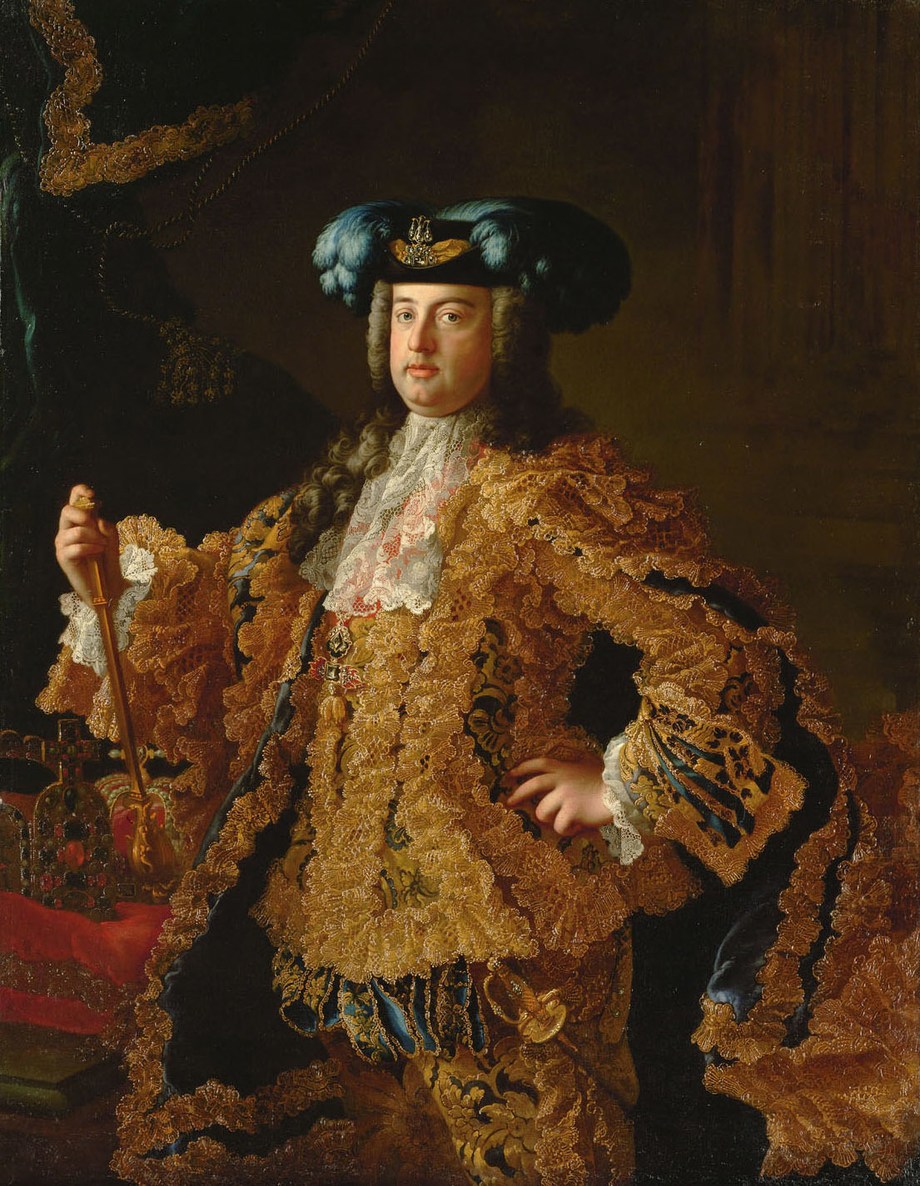
Portrait of Francis Stephen of Lorraine
The Man Who Reigned Without Ruling
Francis Stephen of Lorraine accumulated crowns like trophies in a hunting lodge—Duke of Lorraine by inheritance, Grand Duke of Tuscany by treaty, Holy Roman Emperor by election in 1745. And yet the central fact of his career is that he ruled almost none of it. The empire belonged, in everything but ceremony, to his wife, Maria Theresa, whose iron will held the Habsburg lands together through two ruinous wars. Francis signed where asked, attended what was required, and then went hunting.
What makes him more than a footnote is money. While Maria Theresa's ministers struggled to fund her armies, Francis quietly built an enormous private fortune through army supply contracts, manufacturing ventures, and banking—reportedly profiting even from enterprises trading with Austria's wartime enemies. He left the crown's finances to her officials and let his own flourish. The psychological signature is unmistakably that of the ESTP: a man rooted in the lived present, allergic to grand vision, gifted at reading the immediate deal, and supremely happy enjoying a world he never tried to remake.
Francis was the ESTP in its most comfortable register—dominant Se chasing pleasure, the hunt, and the lived moment, with an auxiliary Ti doing the cool arithmetic that turned a dispossessed duke into one of the richest men in Europe.
The Appetite for the Present
Se — dominant
Dominant extraverted sensing lives in the immediate and the physical—and Francis lived there more fully than almost any monarch of his age. The hunt was his great passion: the horse, the chase, the open air of the Bohemian forests where he spent as much of the year as duty allowed. Maria Theresa learned to schedule her demands around the hunting calendar. This was not laziness so much as a constitutional preference for the world as it can be seen, touched, and enjoyed right now.
The same appetite ran through his pursuit of women. Francis was a serial philanderer—his infidelities genuinely wounded the devoted Maria Theresa—but Se does not scheme toward conquest; it simply responds to what is present and pleasurable. His natural-history collecting—the menagerie at Schönbrunn, the cabinet of minerals that seeded the Habsburg holdings—was the same impulse in a quieter key: tangible things you could hold and show off. He engaged the world through his senses, never through abstraction.
The Cool Arithmetic of a Fortune
Ti — auxiliary
Beneath the genial surface, Francis possessed a genuinely shrewd financial mind—the cool, impersonal logic of auxiliary Ti applied not to philosophy but to ledgers. He understood money the way a card player understands odds: instinctively, unsentimentally, and with an eye for the angle others missed. Where Maria Theresa's government lurched from one fiscal crisis to the next, the emperor's private accounts only grew.
He built his wealth through army supply contracts, manufacturing, and banking—reportedly from ventures trading with Austria's wartime enemies. The moral temperature was serenely amoral: a deal was a deal, strategic loyalties were his wife's department. Se supplied the appetite; Ti supplied the method by which it could be indulged indefinitely and at a profit.
The Easy Charm of a Genial Consort
Fe — tertiary
Tertiary Fe shows up as social ease rather than deep emotional attunement. Francis had this in abundance: easygoing, affable, unpretentious, the sort of man who put a tense court at its ease. Where Maria Theresa commanded, Francis charmed. His freemasonry fit the pattern—a fraternal world of lodges congenial to a man who liked good fellowship more than ideology.
But tertiary Fe is a supporting player, and its limits showed where it mattered most. Francis was warm to nearly everyone, yet he could not give Maria Theresa the fidelity her devotion deserved. His charm smoothed over the hurt—contrite, affectionate, reliably pleasant—but the Fe was real and shallow: it managed atmospheres beautifully and managed his deepest obligations rather poorly. Social grace that lubricates the pursuit of pleasure rather than a moral compass that governs it.
The Emperor Without a Vision
Ni — inferior
The most telling thing about Francis is what he lacked. Here was a man who held the oldest crown in Europe and left behind no grand design—no reforming program, no strategic vision, no historical mission. Inferior Ni is the absence of exactly that faculty: the long view, the unifying purpose. He was content to enjoy the present, accumulate his fortune, and let his wife carry the weight of what the monarchy was to become.
The contrast with those around him is stark. Maria Theresa reorganized an empire around a clear sense of dynastic destiny; their son Joseph II became the very archetype of the visionary reformer. Set beside them, Francis's want of vision reads less as failure than self-knowledge—he understood governance was beyond his gift and turned instead toward the ledgers, the forests, and the pleasures where his talents actually lay.
Why ESTP Over ISTP
Why not ISTP?
The ISTP shares the Se–Ti pairing but inverts the stack—leading with detached, private Ti and turning to Se as support. The ISTP is the quiet tinkerer who would rather be left alone with a mechanism than work a room. Francis was the opposite: outward, social, pleasure-loving, a charming deal-maker who thrived in company and in the field. His financial genius was not the solitary craft of an ISTP but the gregarious operation of a man constantly out among people, contracts, and appetites.
An ISTP's dominant Ti would have made Francis more guarded, more private, less given to open philandering and lavish sociability. Instead his Se came first and came outward: he led with appetite and charm and let the cool calculation serve them. That is the ESTP, and Francis is nearly a textbook of it.
Connected Figures
Further Reading
- Maria Theresa — Edward CrankshawThe essential biography of Francis's wife and governing partner — the context in which his consort role is best understood.
- Maria Theresa: The Great Empress — Brigitte HamannA rich portrait of the Habsburg court Francis inhabited, including the dynamics of the imperial marriage.
- The Habsburg Empire: A New History — Pieter M. JudsonPlaces the Francis–Maria Theresa partnership in the longer arc of Habsburg dynastic rule.
- Joseph II: In the Shadow of Maria Theresa — Derek BealesIlluminates the generational contrast between Francis's easygoing temperament and the reforming zeal of his son.
