 Historical Figure MBTI
#340 · 3-31-26 · The Habsburg Court
Joseph II
Holy Roman Emperor · The Revolutionary on the Throne · Enlightened Despot
1741 — 1790
6 min read
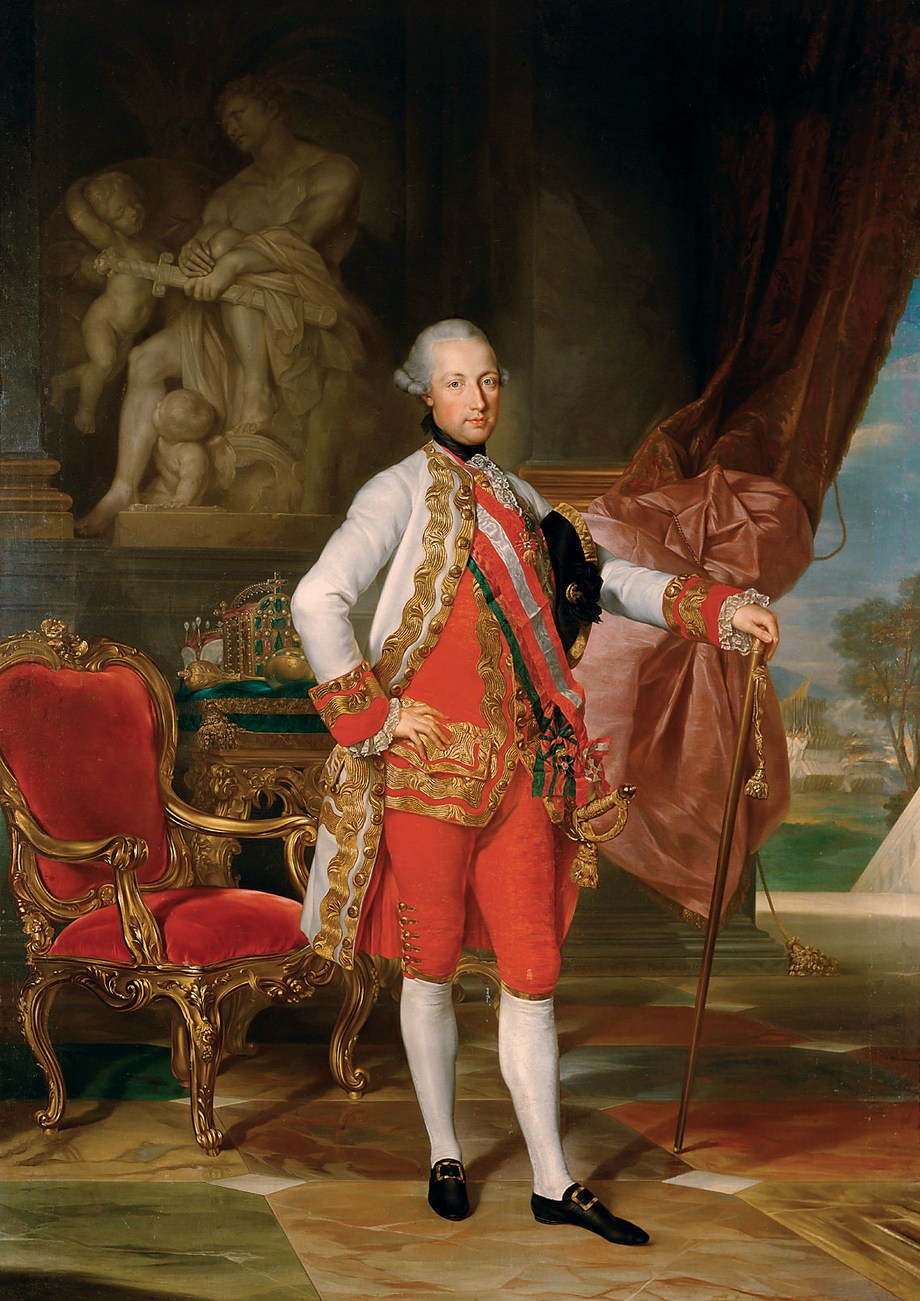
Portrait of Joseph II
The Man Who Tried to Legislate Utopia
When he died at forty-eight in 1790, the most radical monarch in Europe composed his own epitaph: here lay a prince “who, with the best intentions, failed in everything he undertook.” Eldest son of Maria Theresa, he was austere and doctrinaire where she was warm and consultative. When she died in 1780 his decade alone was a torrent of edicts—the Patent of Toleration, abolished serfdom, dissolved monasteries, equality before the law, and the notorious reusable coffin: impeccable in logic, catastrophically deaf to how people felt about burying their dead. Revolt in the Netherlands and Hungary forced him, dying, to revoke much of what he had built.
Joseph was the INTJ who tried to legislate utopia—a dominant introverted intuition fixed on one systematic vision of a uniform, rational, enlightened empire, driven by an auxiliary extraverted thinking that imposed that vision by decree faster than any people on earth could be made to absorb it.
One Empire, One Reason, One Plan
Ni — dominant
Dominant Ni does not see a patchwork; it sees a pattern. Where his mother looked at the Habsburg monarchy and saw a hundred separate things—Hungarian magnates, Belgian guilds, Tyrolean peasants, each to be humored in its own grievance—Joseph saw one object that ought to be rational and uniform throughout. This is Ni: not a list of reforms but a single converging vision held with such force that everything failing to fit it becomes an obstacle to remove.
His reforms came as an avalanche—six thousand edicts in a decade, each a deduction from one premise: the state exists to serve rational welfare, and a sovereign who sees the good clearly is obliged to impose it. Ni reasons from the end backward; Joseph began with the finished image and legislated toward it without patience for the ground he had to cross. He saw, decades early, the shape of the modern centralized state—and mistook seeing it for being able to command it into existence overnight.
Reform by Decree
Te — auxiliary
Auxiliary Te ran in one characteristic register: the command. Joseph did not persuade; he ordered. He annotated reports from every corner of the administration, standardized the bureaucracy, codified the law, taxed noble and church land equally, and pushed German as the single administrative language. This is Te governance stripped of charm: structures enforced from above, measured by output and not by consent.
Maria Theresa reformed by feel, in deference to what her peoples would bear; Joseph reformed by logic at speed. Catherine the Great, whom he studied on his “Falkenstein” visits, wielded power outward through flattery and favorites, never spending more than the moment could bear. Joseph's Te pointed inward. He commanded the machine. He never learned to win the men who had to run it.
The Austere Idealist Who Would Not Be Loved
Fi — tertiary
Beneath the decrees ran a private, ascetic idealism. He held his convictions—that serfdom was evil, that a beggar and a prince were equal before the law—not as policy but as a personal creed, privately authored, indifferent to whether the world found it charming. He stripped away court ceremony, dressed plainly, opened the Prater to the public.
His mother ruled by making people love her; Joseph governed as though his popularity were beneath him. Fi gave him the courage to attack serfdom and the stake at once; it gave him no suppleness to make either go down. The epitaph he drafted for himself—the prince who failed in everything—is Fi's voice: a private judgment in the same severe register he had applied to everyone else.
Blind to the Ground Beneath the Throne
Se — inferior
Inferior Se is the INTJ's blind spot, and in Joseph it undid the reign. Se reads the present moment as it is, and Joseph could not read it. He knew with perfect clarity what his empire ought to be and almost nothing of what it presently was: how attached the Belgians were to their ancient charters, how a peasant freed on paper still lived inside a world of custom a decree could not abolish. He legislated for an abstraction and was bewildered when actual human beings refused to behave like it.
His impatience was inferior Se under pressure: unable to feel out the right pace, he rammed everything through at once. Even his incognito travels as “Count Falkenstein” were Se in service of Ni—he toured to gather confirmation, not to be surprised. By the end of the 1780s the Austrian Netherlands were in revolt, Hungary on the edge of rebellion, and a mismanaged Ottoman war had broken his health. On his deathbed he revoked most of his reforms, the rational edifice dismantled by the reality he had refused to consult.
Why INTJ Over ENTJ
Why not ENTJ?
The reforming will and the imperial command tempt an ENTJ reading—but set Joseph beside the cluster's actual ENTJ, Catherine the Great. Catherine led with dominant Te turned outward: she read the room, governed through flattery and favorites, and never spent more authority than the moment could bear. Joseph did the opposite—an inner, doctrinaire vision imposed top-down, with no instinct for pace or consent. The ENTJ reads the ground and times the push; Joseph never read the ground at all. That is the inward INTJ ideologue, not the pragmatic ENTJ executive.
The distinction is one of direction. Maria Theresa governed outward, by feel; Catherine acquired and persuaded and performed. Both read the world they worked in. Joseph deduced the world he wanted and issued it as law. The ENTJ commands the world as it is; the INTJ commands the vision and dares the world to catch up. Joseph dared, and the world did not.
Connected Figures
Further Reading
- Joseph II — Derek BealesThe definitive two-volume biography (1987, 2009) — exhaustive on the reforms, the court, and the contradictions of Josephinism.
- Enlightened Absolutism: Reform and Reformers in Later Eighteenth-Century Europe — H. M. Scott (ed.)Places Joseph within the broader European context of enlightened despotism, with comparative chapters on Frederick and Catherine.
- The Habsburg Monarchy, 1618–1815 — Charles W. IngraoA concise survey that sets Joseph's decade of reform against the longer arc of Habsburg state-building.
- In the Shadow of the Empress: The Defiant Lives of Maria Theresa, Mother of Marie Antoinette — Nancy GoldstoneReadable narrative that illuminates the mother-son dynamic and the Habsburg family politics surrounding Joseph's co-regency.
