 Historical Figure MBTI
#354 · 4-1-26 · The French Revolution
Madame Élisabeth
Sister of Louis XVI · The Pious Martyr · Faithful to the Scaffold
1764 — 1794
5 min read
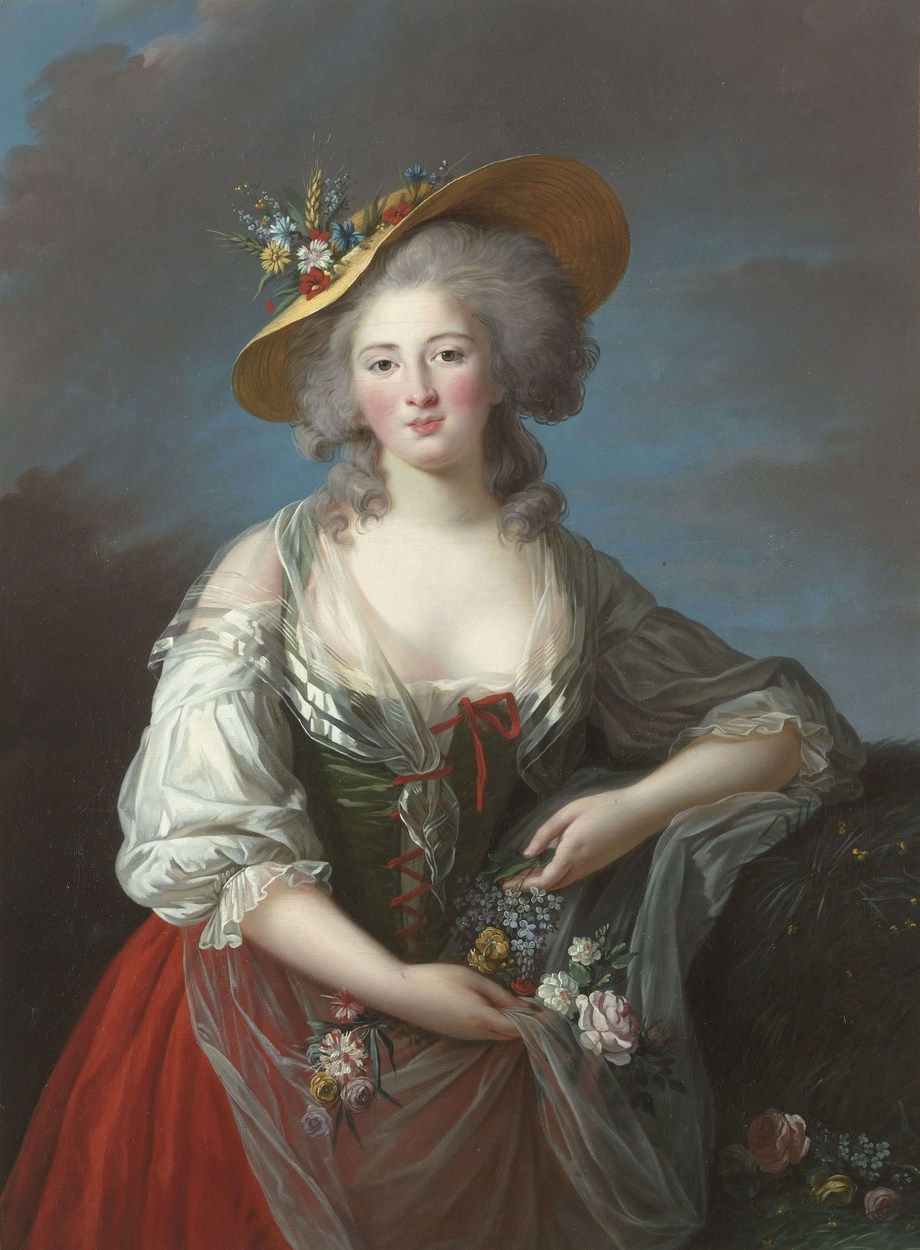
Portrait of Madame Élisabeth
The Sister Who Would Not Leave
Élisabeth Philippine Marie Hélène de France (1764–1794), the youngest sister of Louis XVI, was urged more than once to emigrate as the Revolution gathered force. She refused. She would not abandon the brother she loved, nor his wife, nor his children. It was not a calculation; it was a conviction.
Before 1789 she had lived quietly at her estate of Montreuil—pious, unworldly, almost entirely without ambition. When the mob came to Versailles, when the flight to Varennes ended in humiliation, when the long imprisonment in the Temple began, she met each disaster with the same steadiness, comforting Marie Antoinette and caring for the royal children. Tried on charges she had no part in, she went to the guillotine consoling the other condemned to the end.
The temperament behind that steadfastness was the ISFJ: dominant introverted sensing rooted in routine and devout tradition; auxiliary extraverted feeling whose self-sacrificing love made her choose her family over her own safety; and a soul that simply did its duty unto death.
Madame Élisabeth was the ISFJ at its most luminous—a dominant Si rooted in faith, tradition, and the settled order of devotion, governed by an auxiliary Fe whose love was so complete that it chose to stay and die rather than live apart from the family she was born to.
The Rhythm of Devotion
Si — dominant
Dominant Si trusts the tested form and builds a stable inner world out of faithful routine. In Élisabeth this was religion—not ecstatic experience, but religion as a settled order of days. She rose to pray and ended in prayer; she kept the fasts and feasts of the Catholic calendar with exactness. Her piety was not the restless seeking of a convert but the quiet constancy of someone for whom the same prayers repeated year upon year were the substance of the spiritual life.
At Montreuil she made a world she could hold in her hands: a dairy, a garden, the parish poor known by name. She had no taste for the glitter of court life and no ambition to shape events. When the Revolution stripped her of everything, she simply carried her inner order into prison—kept her hours of prayer, gave the royal children their lessons, mended and managed. The world outside was unrecognizable; the shape of her soul did not change.
The Love That Chose to Stay
Fe — auxiliary
If Si gave Élisabeth her constancy, auxiliary Fe gave her the object of it: people. When she could have saved herself by emigrating, she chose instead to remain, because to be safe while her family suffered was simply unthinkable. Her heart had already decided where it belonged.
It expressed itself in service: comforting Marie Antoinette through the worst of the imprisonment, steadying the whole captive household by sheer reliability of presence. Auxiliary Fe supports a dominant Si: the love does not flare and demand attention; it simply attends to the concrete needs of the people in front of it. Hers was the affection proved in tasks rather than declarations—and, at the scaffold, it held. She consoled the others condemned alongside her, refusing to the last to break.
The Quiet Clarity Beneath
Ti — tertiary
Tertiary Ti is modest in an ISFJ, but in Élisabeth it was real: an unshakable inner coherence that, once she had reasoned her way to where duty lay, no pressure could argue out of her. Her private pleasure in mathematics and botany showed its texture—disciplines that reward patient, precise thinking. Most tellingly, it governed her before the Tribunal: confronted by accusers determined to extract confessions, she answered briefly, plainly, and without contradiction. A mind that had settled its own accounts long before could not be pushed off the ground it had quietly chosen to stand on.
The Future She Did Not Try to Read
Ne — inferior
Inferior Ne is the ISFJ's blind spot: the underdeveloped capacity for open-ended speculation. In Élisabeth the lack was almost a grace. She did not lie awake gaming out escape plots or torment herself with branching possibilities as the situation grew more hopeless. The cost was political unimaginativeness—she could not conceive of the Revolution as anything but a temporary disorder that patience might outlast—but the same narrowness spared her from anxious foresight. She needed only to do, today, the next plain duty. She went to her death without theatrics and apparently without terror, having never spent herself rehearsing it.
Why ISFJ Over ESFJ
Why not ESFJ?
The ESFJ shares Élisabeth's warmth and devotion to family, but the ESFJ leads with extraverted feeling: an outward-turned, socially active warmth that draws energy from a circle of relationships. Élisabeth was the opposite of socially expansive. She withdrew from court to the quiet of Montreuil, had contemplated the cloister, and her devotion was inward and self-effacing. Her dominant function was Si, not Fe—the steady inner constancy of faith and routine, with her love serving that constancy rather than the other way round.
An ESFJ's decision to stay would have been a visibly emotional commitment, lived out loud. Élisabeth's was quiet to the point of invisibility—an act of duty so undramatic she seemed barely to regard it as a choice. She did not organize, exhort, or lead; she stayed, prayed, and endured: the quietly steadfast ISFJ, faithful unto death in the still and self-effacing way the type knows best.
Connected Figures
Further Reading
- Marie Antoinette: The Journey — Antonia FraserThe most thorough English-language account of the royal family's final years, including the Temple imprisonment Élisabeth shared.
- The Oxford History of the French Revolution — William DoyleStandard scholarly overview of the period — essential context for Élisabeth's world and the mechanics of the Terror that killed her.
- Fatal Purity: Robespierre and the French Revolution — Ruth ScurrA close study of the man whose Tribunal condemned her; illuminates the ideological machinery that made her death inevitable.
- Louis XVI — John HardmanThe definitive biography of her brother, tracing the court and family life at Versailles through to the fall of the monarchy.
