 Historical Figure MBTI
#355 · 4-2-26 · The French Revolution
Maximilien Robespierre
The Incorruptible · Architect of the Terror · Prophet of Virtue
1758 — 1794
13 min read
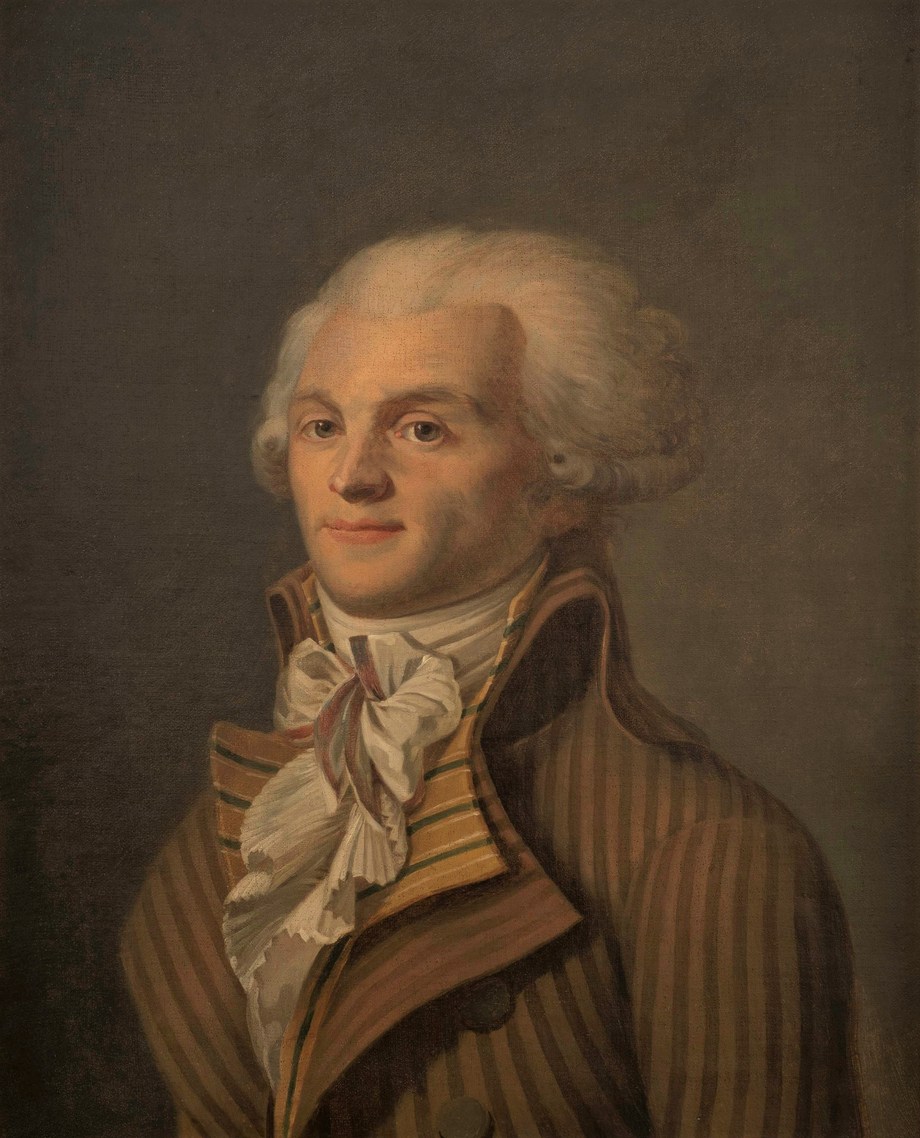
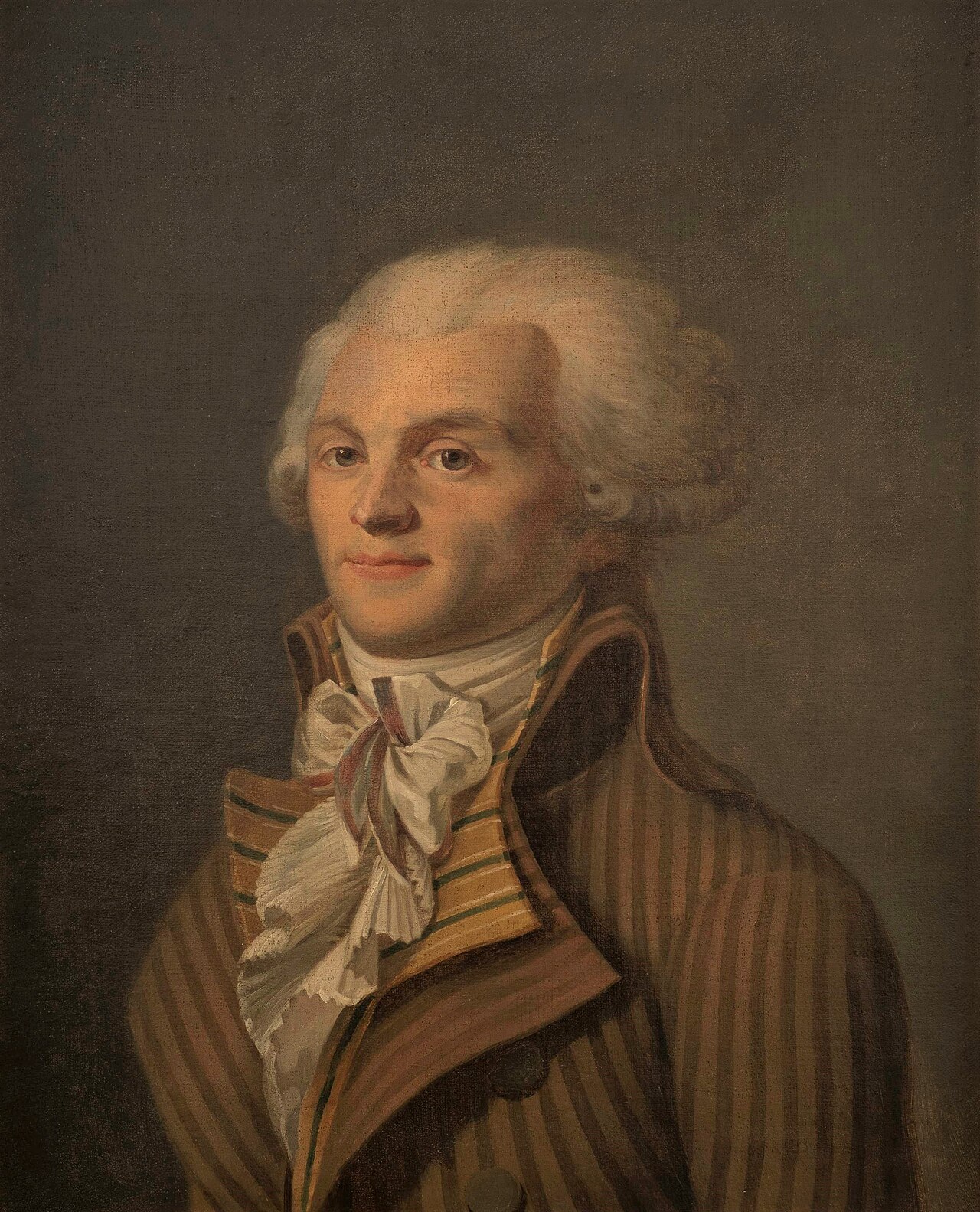
Portrait of Maximilien Robespierre
The Man Who Would Abolish Death and Became the Terror
In May 1791, before the Constituent Assembly, a slight, fastidious provincial lawyer with a thin voice rose to argue that the state had no right to kill. The death penalty, he said, was a barbarism unworthy of a free people—legalized murder that corrupted the very society it pretended to protect. The speech was sincere, principled, and largely ignored. Two years later the same man was the presiding conscience of the Committee of Public Safety, the guiding voice of a revolutionary government that would send tens of thousands to the guillotine in the name of saving the Republic. The chasm between those two men is the riddle of Maximilien Robespierre, born in Arras in 1758, “the Incorruptible,” the most feared and least understood figure of the French Revolution. The temptation is to call him a hypocrite, a man who shed his principles the moment power tempted him. The truth is stranger and more disturbing: he never abandoned a single principle. What changed was not his character but his category.
He was a disciple of Rousseau so devout that the word understates it. He had absorbed the Social Contract not as a book but as revelation—the general will, civic virtue, popular sovereignty, the moral regeneration of a fallen nation—and his politics were simply Rousseau made absolute and handed an executioner. Everything in him pointed inward to a fixed and luminous vision of what the Republic ought to be: a community of virtuous citizens bound by a shared moral will, purged of corruption, redeemed. Against that vision the actual human beings in front of him—the king, the queen, the deputies, his own friends—weighed almost nothing. At the trial of Louis XVI he produced the formula that explains the rest of his life: the king was not a citizen to be judged under criminal law, but an enemy whose very existence was incompatible with the Republic's. “Louis must die,” he told the Convention, “because the nation must live.” Terror was not punishment. It was the Republic defending its own life.
From that reasoning everything followed. He sent the king and Marie Antoinette and the gentle Madame Élisabeth to the scaffold; he sent his own childhood friend Camille Desmoulins and the colossal Danton after them; he drove Condorcet into hiding and death; and he staged, like a high priest in a sky-blue coat, the deistic Cult of the Supreme Being, walking at the head of the procession as though appointed by Heaven to read the nation's soul. He felt no contradiction in any of it, because to him the abstraction—the People, Virtue, the Republic—was always more real than the person bleeding in front of him. This is not the cold private logic-machine the cynics imagine. It is something rarer and far more dangerous: a man of intense, totalizing moral feeling who had pitched that feeling at the level of the collective and could no longer see the individuals it consumed. He is, in the precise and terrible sense, an INFJ—the dark mirror of the type.
Mirabeau said it first and best: “That man will go far, because he believes everything he says.” It is the whole of the dark INFJ in a sentence—a vision held with such absolute inner conviction that no fact, no friendship, and no severed head could ever falsify it.
The Republic That Existed Only in His Head
Ni — dominant
Dominant introverted intuition perceives a single hidden form beneath the chaos of events and organizes the whole of reality around it. In Robespierre that form was the Republic of Virtue—not the France that actually existed, with its factions and famines and frightened deputies, but the redeemed nation that ought to exist, a community of free and moral citizens purged of corruption and bound by a common will. This vision was not a program he advocated; it was the lens through which he saw everything, the more-real-than-real to which the visible world was only an imperfect approximation. He did not argue toward it from evidence. He began with it, complete and luminous, and read the entire Revolution as the labor of bringing the world into conformity with the picture already finished in his mind.
The defining feature of Ni, and the engine of his catastrophe, is its independence from external fact. A vision held this inwardly cannot be falsified by reality; reality that contradicts it is simply judged corrupt, an obstacle to be removed. Where a Te or Se politician counts the votes actually in the room and bends, Robespierre measured every man and every event against the template of the virtuous Republic and found them wanting. The Girondins were not rivals with a different program; they were a deviation from the true path. Danton's indulgence, the de-Christianizers' excess, the speculators' greed—each was not a policy disagreement but a stain on the absolute. The more the real France failed to resemble the ideal, the more enemies the ideal required, until the gap between vision and world could only be closed by the blade.
The Cult of the Supreme Being is the purest expression of the dominant function. Faced with a Revolution he believed had drifted into atheism and moral squalor, Robespierre did not propose a reform; he proposed a new civic religion, a single regenerating faith that would bind the nation in shared virtue and shared awe. In June 1794 he staged it—a vast festival on the Champ de Mars, papier-mâché figures of Atheism set aflame, and Robespierre himself at the head of the procession in a sky-blue coat, carrying a bouquet of wheat and flowers, descending toward a watching nation as the prophet of its soul. It was Ni made spectacle: the inner vision projected onto a whole people, the seer convinced that he alone could see the form the future was meant to take, and meant to take through him.
The Voice of a People He Could Not Touch
Fe — auxiliary
This is the function on which the whole diagnosis turns, and the one most easily mistaken. Robespierre was personally cold, awkward, and unloving—no mistress, no close intimates save a doomed few, a monastic privacy that the cynic reads as the detachment of an introverted thinker. But listen to the actual register of his politics, and it is not the language of a private system at all. It is the language of the collective moral will. Every speech invokes the People, virtue, the general will, the shared regeneration of a nation—a relentless appeal to a community of feeling that he positioned himself to voice. Auxiliary extraverted feeling does not require warmth toward the man beside you. It requires that your moral compass be calibrated to a group, that you reason in the register of what the collective ought to feel and ought to be. Robespierre never reasoned otherwise.
And he did not merely speak for the People—he appointed himself their conscience. The epithet he wore, “the Incorruptible,” was an Fe claim before it was anything else: the assertion that he, alone among the corruptible deputies, was the pure channel through which the nation's true moral will could speak. He took no bribes, kept no mistress, lodged simply with the carpenter Duplay's family, accepted no money he did not need—and made of that austerity a public office, the living proof that one man at least had subordinated his private self entirely to the virtue of the whole. This is Fe in its prophetic, moralizing mode: the self dissolved into the collective and then re-emerging as its appointed voice, the conscience of the general will made flesh. The INTJ builds a private system and trusts it against the crowd. Robespierre built his authority precisely out of his fusion with the crowd's imagined soul.
What makes him terrible is that this Fe had curdled. Healthy extraverted feeling attends to the actual emotional reality of actual people; Robespierre's had abstracted clean off them. He loved “the People” with a genuine, scalding devotion and fed the people—real ones, by the cartload—to the guillotine without flinching. When Camille Desmoulins, the friend of his school days at Louis-le-Grand, began to plead in print for clemency, Robespierre did not experience it as the betrayal of a friend. He experienced it as a deviation of the collective will, an indulgence that endangered the whole, and he let his friend go to the scaffold. The Fe was not absent. It was operating at a register so collective, so moralized into abstraction, that the individual human in front of it had become invisible. This is the dark INFJ exactly: the moral feeling for the many, untethered from any feeling for the one.
The Lawyer's Airtight Logic of the Guillotine
Ti — tertiary
Robespierre was, before he was anything else, a lawyer—and a good one, trained at Louis-le-Grand, admitted to the bar at Arras, careful and exact in argument. Tertiary introverted thinking gave the prophet his instrument: the capacity to take the visionary premise and follow it, step by remorseless step, to a conclusion no one could logically refuse. His speeches are not the ravings of a fanatic. They are demonstrations, built like briefs, each proposition resting cleanly on the last, the architecture so tight that to grant the first principle is already to have conceded the scaffold. This is what made him so much more dangerous than a mere zealot. The zealot shouts; Robespierre proved.
The king's trial is the masterpiece of this faculty. The Convention was paralyzed by an apparent contradiction: the constitution had declared the king inviolable, so how could he be tried at all? Robespierre dissolved the difficulty with a single logical move. Louis could not be tried, he argued, because to try him was to presume he might be innocent—and the very existence of the Republic was the proof of his guilt. He was not a defendant but a defeated enemy; the question was not justice but the safety of the state. “There is no trial to conduct here,” he said. “Louis is not an accused man. You are not judges. Louis must die because the nation must live.” The reasoning is airtight—and monstrous, because the airtightness is doing the work that a feeling for the living man should have done. Ti in service of an Ni absolute does not check the vision against reality; it builds a flawless cage around it.
The same logic produced the theory of the Terror itself, distilled into the formula that haunts his name: “virtue, without which terror is fatal; terror, without which virtue is powerless.” It is a perfect syllogistic couplet—virtue is the end, terror its necessary instrument, the two locked in reciprocal dependence. Grant that the Republic must be virtuous, grant that its enemies will destroy it if unchecked, and the guillotine follows as cleanly as a theorem. Tertiary Ti is a loop closed in on itself: it is brilliant at internal consistency and helpless against the question its premises never permit it to ask—whether the whole structure, however coherent, has any business existing at all. Robespierre reasoned impeccably from a starting point that should never have been granted, and the rigor of the reasoning was exactly what made it impossible for him to stop.
Blind to the Bodies His Abstractions Consumed
Se — inferior
Inferior extraverted sensing is the INFJ's blind spot: the immediate, physical, concrete present—real bodies in real rooms, the brute facts of flesh that the visionary mind chronically discounts. Robespierre's relationship to the sensory world was one of unease and aversion. He was physically slight, his eyes weak behind the famous green-tinted spectacles that shaded them from the light, his voice thin and unsuited to the great halls he was forced to fill. He was fastidious to the point of monasticism—powdered and immaculate in dress, abstemious in food and drink, without vices, without known loves, recoiling from the bodily appetites that animated coarser men. The austerity was real and even admirable. It was also the mark of a man profoundly ill at ease in the world of the senses, who lived among ideas because the concrete offered him so little purchase.
The fatal form of this blindness was moral, not physical. Robespierre could not see the bodies his abstractions consumed. The People was vivid to him; the people—this woman in the tumbril, that friend on the plank—were abstractions in reverse, statistics of the Republic's self-defense. He almost never attended an execution; the guillotine for him was a syllogism that happened somewhere else, a logical necessity discharged out of sight. Inferior Se does not merely neglect the concrete; under the pressure of a totalizing vision it becomes incapable of letting the concrete count. The severed head, the orphaned child, the screaming of a particular human in a particular moment—these were precisely the data his dominant function was built to override, and override them it did, to the end.
And the concrete had its revenge, as inferior Se always does. At Thermidor—late July 1794—the terrified Convention, sensing that any of them might be next, turned on him in a single afternoon of shouting. The man of the airtight speech was howled down, his voice failing in his throat; outlawed, cornered in the Hôtel de Ville, he was felled by a pistol ball that shattered his lower jaw—whether his own attempt at suicide or a soldier's shot, no one is sure. He spent his last night on a table in an antechamber, the broken jaw bound with a filthy bandage, unable to speak, the bodily reality he had spent his life transcending now the only fact left to him. The next afternoon he was carried to the guillotine he had fed, and the executioner tore the bandage away so that he screamed before the blade fell. The vision was silenced by the flesh in the end. It usually is.
Why INFJ Over INTJ
Why not INTJ?
The INTJ case is genuinely strong and must be stated at full force. Robespierre was personally cold, awkward, and unloving; he adored “the People” as an abstraction while feeding real people—even his friend Desmoulins—to the blade; and he reasoned from a fixed inner absolute, regardless of human cost, with a lawyer's pitiless logic. That looks like principle-over-people Fi married to executive Te—the very Condorcet pattern, the incorruptible inner compass that will not bend to the man in the room—except that in Robespierre it had turned lethal. On the surface, the snow looks like the natural reserve of an inward, system-building type.
But the case resolves on the register of the feeling, and the register is decisively collective. The INTJ's Fi is private—a compass pointing inward to a personal sense of right, held against the crowd, indifferent to whether the group shares it; Condorcet would not flatter a duke or soothe even Voltaire because his own conscience forbade it, and he was useless before a mob. Robespierre is the opposite animal. His entire politics was cast in the language of the collective moral will—virtue, the People, the general will, the shared moral regeneration of the nation—and he did not stand apart from that will as a private judge of it; he claimed to be its voice, its conscience, its appointed prophet, reading and channeling the nation's soul. That is dominant Ni vision wedded to auxiliary Fe's moralizing, group-calibrated register, not the INTJ's detached and self-contained system. His was Fe curdled into abstraction and absolutism—extraverted feeling for the many that had lost all feeling for the one, the dark mirror of the type rather than its absence. The INTJ trusts a private vision against the People. Robespierre dissolved himself into the People and let the vision speak in their name. He is an INFJ—the most frightening one history offers.
Connected Figures
Further Reading
- Robespierre: A Revolutionary Life — Peter McPheeThe most thorough modern biography — even-handed, richly sourced, and attentive to both the public orator and the private man.
- Fatal Purity: Robespierre and the French Revolution — Ruth ScurrVivid and psychologically acute; follows Robespierre from Arras to Thermidor with close attention to the internal logic of his virtue obsession.
- The French Revolution: A History — Thomas CarlyleThe Victorian classic that coined "the sea-green Incorruptible" — thunderous, partial, and still the most viscerally alive prose account of the Terror.
- Citizens: A Chronicle of the French Revolution — Simon SchamaA sweeping narrative of the whole Revolution that illuminates Robespierre's role within the broader cast of personalities and factions.
- The Social Contract — Jean-Jacques RousseauThe text Robespierre treated as scripture — essential for understanding the general will and civic virtue that structured his entire political vision.
