 Historical Figure MBTI
#356 · 4-2-26 · The French Revolution
Louis Antoine de Saint-Just
The Archangel of the Terror · Robespierre's Right Hand · Apostle of Virtue and Death
1767 — 1794
5 min read
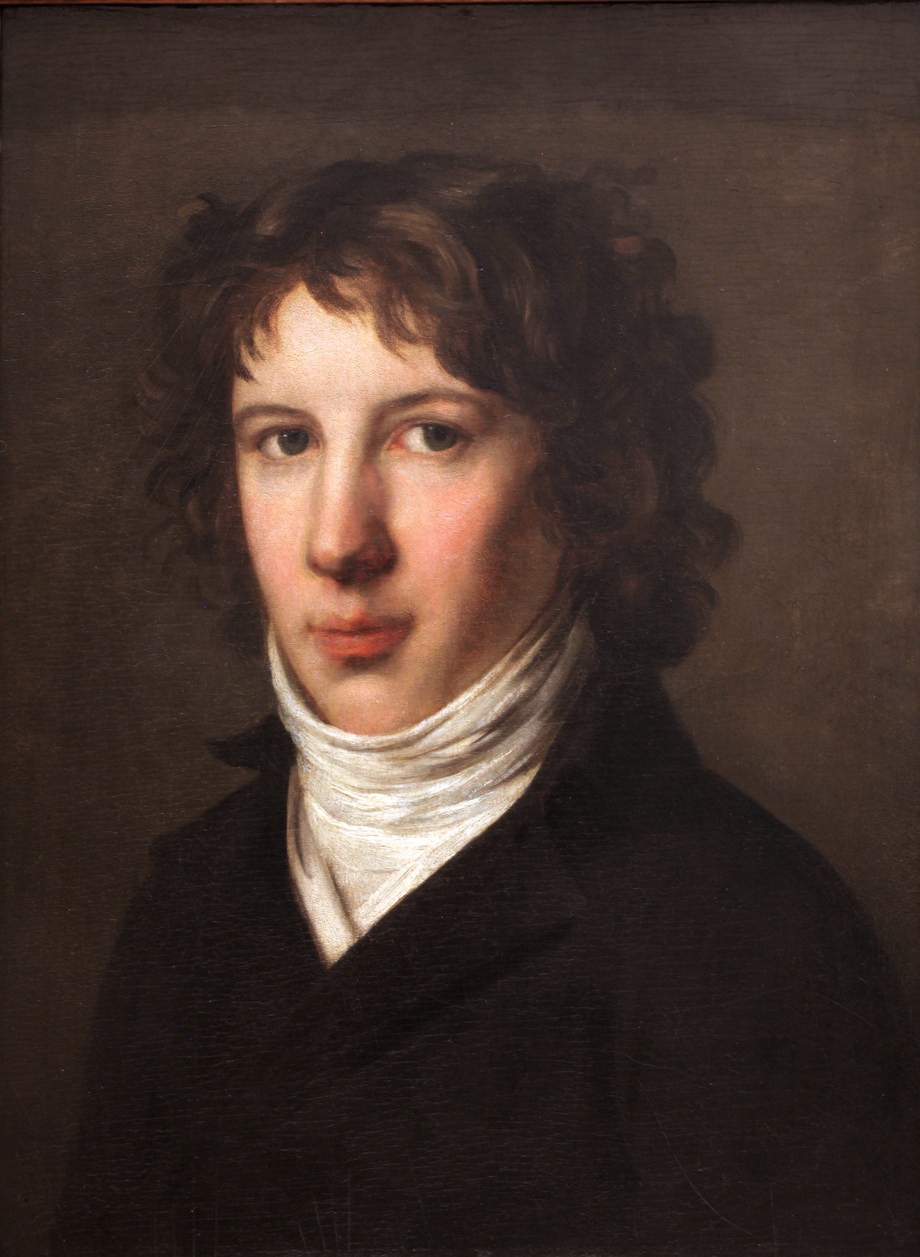
Portrait of Louis Antoine de Saint-Just
The Archangel Who Did the Cold Arithmetic of the Terror
At nineteen he ran off to Paris with his mother's silver; she had him locked up in a reformatory for six months. There he wrote Organt, a licentious mock-epic of adolescent swagger. Nothing in it predicts the man who would stand before the National Convention six years later and reason a king to death without raising his voice. The transformation looks less like development than conversion: the wild youth did not mature into the cold theorist so much as annihilate him.
Humorless and glacially self-controlled, he was the youngest deputy in the hall and within months its most feared. At the trial of Louis XVI he dissolved the legal puzzle in one icy move: the king was not a defendant but an enemy. “No one can reign innocently.” From that premise he served as Robespierre's right hand on the Committee, drafted the Ventôse Decrees, and commanded armies at Fleurus. He is an INTJ—the inward visionary who builds a totalizing doctrine in private and imposes it by remorseless will.
“No one can reign innocently.” It is the whole of his mind in five words—a conclusion drawn not from the man on trial but from a fixed inner axiom, followed to its lethal end without a flicker of feeling for the head it would cost.
The Republic of Virtue as a Finished Blueprint
Ni — dominant
Dominant Ni begins with a single hidden form into which the world must be made to fit. For Saint-Just that form was the Republic of Virtue—stripped of luxury, faction, and private interest. He began with the picture whole, reading the Revolution as the labor of dragging visible France into conformity with the France already finished in his head. His Fragments on Republican Institutions legislate an entire society down to its smallest detail—a utopia of total design that no actual human population could inhabit.
The signature of Ni is that the vision cannot be falsified by fact. Reality that fails to match the blueprint is corruption to be cut away. His rhetoric is Ni made law: “You must punish not only the traitors but even those who are indifferent.” His aphorisms have the finality of geometry: “The Revolution is frozen”— perceiving the historical exhaustion that the men around him could not yet feel.
The Drafter of Law and Commander of Armies
Te — auxiliary
Auxiliary Te gave the vision edges and an executive arm. His speeches are built like legislation: premises laid down with brutal economy, conclusions following as command. The Ventôse Decrees were not a sentiment but a mechanism for transferring suspects' wealth to the poor through the apparatus of the state. Where a feeling type might have exhorted, Saint-Just engineered.
Dispatched to the half-mutinous armies of the Rhine and North, he restored them by organizing will: purging contractors, breaking officers, sharing hardships, and winning at Fleurus. Auxiliary Te in service of an Ni absolute gives the vision teeth without questioning it. The Te asks only “how,” never “whether.”
The Austere Private Absolutism
Fi — tertiary
Tertiary Fi showed itself not as warmth but as purity: an austere absolutism that brooked no compromise with his own conscience. The vanity in his dress was the outward sign of an inner exactingness—a living emblem of the virtue he legislated. He once said he despised the dust of which he was made; the self was an instrument spent in the service of the idea.
Tertiary Fi is a loop that closes on itself: its convictions cannot be argued from outside. Saint-Just's values were held as axioms, not weighed against the suffering they caused; the suffering was the price the axioms required. He could send men to death because his private sense of the necessary admitted no appeal. The austerity that made him incorruptible made him pitiless by the same stroke.
Blind to the Bodies and the Gathering Reaction
Se — inferior
Inferior Se is the INTJ's blind spot: the concrete, physical present discounted by a mind that lives in forms and futures. Saint-Just could draft the death of suspects by the cartload but never registered them as men and women who bled and left children behind. The guillotine was a logical necessity discharged offstage.
The more fatal failure was strategic. By summer 1794 the Convention's survivors were arming against the men who governed by the blade. Saint-Just read none of it. On the ninth of Thermidor he rose to deliver a report and was shouted down. The next day he went to the guillotine beside his master, twenty-six years old, without a flicker of emotion.
Why INTJ Over ENTJ
Why not ENTJ?
The ENTJ case has surface appeal: Saint-Just commanded armies and pursued power with ferocity. But the ENTJ reads a room, builds coalitions, and lets strategy follow the field. Saint-Just did none of this. His power was private and visionary—a doctrine assembled in silence and imposed by will, indifferent to whether anyone followed. His Te was the servant of the vision, not its source.
The ENTJ leads with extraverted thinking: world first, plan revised against resistance. Saint-Just inverted that order—the vision came first and complete, and reality was the resistant material into which it had to be forced. He could not read the gathering reaction because his eyes were fixed on a future already settled in his mind. The ENTJ would have counted the votes and maneuvered. Saint-Just stood in the wreckage of Thermidor in perfect stillness.
Connected Figures
Further Reading
- Saint-Just: Apostle of the Terror — Norman HampsonThe most penetrating English-language biography — meticulous on his ideology and temperament.
- The Terror: The Merciless War for Freedom in Revolutionary France — David AndressPlaces Saint-Just in the full arc of the Committee of Public Safety and the Thermidorian reaction.
- Robespierre: A Revolutionary Life — Peter McPheeEssential for understanding the Robespierre-Saint-Just partnership at the heart of the Terror.
- Citizens: A Chronicle of the French Revolution — Simon SchamaVivid narrative history that captures Saint-Just's role in the revolutionary drama.
