 Historical Figure MBTI
#357 · 4-2-26 · The French Revolution
Georges Couthon
The Paralyzed Triumvir · Co-Author of the Law of Prairial · Gentle in Private, Lethal on Paper
1755 — 1794
4 min read
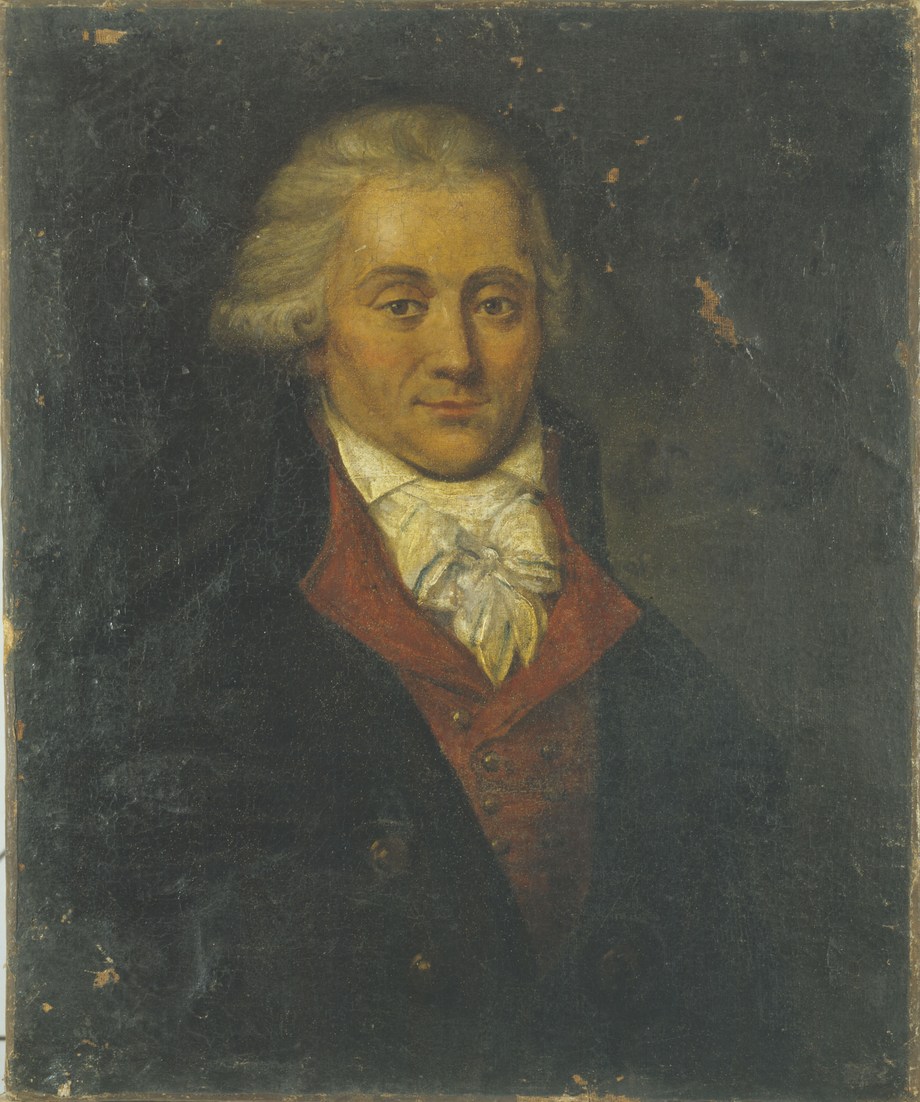
Portrait of Georges Couthon
The Gentle Man in the Wheelchair Who Signed Away Thousands
He could not walk. A degenerative paralysis had left Georges Couthon unable to stand, so he designed a wheeled armchair and had himself carried up the Convention steps. There he sat—a mild-faced lawyer from the Auvergne, soft-spoken, visibly suffering—and from that chair co-authored one of the most pitiless documents of the modern age. He was the third of the ruling triumvirate of the Year Two, the quiet partner of Robespierre and Saint-Just, and the hardest of the three to hold in the mind: the cruelty and the tenderness in him refuse to resolve into a single face.
The tenderness was not a pose. His letters to his wife and sons are so unguarded that archivists find them unbearable next to what their author did by day. He wept easily. That man helped write the Law of 22 Prairial, which stripped the accused of counsel, witnesses, and any defense, reduced every verdict to acquittal or death, and turned the guillotine into an assembly line. Executions very nearly trebled in the seven weeks that followed. He is, in the precise and disturbing sense, an INFJ: the gentlest of the triumvirs, and, on paper, among the most lethal.
The man who wept over his children signed the law abolishing the right to a defense and felt no contradiction, because the abstraction he loved was always larger than the person in the room.
The Republic He Served From a Chair
Ni — dominant
In Couthon, dominant Ni organized everything around a single image: the regenerated Republic —virtuous, equal, redeemed. He had been a provincial magistrate; he moved steadily leftward because his vision demanded it. Once the future was clear, everything else—comfort, body, safety—was subordinated. The Lyon revolt was not a grievance to negotiate but a betrayal of the whole, a city to be, in the language of the decree, effaced. What made his Ni so total was its fusion with Robespierre's: not the lonely prophet but the disciple-prophet, whose certainty is confirmed by another's until doubt becomes structurally impossible.
The Warmth That Served a Merciless Ideal
Fe — auxiliary
Fe explains the tears and, on closer reading, the cruelty. Couthon was courteous where Saint-Just's was glacial, the one of the three with a household he hurried home to. But Fe attaches to a collective, and the question is which one. His warmth had fastened onto the abstract People and the concrete person of Robespierre in whom that People found its voice. To be at odds with that will was unbearable dissonance. Healthy Fe feels the person in front of it; his had pitched itself so wholly at the People that the accused before a tribunal forbidden to speak had dropped below its threshold. He could weep over his sons and legislate away strangers' lives in the same week, not because he was two men but because his warmth aimed at objects too large to contain the individuals it consumed.
The Lawyer Who Drafted the Machine
Ti — tertiary
Couthon was a lawyer, and tertiary Ti gave the visionary his instrument. The Law of 22 Prairial is, read coldly, a feat of drafting: elastic enough to catch anyone, stripped of procedural friction, reducing every verdict to a binary. Logically clean—which is exactly what makes it monstrous. In Couthon, Ti serves the goal, never generates it. The vision came from Ni, the loyalty from Fe; the lawyer's logic arrived afterward, brilliant at constructing the cage, helpless to wonder whether the cage should exist.
The Broken Body and the Suffering He Could Not Watch
Se — inferior
Inferior Se takes in Couthon a form almost too apt: his own body had failed him. The paralysis pushed the senses to the margin and the world of ideas to the center; his vision flourished in inverse proportion to his body's freedom. He could legislate death by the thousand because death, at the level of the decree, was an abstraction. Brought to the concrete act he broke: at Lyon he tapped the first house with a silver hammer— deliberately symbolic—and could not preside over the mass shootings. He was replaced by Fouché. The vision could order anything; the man could not watch it.
The senses had their revenge at Thermidor. Couthon, who could not run, could not flee. He went to the guillotine the next day, the executioner struggling to fit the paralyzed body to the plank. The man who had transcended the flesh his whole life was destroyed, at the last, entirely through it.
Why INFJ Over ENFJ
Why not ENFJ?
The ENFJ leads with Fe, reads a room, and bends toward the people present. Couthon did the reverse: his gentleness sat beneath a fixed inner vision that overrode it the moment the two conflicted. He balked at Lyon not because his Fe read the room but because his inferior Se could not bear the concrete. That is absorbed dominant Ni with Fe in the warm but subordinate seat—not the outward-leading Fe of the ENFJ.
An ENFJ of Couthon's warmth would have been pulled back toward the human beings his policies were grinding up. Couthon was not pulled back. His vision held the wheel; feeling was harnessed to it—dominant Ni served by auxiliary Fe, the architecture he shared with Robespierre: the dark INFJ in its quietest key.
Connected Figures
Further Reading
- The Terror: The Merciless War for Freedom in Revolutionary France — David AndressThe most readable modern account of the Committee of Public Safety and the Year Two, situating Couthon within the ruling triumvirate.
- Fatal Purity: Robespierre and the French Revolution — Ruth ScurrA biography of Robespierre that provides the essential context for understanding Couthon's loyalty and the inner dynamics of the triumvirate.
- The French Revolution: A History — Thomas CarlyleThe great Victorian narrative history — vivid on the fall of the triumvirate and the chaos of Thermidor in which Couthon was caught.
- Citizens: A Chronicle of the French Revolution — Simon SchamaA panoramic account of the Revolution covering the Law of Prairial and the Great Terror with attention to the men who built it.
