 Historical Figure MBTI
#358 · 4-2-26 · The French Revolution
Augustin Robespierre
Robespierre's Younger Brother · Patron of the Young Bonaparte · The One Who Chose to Fall
1763 — 1794
4 min read
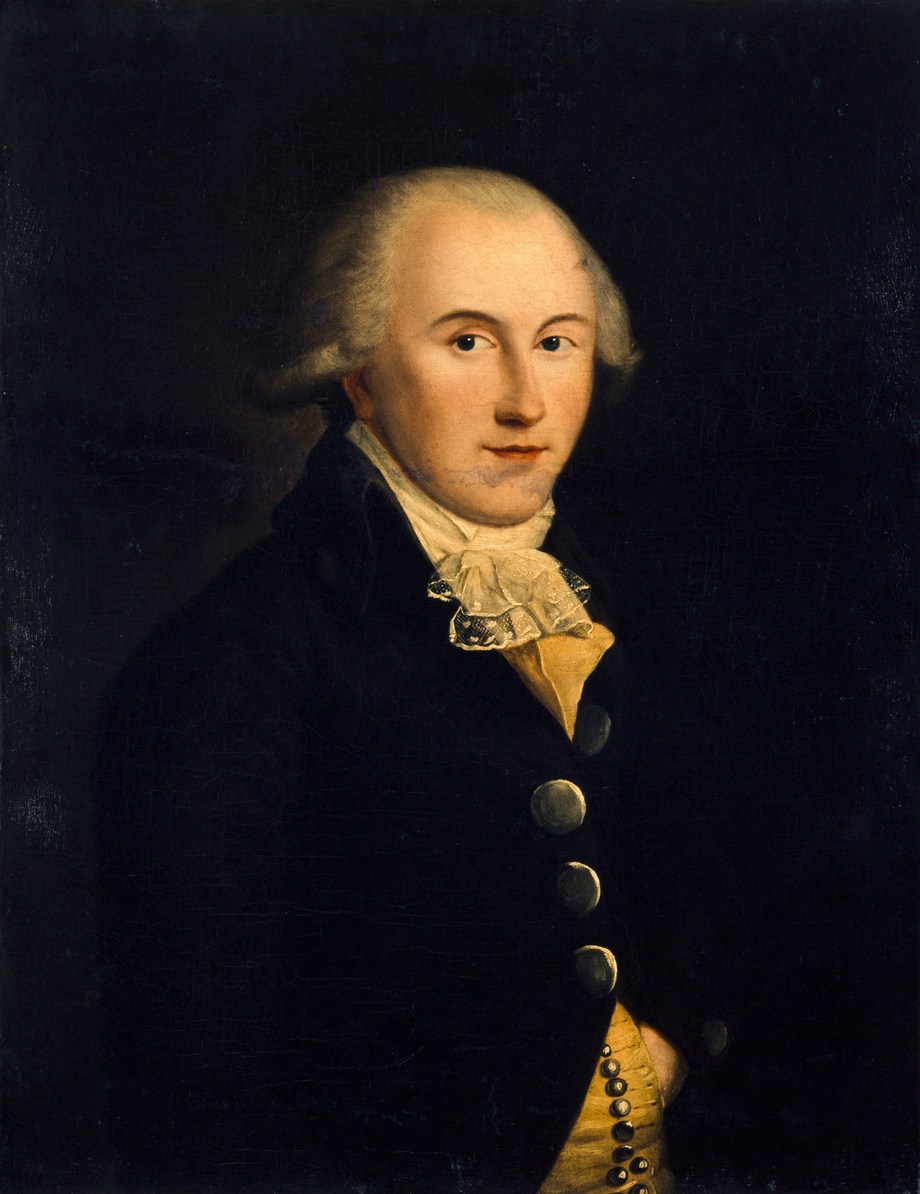
Portrait of Augustin Robespierre
The Brother Who Did Not Have to Die
History remembers him as a shadow cast by a more terrible man. Augustin Robespierre was born in Arras in 1763, five years after his brother Maximilien—the warmer of the pair, gregarious, fond of life, the kind of man his friends called Bonbon. He followed Maximilien into the law, into the Revolution, into the Convention, and at every turn his motive was less ideology than devotion. He did not believe in the Republic of Virtue so much as believe in the man who believed in it.
In 1793, sent on mission to the Army of Italy, he recognized something in an unknown artillery officer no one else had yet seen. He championed Napoleon Bonaparte, pressed his promotion, and grew close enough that Napoleon later admitted he had nearly tied his entire future to the Robespierres—not strategy, but temperament.
Then came Thermidor. Augustin had committed no capital crime of his own; he could have stayed silent and survived. Instead he rose and demanded to be arrested too. “I am as guilty as my brother; I share his virtues.” The next afternoon he died beside Maximilien on the scaffold. He is the clearest ENFJ the Revolution produced: not a thinker, not a fanatic, but a man whose deepest organ was loyalty.
Augustin Robespierre is the ENFJ stripped to its essence—dominant Fe pouring itself wholly into the people he loved, auxiliary Ni serving a vision he had borrowed rather than built. His defining act was not doctrine but fidelity: he chose to die with his brother because the bond was more real to him than his own survival.
The Warmth His Brother Lacked
Fe — dominant
Every contemporary who left a word about Augustin reached for the same register: he was likable, open, easy to be with—a man who simply liked other people, where Maximilien made of his austerity a kind of public office. His advancement of Bonaparte was a pure Fe act: he warmed to the man and threw his loyalty behind him, doing what dominant extraverted feeling always does—investing himself in a person.
Fe also explains Thermidor. When the dominant function is the feeling-bond itself, the unthinkable thing is not death but separation. Augustin had no need to die; he chose to, because letting his brother go to the scaffold alone was a betrayal his whole nature refused. He would not let the bond be severed by anything as small as his own continued life.
A Vision Borrowed, Not Built
Ni — auxiliary
Augustin had a vision—the regenerated Republic, virtue triumphant—but it was not, in any deep sense, his. It was Maximilien's, absorbed whole because the brother he loved held it. In Maximilien, dominant Ni built the Republic of Virtue from the inside out. In Augustin the same vision arrived secondhand, warmed by devotion rather than forged in solitude. This is Ni in the auxiliary seat: serving the feeling-bond rather than generating its own absolutes.
Yet auxiliary Ni was also the faculty that let him see what others missed in a young Bonaparte—reading latent trajectory rather than present fact. That instinct for hidden promise, married to the Fe impulse to invest oneself in a person, is the ENFJ's most attractive gift: the mentor's eye, staking influence on a future one can sense but not yet prove.
An Appetite for Life
Se — tertiary
Where Maximilien's inferior Se made him recoil from the sensory world, Augustin could enjoy a meal, a gathering, the ordinary warmth of company. On campaign he was present at the siege of Toulon, moving with the armies of the south, carrying his commissions with a soldier's nerve—happier in the field than buried in the doctrinal warfare of the Paris clubs.
But Se is a supporting player, not a governor. The love of life was real; the love of his brother was deeper. Se made him glad to be alive, then stood aside when Fe decided that living without Maximilien was not worth the price.
A Loyalty Never Coldly Examined
Ti — inferior
Inferior Ti is the cold logic that asks not whom do I love but is this actually true. In Augustin it was almost wholly absent. He took the cause as given because the man behind it was given; he did not interrogate the doctrine, but loved the brother and let the love stand in for the verdict.
His death was the perfect expression of that absent function. “I am as guilty as my brother; I share his virtues” has no logic in it—he was not, by any measure of law, as guilty as Maximilien—but it was never meant to be logical. It was fidelity dressed in the language of guilt. He did not examine his loyalty. He simply obeyed it, all the way up the steps of the scaffold.
Why ENFJ Over ESFJ
Why not ESFJ?
The ESFJ case is tempting: Augustin was sociable, warm, loyal, and ruled by dominant extraverted feeling—all ESFJ territory. But the ESFJ pairs that warmth with auxiliary Si, a grounding in tradition and established duty. Augustin was not a guardian of the established order; he was a revolutionary drawn to a vision of a future that did not yet exist, an early backer of an unproven officer in whom he sensed enormous latent destiny. Reading promise rather than precedent—that orientation toward the not-yet—is auxiliary Ni, not Si.
The faith he placed in Bonaparte is unintelligible as Si and obvious as Ni. He was an ENFJ: dominant Fe in the warmth and the fatal fidelity, auxiliary Ni in the borrowed vision and the talent-spotter's eye, the whole of him organized around people and the future rather than people and the past.
Connected Figures
Further Reading
- The Death of the French Revolution: A History in Documents — Laura Mason & Tracey RizzoPrimary-source anthology that includes the Thermidor session where Augustin demanded his own arrest.
- Robespierre: A Revolutionary Life — Peter McPheeThe most reliable modern biography of Maximilien, with substantial coverage of Augustin's role as commissioner and his Thermidorian choice.
- The Terror: The Shadow of the Guillotine — France 1792–1794 — David AndressPuts both Robespierres in the political context of the Committee of Public Safety and the mounting crisis of Year II.
