 Historical Figure MBTI
#359 · 4-2-26 · The French Revolution
Éléonore Duplay
Robespierre's Betrothed · The Widow Who Never Wed · Faithful for Forty Years
1768 — 1832
6 min read
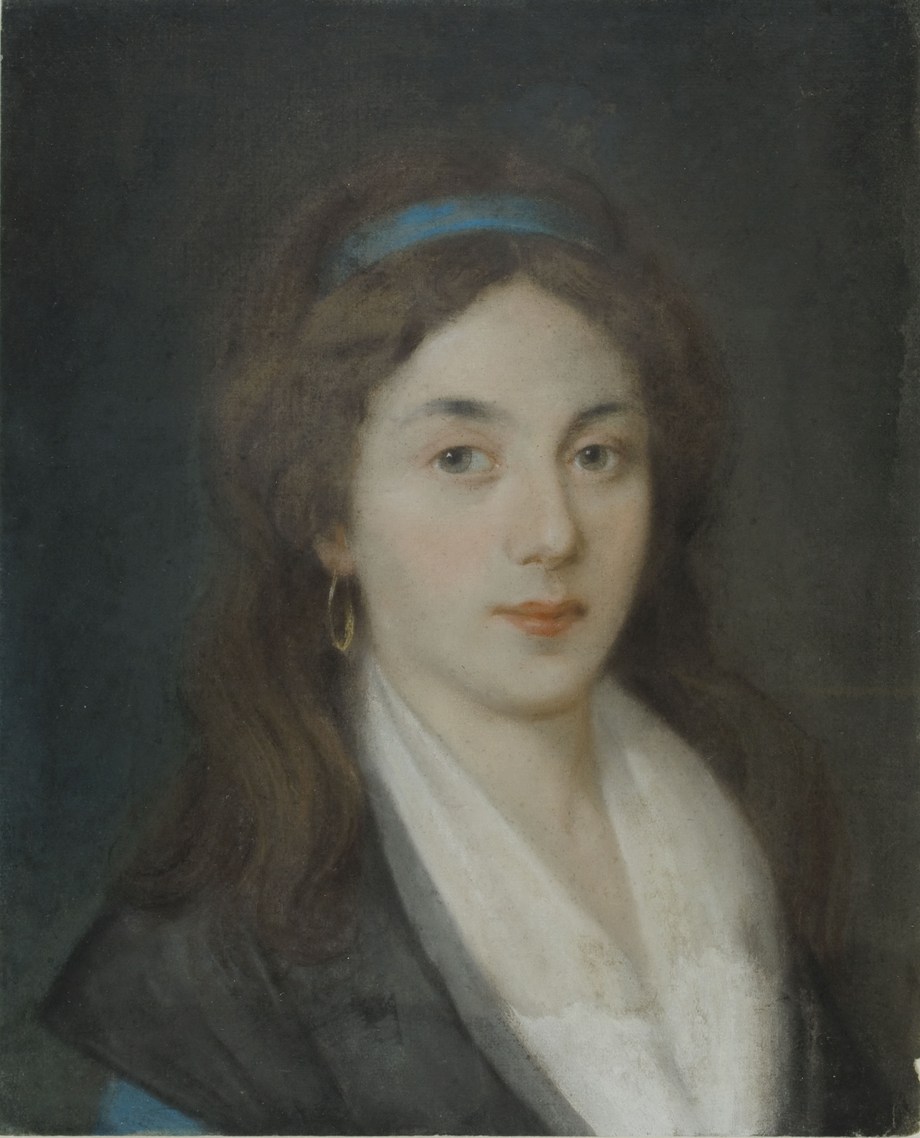
Portrait of Éléonore Duplay
The Widow Who Was Never a Wife
Éléonore Duplay was the eldest daughter of Maurice Duplay, a master carpenter whose modest house on the rue Saint-Honoré became the home of Maximilien Robespierre from 1791 until his death. He lodged there, took his meals at the family table, and was folded so completely into the household that contemporaries assumed he and the quiet eldest daughter were betrothed. She was studying painting under David in those years, a serious girl of no great fortune, and she fell in love with the most feared man in France without, so far as anyone could tell, ever once raising her voice about it.
When Robespierre fell at Thermidor in July 1794, Éléonore put on black. She was twenty-six. She wore mourning for the rest of her life, refused every suitor, and for nearly forty years kept faith with a man to whom she had never been legally bound. Paris gave her a title she had no right to and could not refuse: la Veuve Robespierre, widow of a marriage that never happened. That quiet, backward-facing steadiness is the clearest mark of the ISFJ the historical record offers.
Éléonore Duplay was the ISFJ reduced to its essence—a dominant Si that kept a vow no one had formalized for forty years, and an auxiliary Fe that poured itself wholly into one household and one man and never once asked to be seen doing it.
The Vow That Was Never Spoken Aloud
Si — dominant
Dominant introverted sensing is the function of fidelity to what was—the loyalty that holds a thing constant once it has become real. Si does not chase the new; it keeps the old. Whatever passed between Éléonore and Robespierre in the Duplay house became, after his death, a fixed point around which the rest of her life was organized. She did not move on because moving on would have meant amending the one thing she held most fully real.
The forty years of mourning are pure Si. There was no formal bond to honor, no widow's pension, no legal claim—and honoring Robespierre after Thermidor carried real danger. She kept faith with an unformalized promise because its reality, to her, did not depend on formalization. Memory, for dominant Si, is not a record of the past but a thing still binding in the present. She wore the black not as a statement but as a fact—the gesture not of a woman dramatizing grief but of one for whom the past was simply not negotiable.
The Devotion That Poured Into One House
Fe — auxiliary
Auxiliary extraverted feeling gave the constancy its direction. Fe orients the self toward the emotional life of others—toward harmony, care, the warmth of a bonded circle—and in the ISFJ it works quietly, in service rather than declaration. The Duplay household was a place of unusual closeness; Robespierre was drawn into it by a hunger for domestic warmth, and Éléonore was at the center of that warmth. She tended the man and she tended the home, and the two were, in her, nearly the same act.
Where an extraverted-feeling type needs the relationship acknowledged and made public, Éléonore needed only to be useful to the people she loved. Robespierre, cold and monastic, may never have loved her as completely as she loved him—but the asymmetry would not have altered her. Auxiliary Fe in an ISFJ does not love in order to be loved back; it loves because caring is the shape its inner life takes. When the man was gone she kept giving it to his memory, since there was nothing else left to tend.
The Quiet Resolve Beneath the Grief
Ti — tertiary
Tertiary introverted thinking is the private logic that stiffens the devotion—the spine inside the grief. To refuse marriage offer after marriage offer, in a society where an unmarried woman of modest means had few comforts or security, is not sentiment. It is a settled conviction enforced against one's own interest: she had given herself once, the gift was not revocable. Beneath the mourning black there was something harder than grief—a resolve that did not waver and did not require an audience to keep it firm.
The Future She Refused to Imagine
Ne — inferior
Inferior extraverted intuition is the ISFJ's blind spot—the faculty of open possibility, of the branching futures one could still go and live. It is precisely the function Éléonore appears never to have engaged. Where another woman would have looked at the wreckage of 1794 and seen, eventually, some other future—another marriage, another version of herself—Éléonore seems to have seen no alternative at all. There was the past, which was real, and there was its keeping, which was her life.
The inferior function is the one we cannot use and so cannot be tempted by. Éléonore was not tempted by the open future because she could not really conceive of it. Her inferior Ne cost her the future, and in exchange it gave her a fidelity so complete that two centuries later it is still the only thing we know about her—and very nearly enough.
Why ISFJ Over ESFJ
Why not ESFJ?
The ESFJ shares the same Si–Fe devotion and the same gift for keeping a household. But the ESFJ's feeling is extraverted to the front—outward, sociable, sustained by a circle that recognizes and returns it. Éléonore was the opposite: retiring, private, almost invisible. An ESFJ's devotion lives in the world and needs the world; hers lived in her memory and needed no one. The dominant function is Si held close, not Fe turned out.
An ESFJ's loyalty is energized by being seen to care, by the warmth of mutual recognition; strip those away and it has little to feed on. Éléonore's devotion fed on nothing external. The man was dead, the cause was disgraced, and there was no circle left to reflect her grief back to her—and still she kept faith for forty years, because the loyalty lived entirely inside her and needed no outward confirmation to survive. Introverted constancy, not extraverted care.
Connected Figures
Further Reading
- Robespierre: A Revolutionary Life — Peter McPheeThe most thorough modern biography of Maximilien Robespierre; covers the Duplay household and Éléonore's role within it in careful detail.
- Fatal Purity: Robespierre and the French Revolution — Ruth ScurrA vivid account of Robespierre's rise and fall that brings the Duplay ménage — and Éléonore's quiet devotion — into sharp relief.
- The Family Romance of the French Revolution — Lynn HuntExplores how gender, family bonds, and political loyalty intertwined during the Revolution — essential context for understanding Éléonore's position.
