 Historical Figure MBTI
#321 · 3-27-26 · The Enlightenment
Condorcet
Mathematician · Philosophe · Prophet of Progress · Martyr of the Revolution
1743 — 1794
5 min read
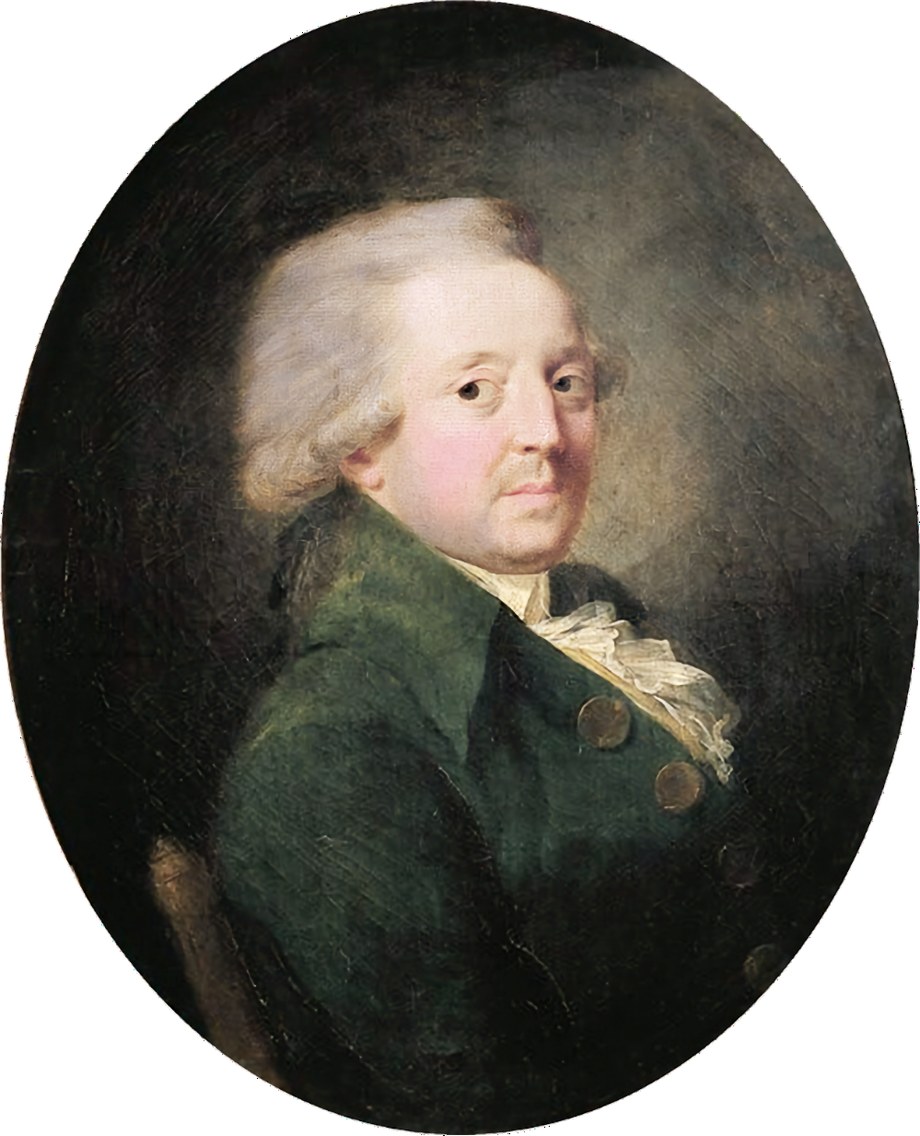
Portrait of Condorcet
The Volcano Beneath the Snow
In the spring of 1794, a man under sentence of death sat writing the most optimistic book of the eighteenth century. The Terror was devouring his friends; the Convention had decreed his arrest. What he produced was not a defense but the Esquisse d'un tableau historique des progrès de l'esprit humain—a hymn to the perfectibility of the human race. Condorcet wrote the future's most hopeful prophecy while the present was hunting him to his grave.
His temperament was not the bloodless calculating engine the stereotype assigns to the INTJ. He was a man of enormous, scalding feeling who could not get the feeling out—painfully shy, nearly inaudible in debate, yet a furnace of conviction, a theological hatred of cruelty burning behind a face that gave nothing away.
His friends called him “a volcano covered with snow”—and that is the INTJ with a powerful buried Fi in a single phrase: a mind of glacial composure on the surface, an inner life of molten conviction underneath, and almost no channel between the two.
The Sweep of the Whole Future
Ni — dominant
The Esquisse is one of the purest acts of Ni in the canon. Condorcet wrote the past as the arc of a hidden law, dividing the career of the species into ten epochs, each a step nearer to reason—then extrapolated straight off the edge of the known: the equality of the sexes, the abolition of inequality between nations, the indefinite extension of human life. He was not describing the world. He was seeing through it to its destination.
A lesser optimism needs comfortable circumstances; Condorcet's burned hottest under sentence of death. That is Ni's peculiar independence—a vision held with such inward certainty that catastrophic reality cannot dislodge it. He expected to die, and arranged calmly for it. The future was real to him in a way the present was not.
Mathematics Laid Upon the World
Te — auxiliary
Auxiliary Te gave Condorcet the instruments to impose his vision. The Jury Theorem—if each juror is more likely than not to be right, a large enough body is almost certain to be right—translates Ni's faith in collective reason into a checkable result. The constitution he drafted in 1793 pushed the same impulse to full scale: an elaborate scheme of elections meant to extract a coherent general will from the voting paradox he had discovered.
Yet Te was the servant, never the master. A Te dominant reads the room and bends to assemble a working majority. Condorcet could not. His Te built flawless systems and then could not get them adopted; he engineered the perfect constitution and watched the Montagnards bury it. Te in the auxiliary position designs the world beautifully and is repeatedly astonished that the world will not simply run the program.
The Conviction That Could Not Be Transmitted
Fi — tertiary
His was an age of polished irony, and Condorcet was incapable of it. Turgot called him “a rabid sheep”—mild of face and forever on a short fuse. As a boy he gave up hunting because associating his pleasure with an animal's anguish “offended his reason”—a moral revulsion so total it presented itself as logic. That is Fi—value felt as bedrock—wearing the mask of Te.
But the decisive thing is not the heat: it would not conduct. John Morley called his a “non-conducting” temperament—fierce conviction with no power to transmit it, only “the distant ground-swell of repressed passion.” Beside Danton or Marat he was useless as an orator. Emotion intense but trapped is Fi, not Fe. The snow was not a disguise—it was the actual surface, and there was no vent.
His feeling expressed itself as inflexible private principle. To Voltaire himself he wrote: “My attachment bids me say what will be best for you, and not what might please you most.” An Fe type would have found the gracious words; Condorcet could not.
The Body He Forgot to Save
Se — inferior
The Convention was a theater of presence—voices that filled a hall, gestures that swayed a mob, physical courage performed in the moment. These were the Se virtues, and Condorcet had none. His failure in the Revolution was not of intellect but of embodiment.
The inferior function turns tragic at the end. Survival required one thing: staying hidden. He could not do it. Fearing he would compromise those sheltering him, he fled into the open countryside—which read him instantly. He was arrested at an inn when he ordered an omelet and, asked how many eggs, gave the answer of a man who had never cooked one.
He died in a cell at Bourg-la-Reine in 1794, a pocket Horace his only companion. Condorcet was undone not by any failure of reason or principle, but by the plain, physical present he had spent his genius transcending.
Why INTJ Over INFJ
Why not INFJ?
Condorcet's “non-conducting” tragedy—the man of vast feeling who could not reach a room—can be read as thwarted Fe: a soul that desperately wanted communion and was constitutionally barred from achieving it. The empathy, the prophetic warmth, and the gentleness of his private life all lend this reading weight.
But the evidence tips to INTJ on the rigidity. An INFJ bends toward reconciliation; Condorcet sharpened, dismissed caution as cowardice, refused to read the room even when it would have saved his life. Set that beside the Te execution and the picture resolves: Ni driving Te, fierce Fi as the moral core, inferior Se leaving him careless of his own body. An INTJ who loved humanity in the abstract while struggling with the humans in front of him.
Connected Figures
Further Reading
- Condorcet: From Natural Philosophy to Social Mathematics — Keith Michael BakerThe definitive intellectual biography in English — traces the social mathematics, the jury theorem, and the paradox in full scholarly depth.
- The Marquis: A Study in the Life of Condorcet — J. Salwyn SchapiroA readable life that gives full weight to Condorcet's political career as a Girondin and his fate under the Terror.
- Esquisse d'un tableau historique des progrès de l'esprit humain — Condorcet (trans. June Barraclough as Sketch for a Historical Picture of the Progress of the Human Mind)The primary text itself — the hymn to human perfectibility written in hiding while under sentence of death.
- The Dream of Reason: A History of Philosophy from the Greeks to the Renaissance — Anthony GottliebPlaces Condorcet within the broader Enlightenment tradition; the companion volume covers the Age of Reason that Condorcet inhabited.
