 Historical Figure MBTI
#320 · 3-27-26 · The Enlightenment
Louis XV
King of France · 'The Beloved' · The Reluctant Sovereign
1710 — 1774
9 min read
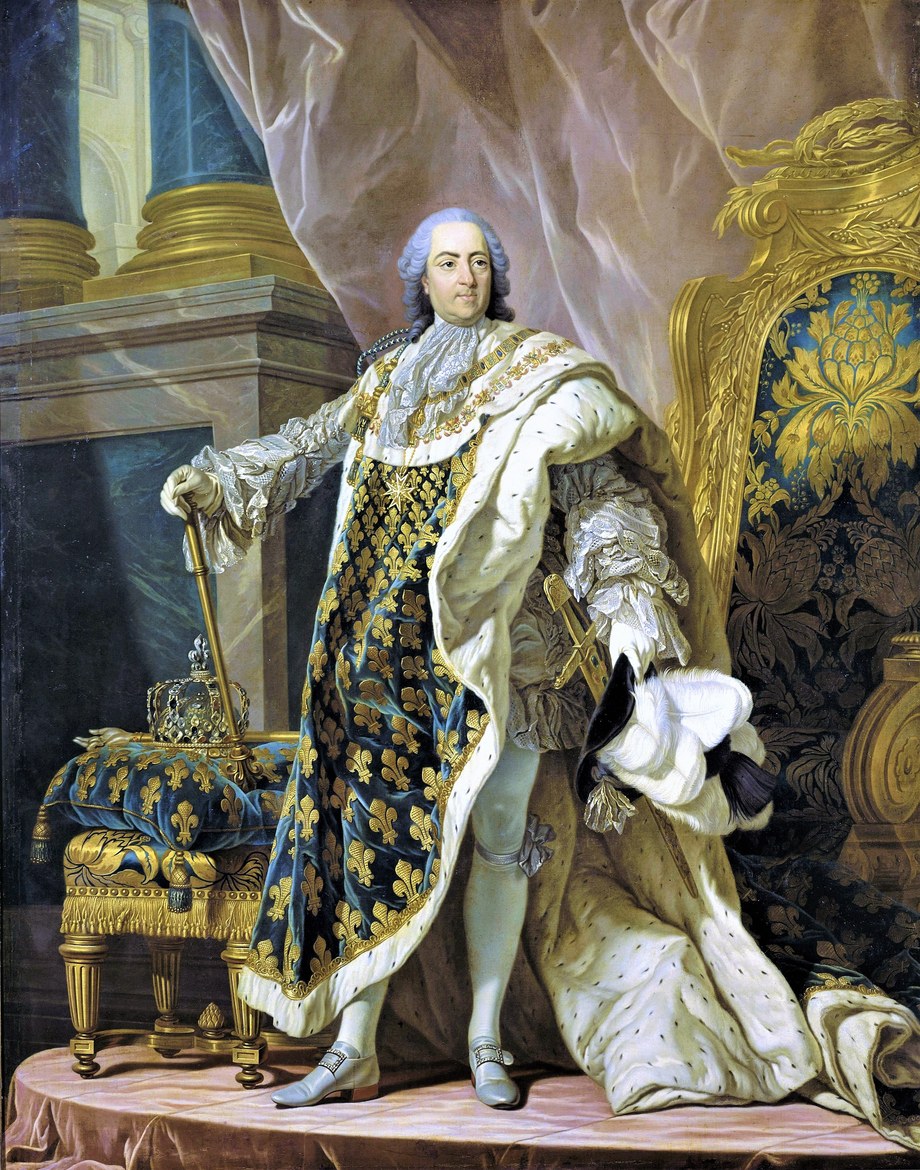
Portrait of Louis XV
The King Who Wanted to Be Left Alone
The most powerful man in Europe spent the better part of his life trying to slip out of the room. While the court of Versailles arranged itself each morning around the ceremony of the levér—nobles competing for the honor of handing him his shirt—Louis XV endured it with the fixed distance of a man performing a part he had never chosen. The moment public duties relented he was gone: to the hunt; to the small private rooms he carved out of the palace, the petits appartements, where the company thinned and he could finally be himself; to the beds of his mistresses. He had been crowned at five and would reign fifty-nine years, the longest tenure of any French monarch but his great-grandfather. He was bored by almost all of it.
He had genuine gifts—a quick intelligence, a connoisseur's eye, a personal charm that worked on everyone admitted to his intimacy. But he had no appetite for the hard, decisive labor of rule. He hated confrontation; he handed the actual governing to ministers and to his mistress Madame de Pompadour, who ran France from her drawing room for two decades while he hunted and withdrew. France had loved him once—naming him le Bien-Aimé, the Beloved, when the kingdom prayed for his recovery at Metz in 1744. By the time he died of smallpox in 1774, the love had curdled into contempt, and the people who had wept for him jeered the cart that carried his body to Saint-Denis by night.
Beneath the ermine and the famous melancholy lay a coherent psychology: the inward, sensuous temperament of the ISFP. He was not a bad man and not a stupid one. He was simply a king built to be a private gentleman, trapped inside the most public office in the world.
Louis XV was the ISFP on the throne of France—an Fi-Se temperament that lived by private feeling and sensory pleasure, born to an office that demanded the one faculty he could not summon: the cold, decisive, executive will to rule.
The Private Heart Behind the Public Mask
Fi — dominant
Dominant Fi is a private register of personal value that answers to its own compass rather than to the expectations of the surrounding world. The ISFP guards his feelings, lives by them quietly, and resents the demand that he display them on command. This is the key to the famous opacity of Louis XV—the reserve that contemporaries found impenetrable. He gave almost nothing of his inner life to the court. The kingship required a public sun; his temperament kept the actual self hidden, available only to a chosen few.
What governed that hidden self was loyalty to particular people. His bond with Madame de Pompadour long outlived the sexual relationship that began it; when desire cooled he kept her at the center of his life and government for another fourteen years because the personal connection was real to him. He was tender with his children, grief-stricken at family deaths, and bound to a small circle of intimates whose company he preferred to any council of ministers. Fi attaches to the particular, the felt—and Louis's deepest commitments were always to persons he loved, not to the impersonal crown he wore.
The shadow of dominant Fi is the melancholy that haunted his reign. Louis was a devout Catholic who lived in open and serial adultery, and the contradiction tormented him; he could not renounce the women he was attached to, and he could not stop reproaching himself for the attachment. He fell into long spells of ennui so heavy those around him learned to dread them. The pious, the guilty, the withdrawn, the privately tender, the man no one could read—not separate masks but a single Fi temperament, living by an inner law it could not square with the world it was forced to perform in.
The Pleasures of the Present Moment
Se — auxiliary
Auxiliary Se is the function of direct sensory engagement—the body in motion, the eye on the surface of things. Nowhere is it clearer than in Louis's lifelong obsession with the hunt. He rode out hundreds of days a year, keeping meticulous records of the kills, exhausting horses and courtiers alike. The chase gave him what the throne could not: a present so total and bodily there was no room in it for ennui, postponed decisions, or the abstract weight of a kingdom he did not want to govern. In the saddle he was wholly alive.
The same Se made him a connoisseur of beauty in a register that was always sensory, never theoretical. He had a discerning eye for furniture, porcelain, and the proportions of a room. Where his great-grandfather used architecture to overwhelm, Louis used it to enclose: the petits appartements carved into Versailles—smaller spaces, warmer materials, the rococo at its most intimate. He supported the Sèvres porcelain works; he loved gardens and the physical cultivation of growing things. Se wants beauty close and tactile, something to inhabit rather than to contemplate.
The same function drove the sensuality for which his reign became notorious—a long succession of mistresses and the discreet Parc-aux-Cerfs. Psychologically it is of a piece with the hunting and the connoisseurship: an Fi-Se temperament seeking, in the immediate physical present, what it could not find in the gray abstraction of rule.
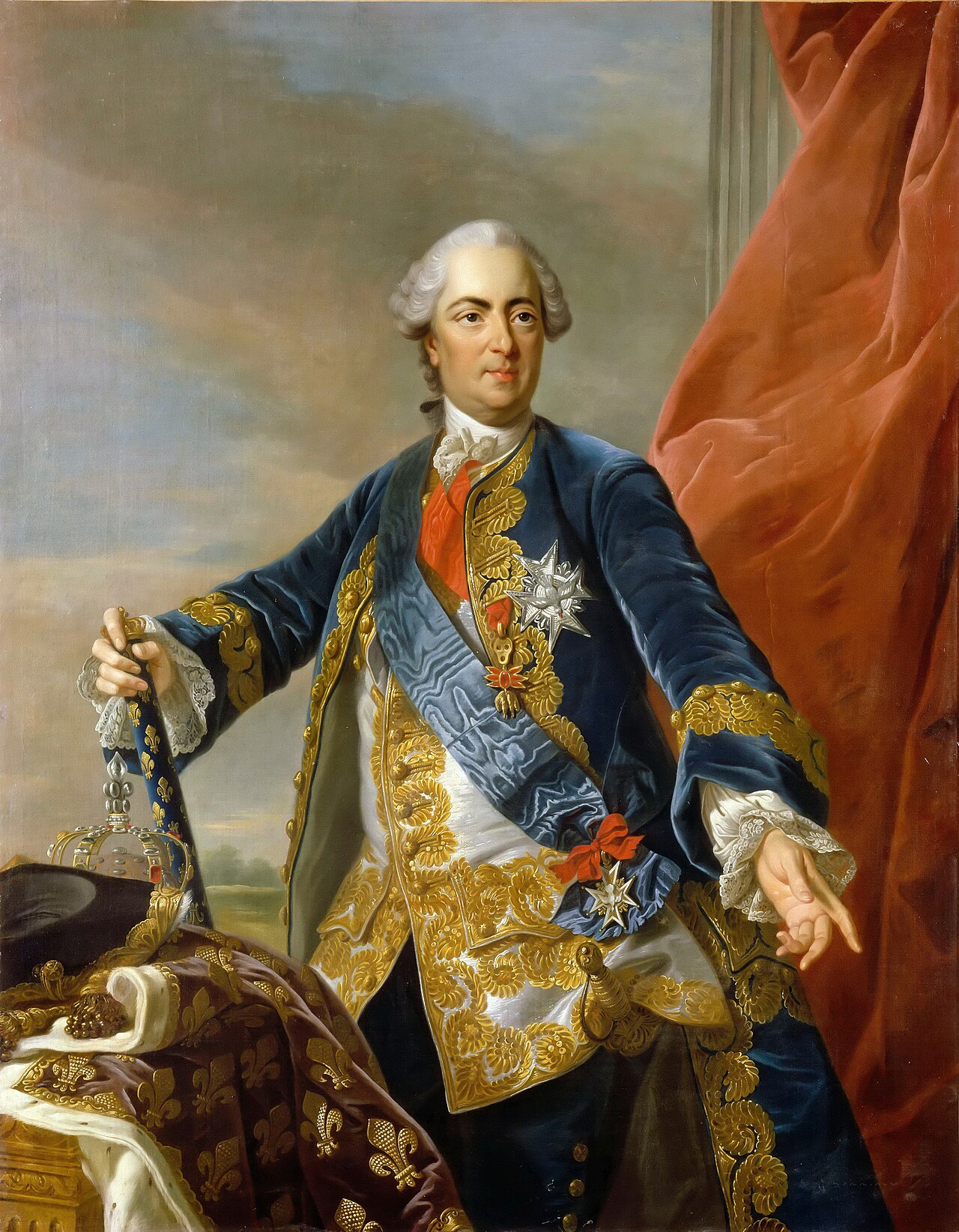
The Secret He Kept From His Own Government
Ni — tertiary
Tertiary Ni operates in flashes rather than as a sustained strategic instrument, and is easily detached from the executive power needed to act on its insights. Louis had this in a strange and revealing form. He could see, often with startling clarity, what was actually happening and where it was tending. But the insight rarely connected to decisive action—it retreated instead into a private parallel world of his own.
The most extraordinary expression of this was the Secret du Roi—a personal network of clandestine diplomacy Louis ran for years through private agents and ciphered letters, pursuing aims that frequently contradicted the official foreign policy conducted by his own ministers. It is a uniquely telling artifact: a king who could not impose his will openly, so built a hidden shadow-state to pursue his real convictions in secret. The Secret was private where Te is public, concealed where rule is exposed, and largely ineffectual—because insight without the will to act on it in the open accomplishes little.
The same detached intuition produced the most famous words attributed to him— après moi, le déluge. Whether he or Pompadour actually said it, the phrase captures something true: a man who could sense the gathering catastrophe—the debt, the alienated parlements, the exhausted legitimacy of the crown—without ever mobilizing himself to avert it. He named the flood and let it come.
The Labor of Kingship He Could Not Bear
Te — inferior
Inferior Te is the ISFP's weakest faculty—the impersonal machinery of decision, organization, and public command. For most ISFPs this matters little; they arrange their lives to require it rarely. But Louis was king of France in the age of absolutism, an office whose entire purpose was the exercise of exactly this faculty. The thing his role most demanded was the thing his psyche could least supply. Everything held against him—the indecision, the avoidance, the surrender of government to others—flows from this single mismatch.
He postponed difficult choices, let problems fester, and could be moved one way then the opposite by the last person to reach him. He let ministers fall through court intrigue rather than dismiss them to their faces. Above all he delegated—handing the executive work to Madame de Pompadour, who possessed in dominant form precisely the commanding Te he lacked. The arrangement was psychologically exact: the ISFP king outsourcing his inferior function to an ENTJ mistress who lived in it. He kept the throne; she did the ruling.
The cost was a kingdom adrift. The Seven Years' War ended in catastrophe—the loss of New France and the French position in India, a humiliation from which French power never fully recovered. The debt mounted. The long struggle with the parlements over taxation dragged on without resolution. Inferior Te under sustained pressure produces paralysis and a slow erosion of the very legitimacy it was meant to defend. Louis did not destroy the monarchy. He simply could not do the work of saving it.
Why ISFP Over ESFP
Why not ESFP?
The ESFP shares the Fi-Se sensualism—the love of pleasure, beauty, and the vivid present—and on a checklist of appetites Louis can look the part. But the ESFP leads with extraverted sensing: outward, gregarious, energized by an audience, at home in the performance of his own life. Louis was the opposite at the core—withdrawn, private, melancholic, visibly pained by the relentless public theater of Bourbon kingship, which he endured rather than enjoyed. An ESFP king would have played the role of the sun with relish; Louis shrank from it and fled to the shaded interior the moment he could. The dominant function is inward Fi, not outward Se, and the whole shape of his life—guarded, sad, retreating—points inward. He held the most exposed office in Europe with the temperament of a man who wanted, more than anything, to not be looked at.
Connected Figures
Further Reading
- Louis XV: The Monarchy in Decline — Michel AntoineThe definitive French-language biography; the standard scholarly account of his reign.
- Madame de Pompadour: Mistress of France — Christine Pevitt AlgrantEssential for understanding the woman who effectively governed in Louis's name.
- The Oxford History of the French Revolution — William DoylePlaces Louis XV's reign in the long arc leading to 1789.
- France in the Enlightenment — Daniel RocheSituates the cultural and intellectual world Louis XV presided over, often at arm's length.
