 Historical Figure MBTI
#319 · 3-27-26 · The Enlightenment
Madame de Pompadour
Royal Mistress · Patron of the Arts · The Power Behind Louis XV
1721 — 1764
6 min read
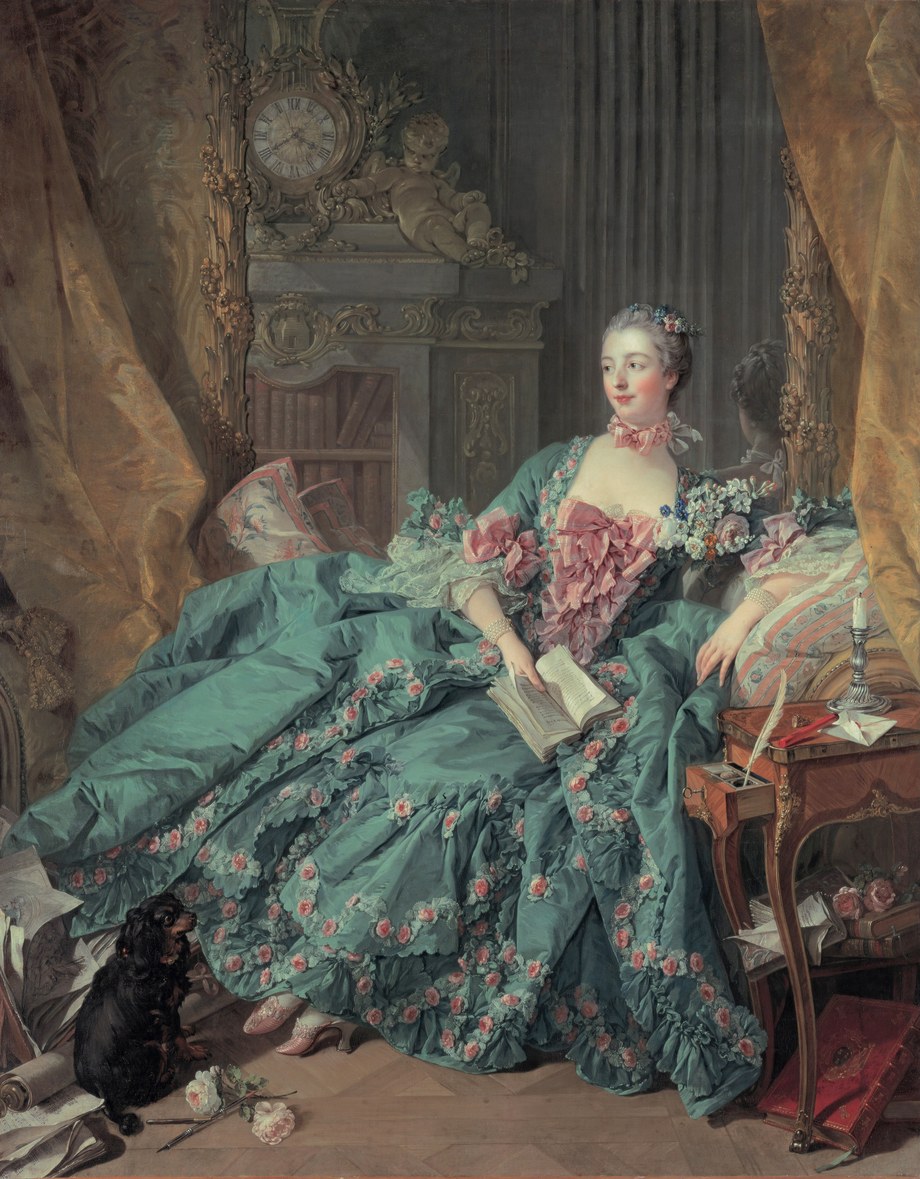
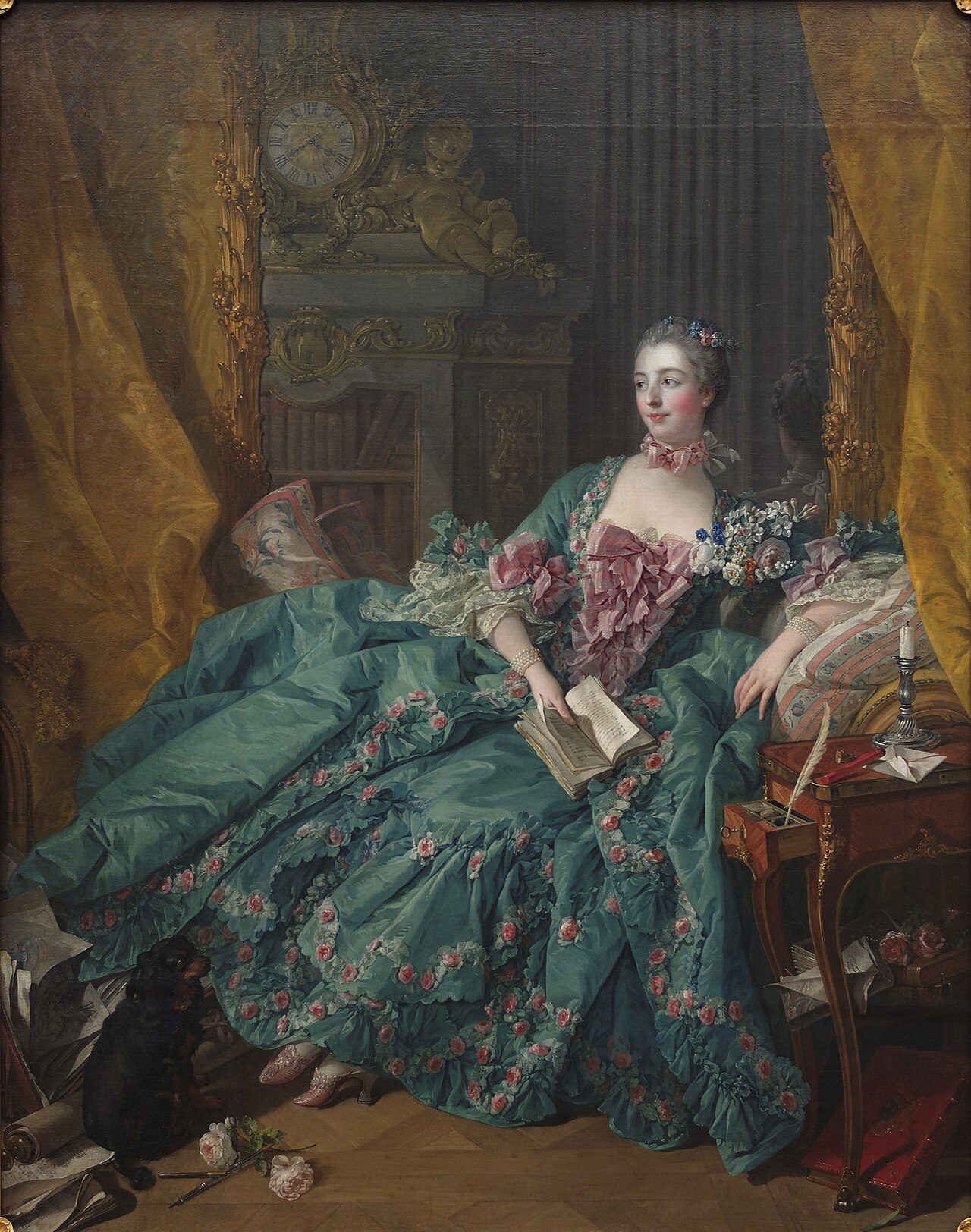
Portrait of Madame de Pompadour
The Woman Who Made Herself Indispensable
At Versailles in the 1750s the surest route to power ran through the apartments of a fishmonger's daughter. Ministers, generals, artists, and ambassadors all learned to approach Jeanne Antoinette Poisson, Marquise de Pompadour—a woman with no constitutional standing who nonetheless controlled access to Louis XV more completely than any minister of state. The court circulated cruel fish-themed verses, the poissonnades, mocking her birth. She catalogued them and went on running France. The sexual relationship that had brought her to court ended around 1750; her grip on power lasted another fourteen years, until tuberculosis killed her at forty-two, still working.
What made the reinvention possible was the ENTJ's outward, commanding, results-driven intelligence: a dominant extraverted thinking that ran patronage, appointments, and statecraft as a single enterprise, managing people and building institutions toward measurable ends. Beneath it ran an auxiliary introverted intuition fixed on one long vision—the cultural and political ascendancy of France, with herself at its center—against which every commission and alliance was a move. She did not charm her way into power and then improvise. She organized it.
Madame de Pompadour was the ENTJ who outlived her own usefulness as a mistress by becoming a minister—a Te-driven executive who ran the patronage and statecraft of a kingdom as an enterprise, guided by an Ni vision of French cultural and political ascendancy with herself as its indispensable hinge.
The Minister Without a Ministry
Te — dominant
Dominant extraverted thinking is the function of organization imposed on the world: people deployed, institutions built, results demanded and delivered. Pompadour's career after 1750 is one extended demonstration. Stripped of the role custom allowed a royal mistress, she built herself a new one from administrative competence. She controlled the king's schedule and access; she advanced ministers she trusted and broke those she did not, until contemporaries spoke of a government that ran through her drawing room. The phrase that she was prime minister in all but name was not flattery. It was an administrative fact.
The signature of Te is institutional output. She drove the founding of the École Militaire through the king's reluctance and the treasury's resistance. She took the struggling porcelain works at Vincennes, moved it to Sèvres, secured royal patronage and a near-monopoly, and turned it into the most prestigious manufactory in Europe. She organized the patronage of Boucher and the rococo decorators, treating taste itself as something to be administered at scale. Te does not ask whether a thing is lovely; it asks whether it can be built, staffed, funded, and made to run. She built, and managed the personnel in person, on the floor, for twenty years—balancing factions, holding audiences, absorbing daily hostility without letting it interrupt the work.
The Long Game of French Glory
Ni — auxiliary
If Te supplied the machinery, auxiliary Ni supplied the direction. Pompadour's separate enterprises were never separate to her. The Sèvres works, the patronage of the philosophes, the École Militaire, the Austrian alliance—these were facets of a single conceived future in which France was the cultural and intellectual capital of Europe, with her position as its indispensable axis. She was not collecting roles. She was executing a picture.
Her protection of the Encyclopédie shows this reach most clearly. When Diderot and d'Alembert's project twice faced suppression, she intervened—not because she shared every radical premise of the philosophes, but because she grasped, ahead of the court, that the future belonged to the men compiling that dictionary. She advanced Voltaire's career, securing him the post of royal historiographer and a seat in the Académie. The same intuition drove her hand in statecraft: she was a central architect of the Diplomatic Revolution of 1756, the bold reversal that allied France with Habsburg Austria against Prussia. It led into the calamity of the Seven Years' War—the auxiliary function's shadow side, where Ni's confident vision commits a kingdom to a long bet whose execution outruns its wisdom.
The Mastery of Surfaces
Se — tertiary
Tertiary Se in an ENTJ is not impulsiveness; it is a developed command of the sensory register harnessed to the strategic agenda above it. Pompadour's famous sense of style—the staged tableaux, the very pose in which Boucher painted her, reclining amid books and instruments—was managed presentation. She understood that appearance at Versailles was a currency, and she spent it deliberately, performing her way into a magnificence that answered the contempt for her birth more eloquently than any pedigree could.
She had trained as an actress and singer, and she organized the Théâtre des Petits Cabinets, the private court theatricals in which she performed before the king, using the intimacy of performance to hold his attention long after passion had cooled. This is tertiary Se serving dominant Te: the sensory gift bent entirely toward keeping herself essential. But the tertiary position also shows in the relentlessness—the endless redecorating, the refusal of stillness, the magnificence that answered every threat with more constructed surface. Se gives the commander her presence; it can also become lacquer applied over a fatigue she would not admit.
The Loneliness Beneath the Managed Surface
Fi — inferior
Inferior Fi in an ENTJ is the buried interior—the private register of personal value that dominant Te neither trusts nor easily reaches. It surfaces as a suppressed undertow: a self held in reserve so completely that it shows mainly in the cost of the holding. Pompadour's outward life was an unbroken performance of competence under daily cruelty; the court never let her forget her origins. She met it with unflinching control, and that control is the tell. The interior was there. She simply would not let it govern.
The losses were real and she absorbed them inward. Her daughter Alexandrine died at ten—a blow she met with a self-suppression that struck even sympathetic observers as terrible. She wrote of feeling solitary at the height of her power. Ill with tuberculosis in her final years and still working, she held her position by the same will that had won it, a woman who had so thoroughly become her function that stepping out of it was unthinkable. She died at Versailles in 1764 with the composure she had worn over everything. What it held down—the private, undefended self—is the part of her the court never saw, because she had spent a lifetime ensuring it would not.
Why ENTJ Over INTJ
Why not INTJ?
The INTJ shares Pompadour's long strategic vision, and the Ni-driven picture of French ascendancy could belong to either type. But the INTJ models the world privately and engages people sparingly—the strategist who prefers to design the system rather than stand in the middle running the personnel. Pompadour did the opposite: she commanded a court in public, managed factions face to face, held audiences, and built institutions staffed with people she managed daily. Her primary instrument was outward, social, executive Te. She did not retreat to plan. She presided.
The decisive evidence is the texture of her power. An INTJ exerts influence through design—the memorandum, the lever pulled at a distance. Pompadour's power was the social maintenance: the daily controlling of access, the balancing of jealous ministers, the cultivation of clients from Boucher to the Austrian envoy. Her cluster-mate Madame du Châtelet expressed the same dominant Te through published science and public dispute; Pompadour expressed it through the running of a kingdom's patronage. Both were commanders, neither content to model the world from the study while someone else worked the room.
Connected Figures
Further Reading
- Madame de Pompadour: Images of a Mistress — Colin B. BaileyCatalogue essay accompanying the National Gallery of Art exhibition; the fullest account of her patronage of the visual arts.
- Pompadour: Mistress of France — Christine Pevitt AlgrantThe most thorough modern biography, tracing her rise from Paris bourgeoisie to Versailles power broker.
- The Oxford Handbook of the Ancien Régime — William Doyle (ed.)Places her statecraft and the Diplomatic Revolution of 1756 in the wider context of Bourbon governance.
- The Sèvres Porcelain Manufactory: Alexandre Brongniart and the Triumph of Art and Industry — Derek E. Ostergard (ed.)Documents the manufactory she moved and endowed, showing how royal patronage shaped industrial and aesthetic production.
- The Republic of Letters: A Cultural History of the French Enlightenment — Dena GoodmanEssential for understanding the salonnière network and the court politics that Pompadour navigated while protecting the philosophes.
