 Historical Figure MBTI
#993 · 7-21-26 · The Pacific War
Claire Chennault
General · Flying Tigers · Air War Over China
1893 — 1958
5 min read
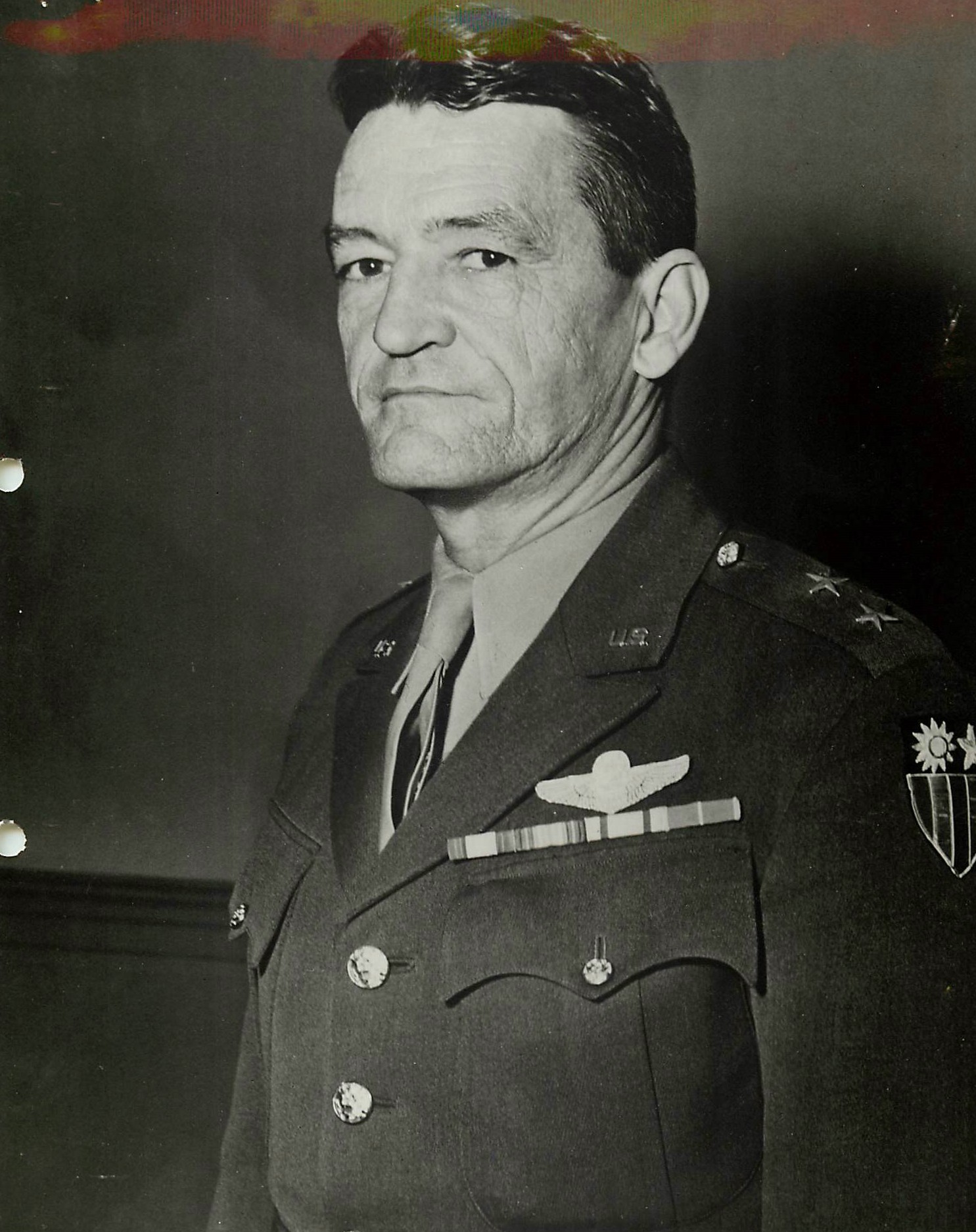
Portrait of Claire Chennault
A Fighter Doctrine Built From What Actually Worked
The US Army Air Corps forced Claire Chennault into early retirement in the 1930s for pushing fighter tactics its doctrine had no room for — he argued, against the prevailing orthodoxy that bombers would always get through, that fighters could still win air combat if flown to their strengths rather than into a conventional dogfight. Rather than abandon the idea, he went to China as a paid air advisor, and when war with Japan broke out, he built the American Volunteer Group — the "Flying Tigers" — around exactly the tactics his own country's air force had dismissed.
He is ESTP: dominant extraverted sensing that read the real, physical performance envelope of the aircraft in front of him rather than trusting theoretical doctrine, paired with auxiliary introverted thinking that built a hard, internally consistent tactical logic — dive, strike, disengage, never turn-fight a more maneuverable Japanese fighter — from that direct observation.
Chennault is the ESTP tactician: dominant Se reading exactly what a P-40 could and couldn't do in the air over Burma and China, auxiliary Ti turning that into a hit-and-run doctrine no textbook had sanctioned.
The result was a kill ratio wildly disproportionate to the AVG's modest numbers and outdated aircraft — a doctrine built entirely from lived combat observation rather than institutional theory, vindicating in the skies over China exactly the argument that had gotten him pushed out of the American military in the first place.
Fly the Plane You Actually Have
Chennault's dominant extraverted sensing showed in his refusal to fly the P-40 the way conventional fighter doctrine said to fly any fighter — turning to meet an attacker head-on. He had watched, firsthand and repeatedly, how the more maneuverable Japanese Zero could out-turn anything the Allies flew, and he built his entire tactical system around what he could see the P-40 actually did well: diving speed and heavy armament, exploited in a single fast pass followed by an immediate disengagement rather than a sustained dogfight.
This was tactics built from direct, embodied combat observation rather than an office in Washington — Chennault had watched Chinese and Japanese air combat up close as an advisor for years before the AVG ever existed, and his doctrine reflects exactly that hands-on, present-tense study of what worked in the air over China, not an abstract theory imported from elsewhere.
A Doctrine He Would Defend Against the Whole Air Corps
Auxiliary introverted thinking gave Chennault's tactical insight its internal rigor and its stubbornness. He did not simply notice that dive-and-strike worked better than dogfighting — he built a closed, defensible tactical framework around it, formation flying paired around mutual protection, precise altitude and speed calculations for when a dive attack would and wouldn't succeed, and he defended that framework against an American military establishment that had already dismissed him once for saying the same thing.
That same rigor made him difficult for later superiors to manage once he was recalled to active duty and given direct command of US air forces in China — he argued forcefully, and often correctly on narrow tactical grounds, for an air-power-first strategy in the theater that put him at odds with Stilwell's ground-forces priorities, each convinced his own closely reasoned logic was the one the war actually required.
Selling a Ragtag Squadron Its Own Legend
Tertiary extraverted feeling shows in Chennault's genuine gift for morale and public image — the Flying Tigers' shark-mouthed P-40s became one of the most recognizable emblems of the entire Pacific War, a piece of visual branding Chennault understood the value of as clearly as he understood dive tactics. He built esprit de corps in a mercenary volunteer outfit with no formal national backing, no guaranteed pay structure comparable to regular service, and a genuine risk of combat death, largely by making the men feel part of something the American and Chinese publics alike found thrilling.
He was a natural, outward-facing promoter of his own unit and his own cause — lobbying journalists, cultivating a public reputation, and courting Chiang Kai-shek's favor as an alternative to the ground-forces reform agenda Stilwell represented — using charisma and public sentiment as a lever in ways a quieter, more solitary ISTP would never have attempted.
Why ESTP Over ISTP
Why not ISTP?
An ISTP refines its tactical insight quietly and lets results speak for themselves, avoiding the spotlight. Chennault did the opposite: he lobbied Washington and the American press directly for support, courted Chiang Kai-shek personally as a patron, and built the Flying Tigers' public legend as deliberately as he built their tactics. That outward advocacy and morale-building — an extroverted, forceful case for his own approach — is Se-Fe in the world, not a solitary technician's quiet competence.
Chennault needed an audience for his vindication, not just a result. He had been publicly dismissed by his own air force, and the entire arc of his career in China reads as a man determined to prove that dismissal wrong in the most visible way possible — a very different psychological need than the quiet, internally satisfied competence of an ISTP.
Connected Figures
Further Reading
- Way of a Fighter — Claire Lee ChennaultChennault's own memoir of his tactical development and the Flying Tigers.
- Flying Tigers: Claire Chennault and His American Volunteers, 1941–1942 — Daniel FordA detailed operational history of the AVG's formation and combat record.
- The Stilwell Papers — Joseph Stilwell (ed. Theodore White)Offers the rival perspective on the Stilwell-Chennault strategic dispute.
