 Historical Figure MBTI
#992 · 7-21-26 · The Pacific War
Soong Mei-ling
Madame Chiang Kai-shek · Diplomat · Voice to Washington
1898 — 2003
6 min read
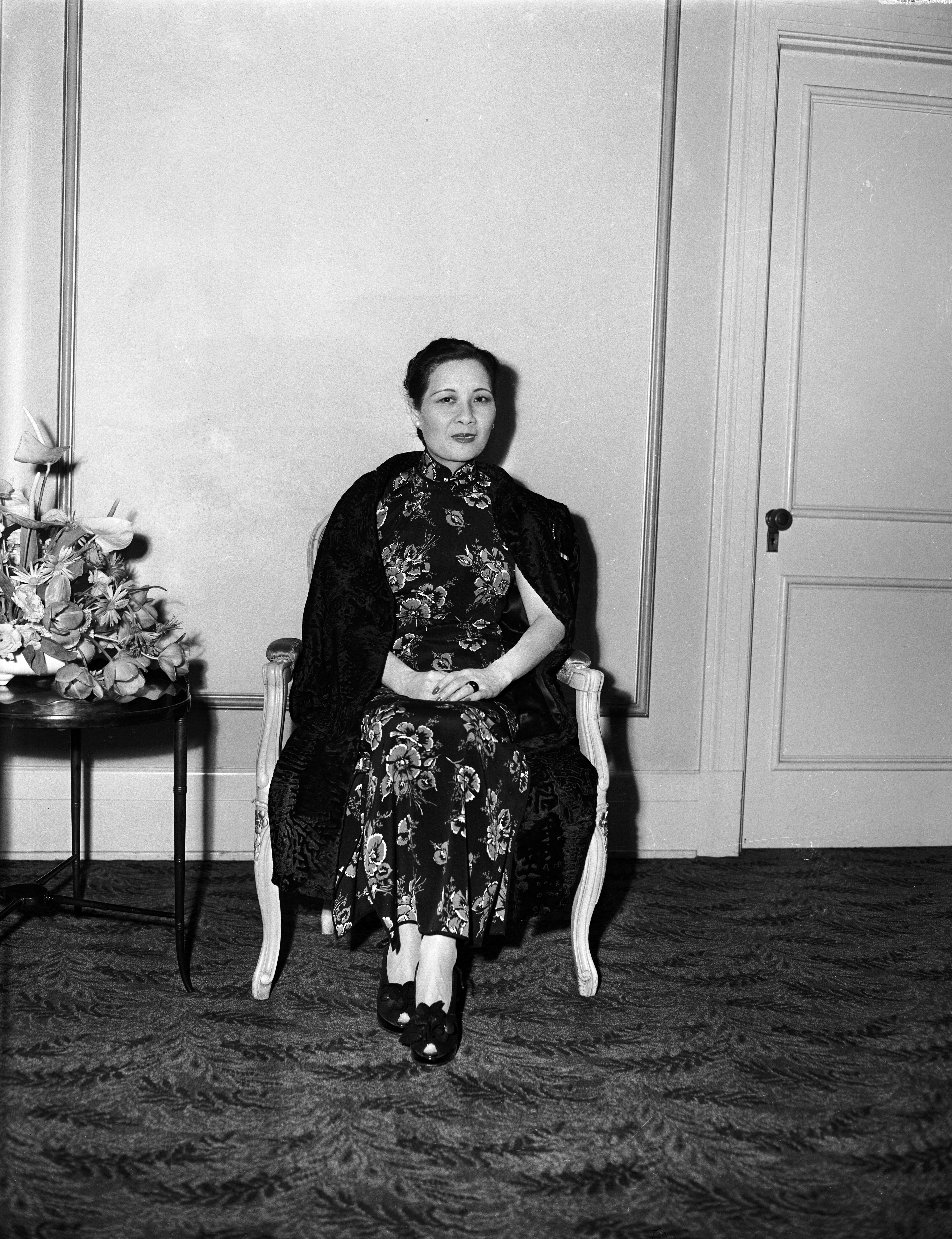
Portrait of Soong Mei-ling
The Diplomat Her Husband's Army Could Not Produce
In February 1943, Soong Mei-ling stood before a joint session of the United States Congress and delivered an address, entirely in fluent, American-accented English, that reduced hardened legislators to a standing ovation and reframed China's war against Japan as a cause Americans owed their sympathy and their material aid — the first Chinese national and only the second woman ever to address Congress in that setting. It was not an accident of charm. It was the calculated culmination of a campaign she had been running for years: to be, in effect, Nationalist China's most effective weapon in Washington, more persuasive than any general and more strategically minded than most diplomats.
She is ENTJ, and the tour of Washington in 1943 is Te-Ni working exactly as the type prescribes: dominant extraverted thinking identifying precisely what outcome was needed — American arms, American money, American public sympathy for a war competing for attention with Europe and the Pacific — and auxiliary introverted intuition reading, with uncanny accuracy, exactly which emotional and political levers in the American public and Congress would produce it.
Soong Mei-ling is the ENTJ operator: dominant Te aiming directly at a concrete strategic outcome, auxiliary Ni reading the American political moment well enough to get it.
She operated, deliberately, above and around both her own husband's formal diplomatic channels and Joseph Stilwell's blunter, more confrontational approach — often more effective at moving Washington than either of them, and fully aware of it.
Aid Secured, One Calculated Appeal at a Time
Dominant extraverted thinking gave Soong Mei-ling an unshakeable clarity about the concrete goal at hand — American Lend-Lease aid, American public sympathy, and eventually American pressure on the Stilwell command dispute — and a willingness to pursue it through whatever channel worked best: personal charm in a Congressional chamber, hard bargaining in private meetings with Roosevelt and his cabinet, or a sustained American press and lecture tour that built a public constituency for China in a way the Nationalist government's formal embassy never managed.
She was, functionally, running an independent diplomatic operation parallel to her husband's, one built around clear, results-oriented objectives rather than protocol — and one that repeatedly out-produced official channels, to the point that American officials often found her a more effective interlocutor on Chinese policy than either Chiang or his ambassadors.
Her later, unsuccessful lobbying campaign against normalized US relations with Communist China, sustained for decades after her husband's government retreated to Taiwan, shows the same Te instinct applied over a much longer horizon — an objective identified and pursued relentlessly, long after most of her contemporaries had accepted defeat.
Reading the Room a Continent Away
Auxiliary introverted intuition is what let Soong Mei-ling see, more clearly than most of the Nationalist government, exactly how American sympathy could be won: not through abstract appeals to alliance or ideology, but through a personal, humanizing narrative — a Wellesley-educated, Christian, fluently American-voiced woman standing in for a China that most Americans knew only through newsreels. She built and controlled that image with real strategic foresight, understanding precisely which version of herself would land with a wartime American public.
It also showed in her longer-range political judgment: she grasped early that the Communist-Nationalist truce was temporary and that the postwar order in Asia would be shaped as much by American domestic politics as by battlefield outcomes in China — a foresight that drove her sustained, decades-long engagement with American policy circles long after the war itself had ended.
Command of the Room, Not Just the Argument
Tertiary extraverted sensing gave Soong Mei-ling her formidable command of presence — the poise, the physical bearing, the immaculate self-presentation that made her Congressional address as visually persuasive as it was rhetorically effective. She understood the performative dimension of politics as concretely as its substance, and used it deliberately: her wardrobe, her manner, her fluent command of an American idiom, all calibrated to project confidence and familiarity to an audience she needed to win over in the room, not just on paper.
It gave her diplomacy an immediacy her husband's formal, hierarchical style lacked — she could work a room of American senators the way Chiang could never have, converting his cause into a personal, present-tense appeal.
A Cause She Never Stopped Believing Was Hers
Inferior introverted feeling surfaces in Soong Mei-ling's unwavering, decades-long personal identification with the Nationalist cause — she continued lobbying for it long after it had lost the Chinese mainland, long after most American policymakers had moved on, and long after her own political relevance had faded, out of what reads as a genuine, privately held conviction rather than continued strategic calculation. That stubborn personal loyalty to a lost cause, sustained well past the point of strategic usefulness, is Fi breaking through a personality otherwise built around calculated external results.
It is a smaller, quieter thread beneath the dominant Te-Ni operator — but a real one, visible in just how long after 1949 she kept fighting a battle that Te alone would have told her was already lost.
Why ENTJ Over ENFJ
Why not ENFJ?
An ENFJ builds influence primarily by cultivating rapport and emotional connection as an end in itself. Soong Mei-ling's charm was never the goal — it was the instrument for a clearly defined external objective: aid, arms, and political sympathy for a specific strategic purpose. Every warm public appearance served a calculated Te aim, and she abandoned diplomacy the instant a more direct route to the same outcome opened up, which is Te-Ni logic, not Fe-Si relationship-building.
The distinction is visible in how coldly transactional she could be behind the public warmth: American officials who worked with her directly often noted a hard, unsentimental negotiator beneath the celebrated charm — precisely what dominant Te with auxiliary Ni, rather than dominant Fe, would produce.
Connected Figures
Further Reading
- Madame Chiang Kai-shek: China's Eternal First Lady — Laura Tyson LiThe standard English-language biography, drawing on her full public career.
- The Soong Dynasty — Sterling SeagraveA wider study of the powerful Soong family and its political networks.
- Generalissimo: Chiang Kai-shek and the Struggle for Modern China — Jay TaylorCovers her partnership with Chiang and her wartime diplomatic role.
- Forgotten Ally: China's World War II, 1937–1945 — Rana MitterSituates her Washington campaign within China's broader wartime diplomacy.
