 Historical Figure MBTI
#990 · 7-21-26 · The Pacific War
Joseph Stilwell
General · "Vinegar Joe" · China-Burma-India Theater
1883 — 1946
6 min read
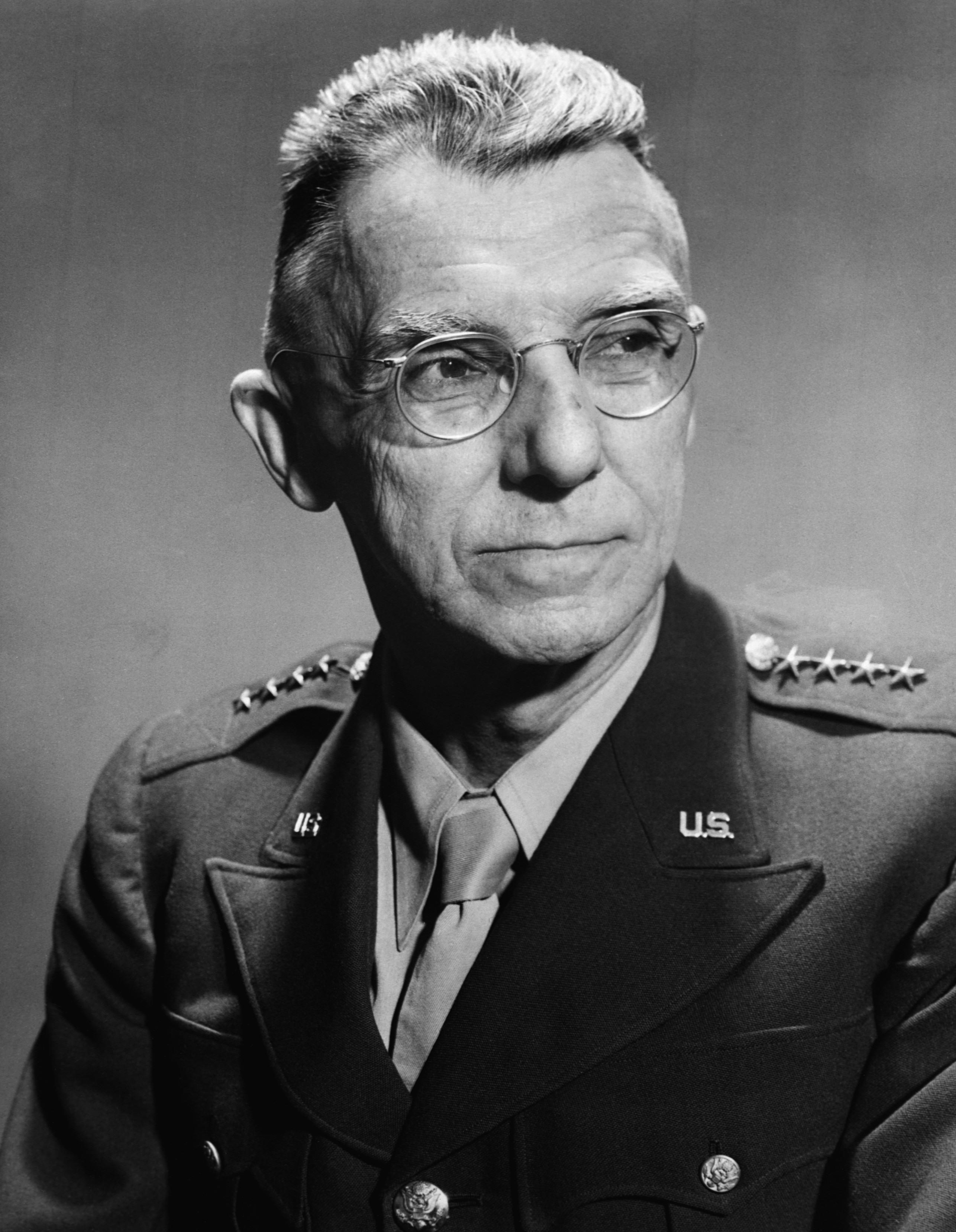
Portrait of Joseph Stilwell
A General Allergic to Pretense, and to His Own Ally
Joseph Stilwell earned the nickname "Vinegar Joe" honestly. He was profane, blunt to the point of tactlessness, openly contemptuous of ceremony, and constitutionally incapable of the diplomatic softening that his job — chief of staff to Generalissimo Chiang Kai-shek, commander of American forces in the China-Burma-India theater — desperately required. When Burma fell to the Japanese in 1942, Stilwell refused evacuation by air and instead walked out with a mixed column of soldiers and refugees, later telling reporters with characteristic bluntness: "I claim we got a hell of a beating. We got run out of Burma and it is humiliating as hell. I think we ought to find out what caused it, go back and retake it."
That sentence is Stilwell in miniature: no self-protective spin, no diplomatic hedging, just a flat assessment of failure and an immediate, forceful demand to fix it. He is ESTJ — dominant extraverted thinking driving toward concrete, measurable results without patience for anything standing in the way, auxiliary introverted sensing anchoring that drive in exhaustive, hands-on knowledge of how Chinese soldiers were actually trained, fed, and led at the ground level.
Stilwell is the ESTJ disciplinarian: dominant Te demanding results now, auxiliary Si insisting he had seen with his own eyes exactly what needed fixing — and no patience left over for anyone protecting a different agenda.
It made him an outstanding trainer of troops and an almost impossible diplomatic partner — and it set him on an inevitable collision course with Chiang Kai-shek, whose priorities were never quite the ones Stilwell believed the war demanded.
Fight the War, Not the Politics of the War
Dominant extraverted thinking gave Stilwell a single, unwavering metric for everything: does this action help defeat Japan. He judged the Chinese Nationalist army's chronic corruption, its hoarded supplies, its unpaid and starving conscripts, and its generals' reluctance to commit forces to actual combat entirely against that metric, and found the whole system wanting — loudly, and to anyone who would listen, including American officials well above Chiang's head.
He pushed relentlessly to retrain and reequip Chinese divisions along American lines, to merit-promote competent officers over politically connected ones, and to commit Chinese troops to the difficult campaign to reopen the Burma Road rather than hold them in reserve for a future civil war — a campaign he personally led on the ground in 1943 and 1944 with notable tactical success. Every one of these pushes was Te in its most undiluted form: identify the obstacle to the objective, remove it, regardless of whose feelings or political position that offends.
That same directness made him a superb battlefield trainer and an infuriating subordinate to anyone, including Chiang, whose objectives were not identical to his own.
A General Who Walked the Ground Himself
Auxiliary introverted sensing shows in the sheer physical, hands-on nature of Stilwell's command style. He had spent years in China before the war, spoke Chinese, and trusted direct personal observation over reports filtered through staff officers — which is exactly why he refused evacuation from Burma in 1942 and instead marched out with his column, and why he insisted on visiting front-line Chinese units personally during the Burma Road campaign rather than directing it from the rear.
This grounded, experience-based confidence is also what made him so certain in his contempt for Chiang's army as he found it: he had seen the starving, unpaid Chinese conscripts and the hoarded American Lend-Lease supplies with his own eyes, not through a report, and that lived, remembered detail is what made his judgments so blunt and so difficult to argue him out of.
Tactical Flexibility, on His Own Terms
Stilwell's tertiary extraverted intuition shows up in his willingness, within the Burma campaign, to depart from conventional tactics when the ground and the enemy demanded it — coordinating with Merrill's Marauders and Chinese units in irregular jungle operations that owed something to the same unconventional playbook Wingate was writing in the same theater. He was capable of real tactical improvisation, just always in the service of the fixed, non-negotiable Te objective rather than as an end in itself.
It was a narrower, more disciplined intuition than Wingate's — Stilwell generated new tactical options only within the bounds of what he had already decided needed to happen, never questioning the underlying goal itself.
Private Contempt, Rarely Concealed
Stilwell's inferior introverted feeling surfaces as a deeply personal, often intemperate moral judgment that he made little effort to hide — most infamously in his private diaries, where he referred to Chiang Kai-shek repeatedly and contemptuously as "the Peanut," and railed against what he saw as Chiang's cowardice and corruption in language far more personal than professional. The contempt was entirely mutual: Chiang found Stilwell's blunt manner and open contempt for Nationalist officials intolerable, and formally demanded his recall in 1944, which Roosevelt ultimately granted.
This is Fi at its least diplomatic — a private, deeply felt sense of right and wrong about Chiang's conduct of the war that Stilwell allowed to leak into his professional relationships rather than managing it as a dominant Fe type might have, and it cost him the very post from which he might have forced the reforms he believed were essential.
Why ESTJ Over ISTJ
Why not ISTJ?
An ISTJ enforces standards quietly, through consistent example rather than public confrontation. Stilwell did the opposite: he complained loudly to superiors, gave blunt interviews to the press, and made his contempt for Chiang's conduct a matter of open record rather than private frustration. That outward, combative bluntness — publicly demanding change rather than quietly modeling it — is extraverted Te, not introverted Si leading the personality.
The comparison matters because Stilwell is often lumped in with quieter, more procedural American officers of the era. He was not one of them. He was a man who believed the war could be won by force of will and blunt honesty applied without diplomatic filter, and who never learned — or never cared to learn — that in a coalition war, the willingness to say the true thing loudly is not the same as the ability to get it done.
Connected Figures
Further Reading
- The Stilwell Papers — Joseph Stilwell (ed. Theodore White)Stilwell's own wartime diaries, unfiltered and famously blunt about Chiang.
- Stilwell and the American Experience in China, 1911–45 — Barbara W. TuchmanThe definitive Pulitzer Prize-winning biography and study of the CBI theater.
- Burma: The Longest War 1941–45 — Louis AllenTheater history covering Stilwell's Burma Road campaign in detail.
- The China-Burma-India Campaign, 1931–1945 — Don MoserAn accessible overview of the theater's command struggles.
