 Historical Figure MBTI
#988 · 7-21-26 · The Pacific War
William Slim
Field Marshal · Rebuilder of a Beaten Army · Victor of Burma
1891 — 1970
8 min read
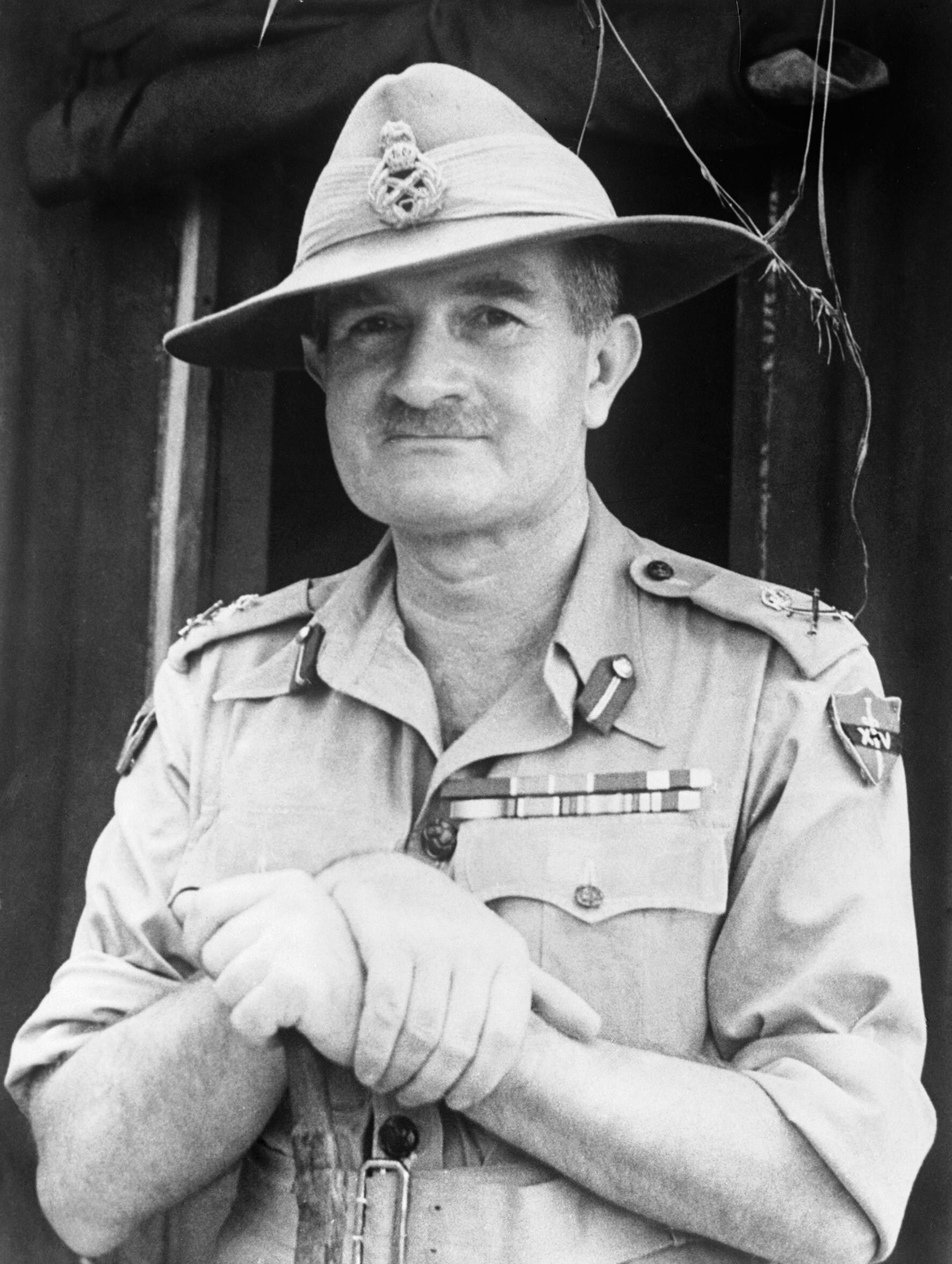
Portrait of Field Marshal Sir William Slim
The General Who Rebuilt an Army From the Ranks Up
In the spring of 1942, the British and Indian forces William Slim commanded were driven out of Burma in what remains the longest retreat in the history of the British Army — nine hundred miles, on foot, through monsoon and jungle, chased the entire way by a Japanese army that had never lost. Most generals who preside over a rout like that are finished. Slim was not. He walked out with his men rather than flying ahead of them, absorbed the humiliation without flinching from it in public, and then spent the better part of two years doing something almost nobody in his position bothers to do properly: he rebuilt the army from the bottom, unit by unit, habit by habit, until it could beat the force that had just humiliated it.
That rebuilding — patient, procedural, unglamorous — is the whole of Slim as a psychological type. He is ISTJ, and almost everything remarkable about him follows from the particular combination of dominant introverted sensing and auxiliary extraverted thinking: a mind that trusts concrete, lived experience over theory, and that turns whatever it has learned into disciplined, repeatable systems. He did not reinvent warfare in Burma. He fixed what was broken — training, jungle craft, malaria discipline, morale, supply — piece by unglamorous piece, and did it so thoroughly that when the Japanese finally attacked again at Imphal and Kohima in 1944, his army held, then broke them, then chased them back across the same ground Slim had once retreated over.
Slim is the ISTJ general: dominant Si turning the humiliation of 1942 into an exhaustive, remembered lesson, and auxiliary Te turning that lesson into an army that could win.
He was also, almost uniquely among senior British commanders of the war, well liked by the men he commanded — not because he flattered them but because he was visibly, unpretentiously one of them: plain-spoken, present at the front, uninterested in the theatrics of command. That, too, is the type. An ISTJ does not perform leadership. He does it, quietly, and lets the results — an army that had been broken, made whole, made victorious — speak for him.
Every Lesson of the Retreat, Filed and Applied
Dominant introverted sensing is the faculty of remembering concrete experience precisely and comparing the present against it — and Slim's entire post-1942 career is that faculty at work on an army-wide scale. He did not treat the retreat from Burma as a wound to be forgotten. He treated it as data: which units broke and why, which officers held their men together and which didn't, what jungle diseases killed more soldiers than Japanese bullets did, what training the British and Indian army had never given its men that the Japanese had drilled into theirs. He absorbed all of it, in exhaustive, personal detail, and then set about correcting each deficiency in turn.
The result was a training regime — jungle warfare schools, malaria discipline that cut sickness rates dramatically, realistic exercises that simulated the actual conditions of Burma rather than the conditions of a parade ground — built entirely from remembered specifics rather than abstract doctrine. This is Si in its purest institutional form: not nostalgia, but a rigorous fidelity to what has actually been lived through, converted into procedure so the same mistakes cannot recur.
It showed, too, in his caution about repeating past errors of overextension. At Imphal and Kohima, Slim's plan was to let the Japanese exhaust themselves attacking prepared positions rather than meet them in the kind of headlong, supply-starved advance that had cost the British so dearly before — a plan built directly out of remembering, in granular detail, exactly how the earlier campaign had gone wrong.
An Army Turned Into a Working Machine
Auxiliary extraverted thinking is what took Slim's remembered lessons and made them operational — organized, measurable, enforced. He restructured supply lines so that an army fighting deep in jungle terrain could actually be fed and resupplied by air when roads failed, a logistical innovation that made the eventual Burma campaign possible at all. He pushed relentlessly for standardized jungle training across every unit under his command, not as a suggestion but as a requirement, because Te does not tolerate uneven execution of a plan once the plan has been set.
He was also, notably, willing to strip away rank privilege that got in the way of results — insisting officers eat the same rations and endure the same conditions as their men, because a functioning fighting force, in Te's calculus, is worth more than the comfort of hierarchy. This is efficiency in service of a clearly defined external goal: an army that works, that holds ground, that wins battles it has no business winning against a numerically comparable and previously dominant enemy.
The victory at Imphal and Kohima in 1944, followed by the reconquest of Burma, was the payoff of that machine — built over two years of unglamorous administrative labor that most histories skip past in favor of the battles themselves, but that Slim himself would have said was the actual work.
A Private Loyalty to the Men He Commanded
Slim's tertiary introverted feeling shows up not in public sentiment — he was not a demonstrative man — but in a quiet, deeply held personal loyalty to the ordinary soldiers under him, expressed through action rather than rhetoric. He insisted on visiting front-line units personally, remembered individual soldiers, and made a point of ensuring that the "Forgotten Army," as it called itself, understood that its commander had not, in fact, forgotten it. This mattered enormously to morale in a theater that received a fraction of the press attention and resources of the war in Europe.
That private conviction — that these men deserved better than they were getting from London and deserved a commander who would say so on their behalf — occasionally put him at odds with superiors more concerned with the Western theater. He held the line on it anyway, in his characteristically understated way, without the public dramatics an ENFP or ENTJ might have brought to the same conviction.
Flashes of Improvisation, Kept on a Short Leash
Slim's inferior extraverted intuition surfaces in the tactical surprises he was capable of springing — the decision to let the Japanese commit fully to attacking Imphal rather than contesting every mile forward, or the unglamorous but inspired use of air supply to sustain positions that conventional logistics said were untenable. These were real departures from convention, but they came dressed as calculated risk rather than open-ended experimentation, and Slim relied on subordinates like Wingate to supply the truly radical unconventional thinking that his own temperament, oriented toward tested method, was less inclined to generate on its own.
It is telling that Slim tolerated and made use of Wingate's wilder Chindit operations without ever adopting Wingate's freewheeling style himself — a dominant-Si type recognizing the value of a possibility-generating counterpart while remaining, at his own core, a man who trusted what had already been proven to work.
Why ISTJ Over ESTJ
Why not ESTJ?
An ESTJ leads outward first — issuing decisions, driving momentum, projecting command in the room. Slim's record shows the opposite emphasis: long stretches of quiet, internal absorption of lessons from the 1942 defeat before any public assertion of a plan, and a personal style that was famously self-effacing rather than commanding by force of presence. His authority came from demonstrated competence accumulated privately, not from outward projection — the signature of dominant Si over dominant Te.
The distinction matters because Slim is so often mistaken for a conventional forceful commander simply because he won. He won by the opposite method: absorbing a catastrophic defeat into memory in full, granular detail, and rebuilding from that memory with disciplined, unglamorous consistency until the army he commanded was simply better trained and better supplied than the one that had beaten it. That is Si-Te, not Te-Si — patience and remembered experience first, assertive execution second.
Connected Figures
Further Reading
- Defeat Into Victory — William SlimSlim's own memoir of the Burma campaign — candid about the 1942 defeat and the rebuilding that followed.
- Road of Bones: The Siege of Kohima 1944 — Fergal KeaneA detailed account of the battle that broke the Japanese advance into India.
- Burma: The Longest War 1941–45 — Louis AllenA comprehensive military history of the theater Slim came to dominate.
- Slim, Master of War — Robert LymanA modern biographical study of Slim's generalship and command style.
