 Historical Figure MBTI
#987 · 7-20-26 · The Pacific War
Raizo Tanaka
Rear Admiral · "Tokyo Express" · The Enemy Americans Respected
1892 — 1969
4 min read
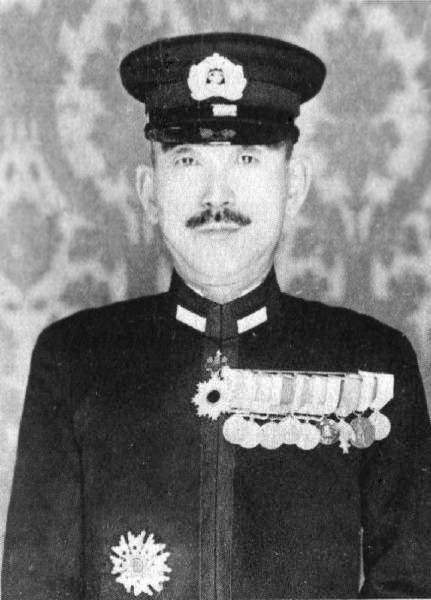
Portrait of Raizo Tanaka
"Tenacious Tanaka"
Every night, for months, Rear Admiral Raizo Tanaka ran his destroyers down the strait the Americans called "the Slot," under constant threat of air attack and naval ambush, to land troops and supplies on a Guadalcanal garrison that was losing the island by daylight. The Americans nicknamed the run the "Tokyo Express" and its commander "Tenacious Tanaka" — a name given in genuine respect. Tanaka's night-combat tactics were sharp enough to inflict real damage on the U.S. Navy even as the broader campaign slipped away from Japan, and his American opponents, who fought him for months, came away regarding him as one of the most skilled destroyer commanders of the war.
That respect matters, because Tanaka's position was close to hopeless almost from the start. He was asked to run an under-resourced, high-casualty resupply mission into a battle Japan was already losing, and he executed it with a precision and professionalism that had nothing to do with the mission's odds. He argued, unsuccessfully, against the resupply strategy itself, then carried it out anyway with total tactical rigor once the order stood.
Tanaka was INTJ in outline — an officer whose dominant Ni let him see the shape of a night battle before it began.
Seeing the Night Battle Before It Started
Introverted intuition gave Tanaka an ability to anticipate how a chaotic, near-invisible night engagement would unfold before the first shot was fired. He developed and refined destroyer tactics specifically suited to darkness and confined waters — torpedo doctrine and formation choices that exploited what he understood, ahead of most of his American counterparts, about how a night action between fast ships would actually play out. At the Battle of Tassafaronga, badly outnumbered, he used exactly that anticipatory read to inflict a lopsided defeat on the American cruiser force sent to stop him.
This was not improvisation in the moment so much as a settled internal model, built and tested across repeated runs, of how the Slot behaved at night — a model precise enough to keep producing results even as the war around it turned hopeless.
Total Professional Execution
Tanaka's auxiliary Te turned his tactical insight into disciplined, repeatable execution. Run after run, he organized his destroyer squadrons with total professional focus — precise timing, efficient loading and unloading of troops and supplies under fire, and a refusal to let the exhausting, thankless nature of the mission degrade its execution. He kept the Tokyo Express running long after most commanders would have let standards slip, treating the operation as a job to be done correctly regardless of how the larger campaign was going.
A Private Objection, Quietly Overruled
Tanaka's tertiary Fi shows up in his private disagreement with the strategy he was ordered to execute. He argued, on principle, that the piecemeal resupply of Guadalcanal was wasting ships and lives for a losing cause, a conviction he held to even as it cost him standing with his superiors. Once overruled, he did not sabotage or half-execute the mission out of resentment — he carried it out with full professionalism, keeping his personal objection separate from his conduct in the field.
The Air Attacks He Couldn't Out-think
Where Tanaka's type was tested hardest was in the immediate, physical vulnerability of daylight — the American air attacks that eventually made the Tokyo Express unsustainable and that no amount of nighttime tactical foresight could fully protect against. His inferior Se meant the answer to that threat was never going to be an in-the-moment improvisation; it was already exhausted by the time the war moved past what his careful, anticipatory planning could offset.
Why INTJ Over ENTJ
Why not ENTJ?
An ENTJ would have pushed his objection to the resupply strategy outward, forcefully, into open confrontation with command. Tanaka's disagreement stayed largely private, expressed and then set aside once the order was given, and his innovations arrived through solitary tactical foresight (Ni) rather than assertive, externally directed argument. He was a quiet strategist, not a commanding presence in the room.
Tanaka over ENTJ comes down to where his conviction lived. Both types could have devised the same night-combat doctrine; only the INTJ would keep his strongest objections to himself and simply out-execute the order he privately doubted.
Connected Figures
Further Reading
- Neptune's Inferno: The U.S. Navy at Guadalcanal — James D. HornfischerCovers the Tokyo Express runs and American respect for Tanaka's tactical skill in detail.
- The Battle of the Tassafaronga — Naval History and Heritage Command (official U.S. Navy history)Primary account of Tanaka's most notable tactical victory.
- Guadalcanal: The Definitive Account of the Landmark Battle — Richard B. FrankComprehensive campaign history covering both sides, including Tanaka's command.
