 Historical Figure MBTI
#991 · 7-21-26 · The Pacific War
Chiang Kai-shek
Generalissimo · Nationalist China · Wartime Ally
1887 — 1975
6 min read
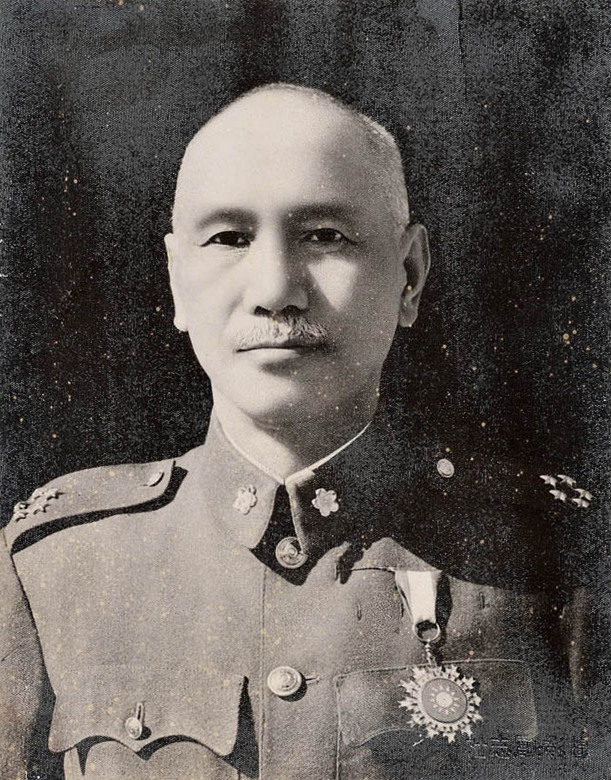
Portrait of Chiang Kai-shek, 1955
Fighting Two Wars at Once, and Husbanding His Strength for Both
Chiang Kai-shek spent the Second World War doing something that looked, to his American allies, like maddening timidity, and looked to Chiang himself like the only sane strategy available: fighting Japan just hard enough to keep China in the war and the aid flowing, while carefully conserving his best divisions, his most loyal officers, and his political capital for the confrontation with Mao Zedong's Communists that he was certain would follow the day Japan was defeated. He was, by nearly every American account, infuriatingly cautious. He was also, on his own terms, playing a longer and more dangerous game than any single campaign against Japan.
That calculation — patient, internally consistent, oriented around preserving assets rather than spending them on a single decisive throw — is the signature of ISTJ. Dominant introverted sensing gave Chiang an exhaustively detailed, rigidly held sense of exactly what forces he had, what each faction within his fractured coalition wanted, and what had happened the last time he trusted an ally or a rival too far. Auxiliary extraverted thinking converted that private ledger into a hierarchical, disciplined command structure that he ran with unyielding formality.
Chiang is the ISTJ strategist: dominant Si hoarding every lesson of a fractured, betrayal-prone political landscape, auxiliary Te organizing the resulting caution into rigid, hierarchical control.
It is precisely this caution that put him on a collision course with his own American chief of staff, Joseph Stilwell, who wanted Chiang's armies thrown fully into the fight against Japan now and had no patience for a strategy built around a war that, from Washington's perspective, hadn't started yet.
Every Betrayal Remembered, Every Asset Counted
Dominant introverted sensing made Chiang a man who never forgot precedent — least of all the precedent of the Chinese Communists, whom the Nationalists had fought a bloody civil war against through the 1930s before an uneasy, incomplete truce during the Japanese invasion. That remembered history is why Chiang treated the wartime alliance with the Communists as a fragile ceasefire rather than genuine cooperation, and why he refused to commit his best-trained, most loyal divisions to campaigns that might leave him weaker relative to Mao when the real reckoning came.
The same faculty made him meticulous, almost obsessive, about which generals and warlords within his own fractured Nationalist coalition could be trusted with troops and which could not — a granular, personally maintained mental ledger of loyalty built from years of coup attempts, defections, and shifting allegiances among China's regional military factions.
It gave his wartime leadership a defensive, conserving character that baffled Americans who judged him purely against the immediate war with Japan, without weighing the war Chiang was simultaneously and privately fighting to survive after it.
Command Through Hierarchy, Not Persuasion
Auxiliary extraverted thinking gave Chiang his instrument for imposing order on China's chaotic wartime coalition of warlords, provincial armies, and Nationalist Party factions: strict hierarchy, personal loyalty tests, and formal command structures that centralized authority in himself as thoroughly as the fractured reality of Nationalist China allowed. He built, and jealously guarded, a personal power base within the army through the Whampoa Military Academy clique of officers loyal directly to him rather than to the broader institution.
This same Te discipline is what made him so resistant to Stilwell's proposed reforms — merit promotion, direct American training of Chinese units, reallocation of Lend-Lease supplies away from hoarding generals — because each of those reforms threatened to weaken the personal-loyalty command structure Chiang had spent two decades building and that he judged, correctly by his own lights, essential to his political survival.
A Private Nationalism Beneath the Formality
Chiang's tertiary introverted feeling appears as a genuine, deeply held personal conviction — reinforced by his conversion to Christianity and his marriage to Soong Mei-ling — that he alone represented the legitimate, unified China, a belief he held onto with quiet, unbending certainty through military defeats, betrayals by regional allies, and constant pressure from Washington to compromise with the Communists for the sake of wartime unity.
That private conviction rarely surfaced as public emotional display; it showed instead in his refusal, again and again, to be talked out of positions he had privately settled on, regardless of how much diplomatic or military pressure Roosevelt's administration or his own generals applied.
Reluctant Improvisation, Under Pressure
Chiang's inferior extraverted intuition emerges mainly under acute pressure — his occasional willingness to play the Americans, the Soviets, and his own regional commanders off one another when circumstances demanded flexibility his instincts otherwise resisted. He could improvise politically when survival required it, as in his shifting, calculated positioning between Washington's demands and his own long-term anti-Communist strategy.
But it was never his comfortable mode. Left to his own preference, Chiang defaulted every time to the conserving, hierarchical caution of dominant Si-Te, treating open-ended improvisation as a last resort rather than a first instinct.
Why ISTJ Over ESTJ
Why not ESTJ?
An ESTJ commits forcefully to a plan of action and drives it outward with visible momentum. Chiang's defining wartime trait was the opposite: prolonged, internal, closely guarded calculation about which forces to commit and which to preserve, often to the frustration of allies who wanted decisive outward action. That inward strategic patience — hoarding strength for a war that had not yet arrived rather than spending it forcefully on the one at hand — is dominant Si-Fi restraint, not dominant Te assertion.
It is exactly this restraint that Stilwell, an outward-driving ESTJ himself, could never forgive or even fully comprehend — two men who shared a function pair in reverse order, one spending strength immediately toward a fixed external goal, the other conserving it against a threat only he was reckoning with in full.
Connected Figures
Further Reading
- Generalissimo: Chiang Kai-shek and the Struggle for Modern China — Jay TaylorThe standard modern biography, drawing on Chiang's own diaries.
- Forgotten Ally: China's World War II, 1937–1945 — Rana MitterReassesses China's wartime role and Chiang's strategic constraints.
- The Stilwell Papers — Joseph Stilwell (ed. Theodore White)The blunt, hostile counterpoint view from Chiang's own chief of staff.
- China's War with Japan, 1937–1945 — Rana MitterBroader context on the war Chiang was fighting alongside his political calculations.
