 Historical Figure MBTI
4 min read
#43 · 2-15-26 · The Roman Republic
Cleopatra VII Philopator
Last Pharaoh of Egypt · Political Strategist · Sovereign in the Shadow of Rome
69 BCE — 30 BCE
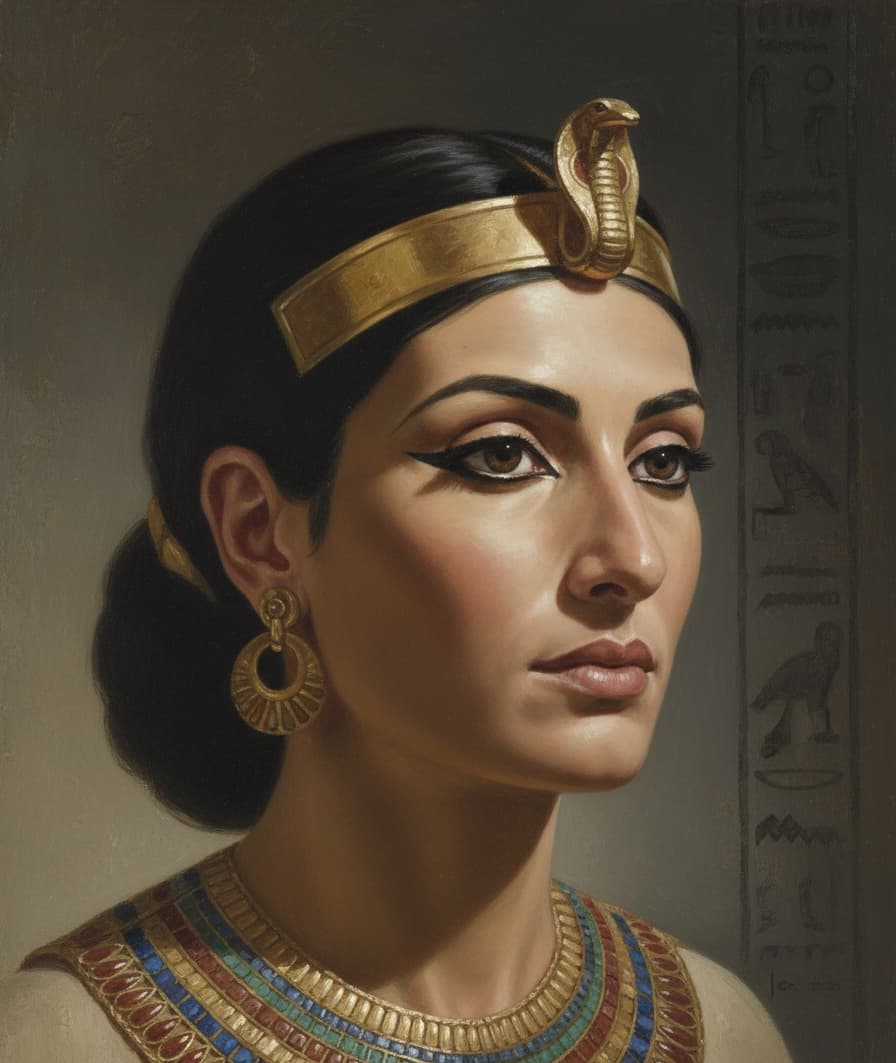
AI-assisted Portrait of Cleopatra VII Philopator.
The Last Pharaoh
Born in 69 BCE into the volatile court of Ptolemaic Egypt, Cleopatra VII Philopator inherited not stability, but fragility. Unlike many of her predecessors, she learned Egyptian in addition to Greek and likely spoke several other languages — positioning herself not merely as a Hellenistic monarch, but as a ruler capable of engaging directly with her subjects.
Her reign was defined by one overriding objective: preserve Egypt's sovereignty in an era when Rome devoured everything around it. She did not inherit power safely. She fought for it — first against her brother, then within Rome's collapsing Republic. Every alliance she made was calculated against that singular goal.
Cleopatra is frequently mistyped as ENFJ — the charismatic enchantress whose power lay in relational influence. But a closer examination reveals she was not primarily leading with emotional alignment. She was leading with executive sovereignty. The evidence points strongly toward ENTJ.
One queen. One collapsing republic. A sovereign who refused to kneel.
Te — Dominant
Cleopatra's instinct was structural. When exiled by her brother Ptolemy XIII, she did not retreat into symbolic protest. She secured access to Julius Caesar directly, negotiated restoration, and re-established her authority through alliance.
Throughout her reign she stabilized Egypt's economy, managed grain exports critical to Rome, controlled naval resources, and structured taxation and financial reserves. She governed actively. Her partnerships with Caesar and later Mark Antony were not romantic accidents. They were strategic consolidations. Te-dominant leaders move toward leverage. Cleopatra consistently did.
Ni — Auxiliary
Cleopatra's decisions reflect long-arc strategic thinking. She understood that Egypt could not defeat Rome militarily. Therefore, survival required integration with Rome's power structure — selectively, advantageously, and without total submission.
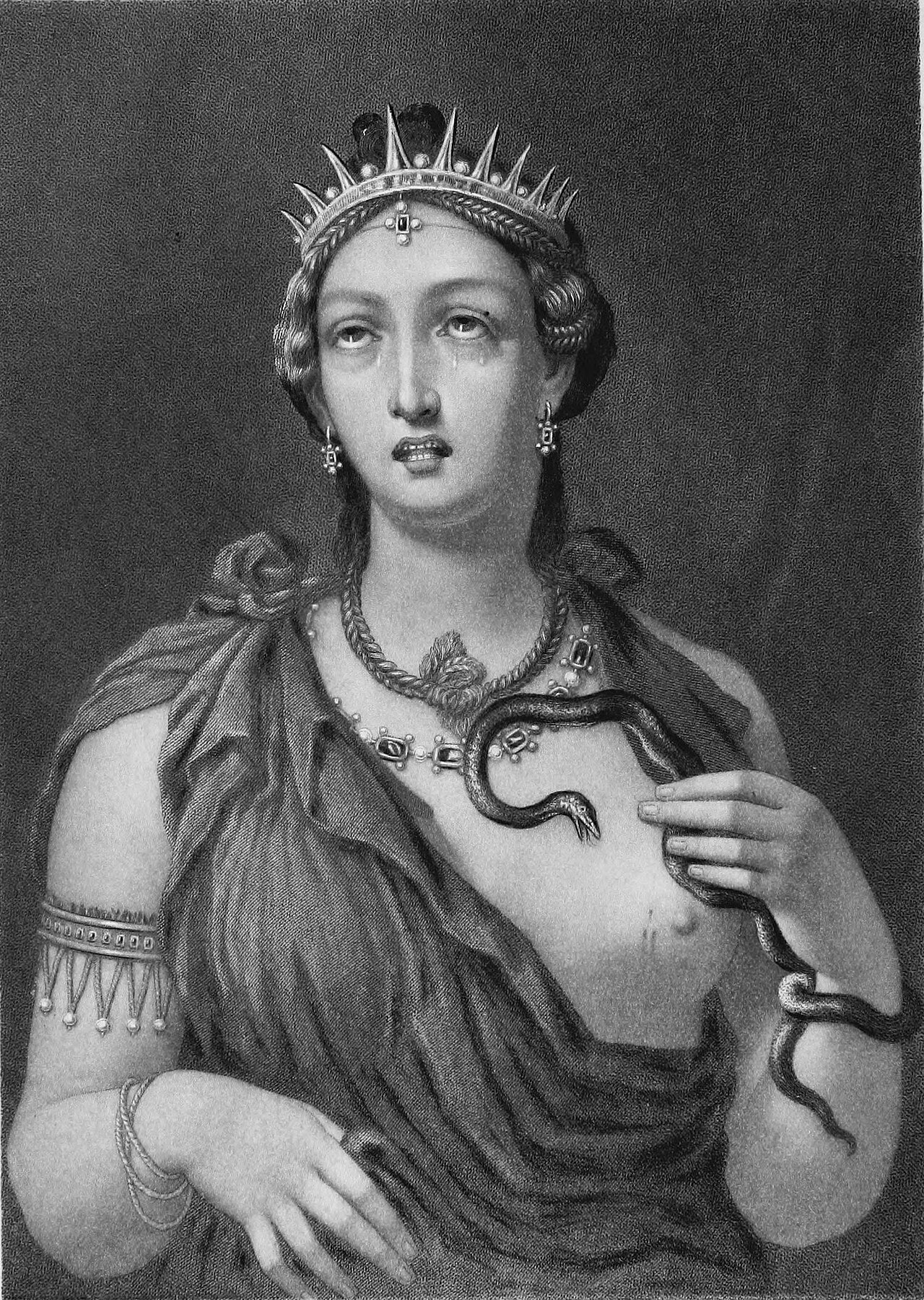
Her relationship with Caesar produced Caesarion, a dynastic statement as much as a child. Her later alignment with Antony was an attempt to counterbalance Augustus and preserve Eastern autonomy. Even her final act — suicide rather than capture — was a sovereign's closing move. She refused to be paraded in Rome as a conquered symbol. Control was maintained until the last decision.
Se — Tertiary
Cleopatra's theatrical displays — the gilded barges, the Dionysian imagery with Antony, the cultivated spectacle — were not uncontrolled indulgence. They were symbolic messaging. She understood presentation as power. Spectacle became a diplomatic tool. This is tertiary Se: deliberate embodiment, not impulsive excess.
Fi — Inferior
Cleopatra does not read as emotionally unguarded. She formed attachments, yes — but always within the hierarchy of state survival. Her identity was not dissolved into love. Her sovereignty remained primary. Her final decision to end her life rather than live in humiliation was not sentimental despair. It was dignity asserted.
Why Not ENFJ?
Why not ENFJ?
Cleopatra is frequently typed as ENFJ because she is remembered as magnetic, persuasive, and emotionally influential. But much of her emotionalized image comes not from neutral biography — it comes from Roman propaganda. After defeating her and Antony, Augustus needed a narrative. Cleopatra became the Eastern temptress, the manipulative queen, the woman who "corrupted" Antony. The ENFJ mistype often unconsciously echoes this framing — interpreting her influence as relational persuasion rather than executive strategy. But Cleopatra did not attempt to harmonize Rome. She chose alliances based on structural leverage and power balance. Her charisma was real — but it functioned as a tool of rule, not as the foundation of her leadership.
The Roman Triangle
With Caesar (ENTJ), the connection feels like strategic parity — two executive minds recognizing mutual advantage. With Antony (ESFP), the relationship shifts in tone: more spectacle, more sensory immersion, more symbolic grandeur.
The triangle is not one of romance alone.
It is one of power types intersecting at the edge of empire.
Connected Figures
Further Reading
- Cleopatra: A Life — Stacy SchiffPulitzer Prize-winning biography that strips away Roman propaganda to recover the queen as administrator and diplomat.
- Cleopatra and Antony — Diana PrestonA narrative account of the final decade — the alliance, the war with Octavian, and the end of an era.
- The Reign of Cleopatra — Stanley BursteinA concise scholarly treatment of her reign in context, with primary sources and historiographical discussion.
- Antony and Cleopatra — Adrian GoldsworthyA dual biography that traces both figures from their parallel worlds toward their fateful intersection.
