 Historical Figure MBTI
#565 · 4-29-26 · The Ottoman Zenith
Constantine XI Palaiologos
Last Emperor of the Romans · Defender of Constantinople · The Marble King
1405 — 1453
7 min read
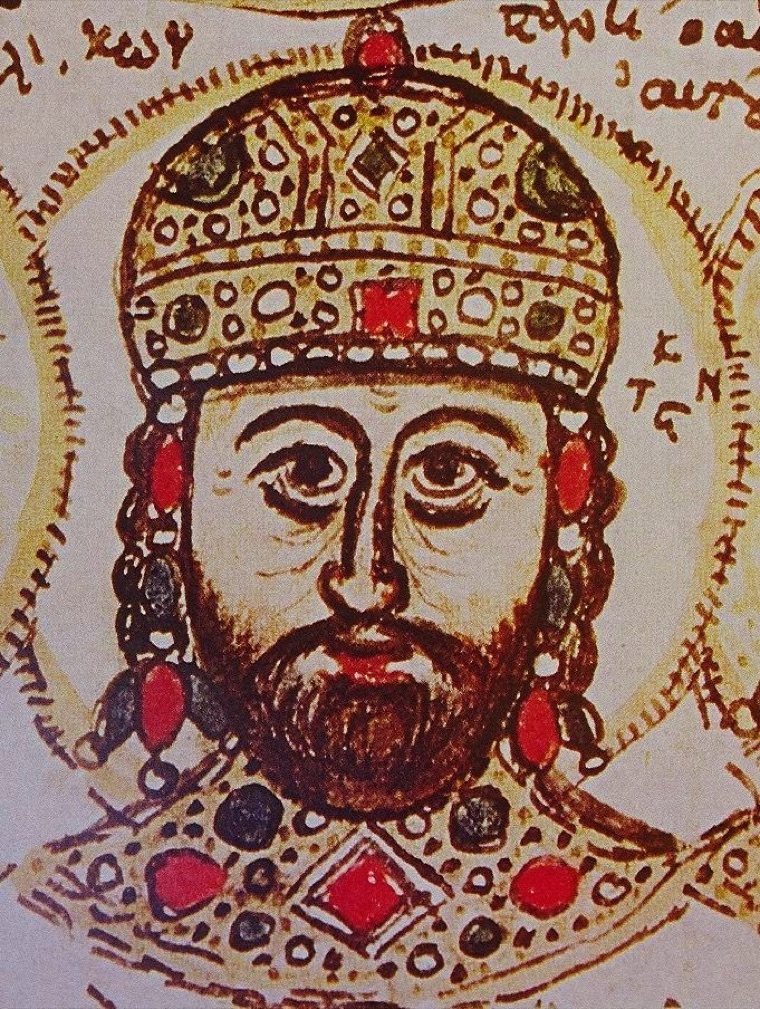
Portrait of Constantine XI Palaiologos
The Emperor Who Took Off the Purple
On the last morning of the Roman Empire, its last emperor did a strange thing. With the walls of Constantinople breached and the Ottoman soldiers pouring through, Constantine XI is said to have stripped off the imperial regalia — the purple, the marks that made him unmistakable — and thrown himself into the fighting to die unrecognized among his men. At the end he wanted nothing the office could give him — only to die as one of them. His body was never certainly identified, and out of that absence grew the legend of the Marble Emperor.
Constantine XI Dragases Palaiologos (1405–1453) was the last of the emperors whose line traced back, in idea if not in fact, to Augustus. He came to the throne in 1449, after a capable apprenticeship as Despot of the Morea — but inherited only a single city ringed by the rising power of Mehmed II. His greatness was not that of a strategist but something quieter: the refusal to save himself. That makes him one of history's purest examples of the ISFP — not the artist the type is usually reduced to, but its rarest and most severe form. He would not leave his city. He would not rule as a vassal. And on the last day, he would not even be an emperor. He would just be a man in the breach.
Constantine is the ISFP stripped to its core: Fi as an unbargainable inner code — die with your people, not above them — fused with the Se courage to make that choice with a sword in your hand. His final act was to become anonymous: authenticity over office, to the death.
The Code He Would Not Break
Fi — dominant
Dominant Fi is a private moral compass answering to no external authority — not to advantage, not to survival, not to the reasoned argument that would let a person off the hook. Mehmed, who did not want a costly siege, sent terms: withdraw and keep his life; rule the Morea as a vassal prince; or simply hand over the city and go. Constantine refused them all — not by calculation, which ran the other way, but because his identity had fused with the city he was sworn to keep. His recorded answer is Fi in its purest register: it was not his to give the city away, for it belonged to all its people, and all of them would rather die than yield it. He named the one thing that was, for him, not negotiable, and made it true with his life.
The same code shows in his greatest failure: to buy Western aid he had backed the hated Union of the churches at Hagia Sophia in 1452, so unpopular his people muttered they would rather see the Sultan's turban than the Cardinal's tiara. When it bought almost no help he did not recant, but died for the very city that had cursed him — Fi does not require to be understood, only to be true to itself.
A Man in the Breach
Se — auxiliary
Auxiliary Se lives in the physical present and meets danger with the body rather than from behind it. Constantine did not experience the siege as a map in a war room; he walked the walls at night, sharing the fear of the men on the Land Walls where the Ottoman cannon — the largest guns yet made — hammered the masonry to rubble, and when the great bombard broke through he worked in the dark to raise a stockade of earth and barrels. He fought with perhaps eight thousand men against Mehmed's eighty thousand and knew the arithmetic; Se needs only to meet the moment, not to believe it can be won. He entrusted the crucial breach to the Genoese soldier Giovanni Giustiniani and held the impossible line for weeks.
And then the last act, Fi and Se welded into a single gesture. When Giustiniani was gravely wounded on the final morning, the defense began to collapse — and it was Constantine, not a general behind the lines, who rode into the failing point, flung off the purple, and charged into the press to die fighting — and was swallowed by it, the reason his body was never found.
The Meaning of a Death
Ni — tertiary
Tertiary Ni is the quieter faculty here — a sense of what a moment will mean once it is over. Constantine was no visionary; he spun no grand designs. But he seems to have understood, with a still and unsentimental clarity, precisely what his death would signify. You can hear it in the speech he gives on the eve of the assault, telling his feuding commanders it was a fine thing to die for one's faith, country, emperor, and people — all four now asked of them at once. It is not the language of a man who thinks he can win, but of one who has fixed on the meaning of losing well. That instinct — to make the final act count, to let the death say what the reign could not — is Ni working faintly beneath the Fi conviction and the Se courage.
The Systems He Could Not Command
Te — inferior
Inferior Te is the ISFP's weakest ground — the machinery of logistics and large-scale organization that a values-driven mind handles poorly. Constantine's one systemic gambit, the Church Union, alienated his own people while failing to conjure the promised armies. Where his rival was strong, he was thin: Mehmed II built a fortress to choke the Bosphorus, cast the monstrous cannon, and had his ships dragged overland on greased logs to bypass the boom across the Golden Horn — engineering at a scale the Byzantine side could not match. Constantine could hold a wall with his body; he could not out-organize an empire.
And yet that weakness is the whole point of why he is remembered. A stronger Te would have judged the city unsavable and cut a deal; Constantine could not, because the part that could have made that calculation was his weakest, and the part that forbade it — the Fi that would not abandon his people — was his strongest.
Why ISFP Over ISTJ or INFJ
Why not ISTJ?
The ISTJ reading is the obvious one and the wrong one. An ISTJ defends the city from duty and precedent — because a Roman emperor does not surrender Rome. But Constantine was offered every honorable exit duty could have accepted, and an ISTJ, freed by a legitimate settlement, takes it. Constantine refused because his identity was inseparable from the city, not because protocol forbade leaving — Fi conviction, not Si duty. The proof is the stripping of the purple: an ISTJ dies as the emperor, in the regalia, at his post; Constantine threw the office away to die as a man.
Why not INFJ?
A martyr's death invites an INFJ reading, but Constantine was no visionary and no prophet. He offered no grand idea of the future and no counsel to a coming age; he was grounded, present, physical — a soldier who walked the walls and died sword in hand in the breach. His courage lived in the body and the moment, in Se, not in the far-seeing abstraction of Ni. He felt his way to the right act; he did not foresee his way to it.
The whole of Constantine reduces to one distinction: he did not defend Constantinople for what it was — an institution, a strategic asset — but for what it meant to him. Every dutiful path led out of the city; only conviction led to the wall. And when even the office threatened to survive the man, he shed that too and chose to be no one — the ISFP in its most absolute form.
Connected Figures
Further Reading
- The Immortal Emperor: The Life and Legend of Constantine Palaiologos, Last Emperor of the Romans — Donald M. NicolThe definitive study of the man and the myth — separates the historical Constantine from the sleeping Marble Emperor of legend.
- The Fall of Constantinople 1453 — Steven RuncimanThe classic narrative of the siege — spare, authoritative, and still the standard account of the city's last days.
- 1453: The Holy War for Constantinople and the Clash of Islam and the West — Roger CrowleyThe most vivid modern retelling — brings the guns, the walls, and the final assault to immediate life.
- The Last Centuries of Byzantium, 1261–1453 — Donald M. NicolThe wider political history of the dying empire Constantine inherited — essential context for how little was left to defend.
