 Historical Figure MBTI
5 min read
#199 · 3-20-26 · Ancient Athens
Democritus
The One Who Saw Atoms in the Void
c. 460 – 370 BCE
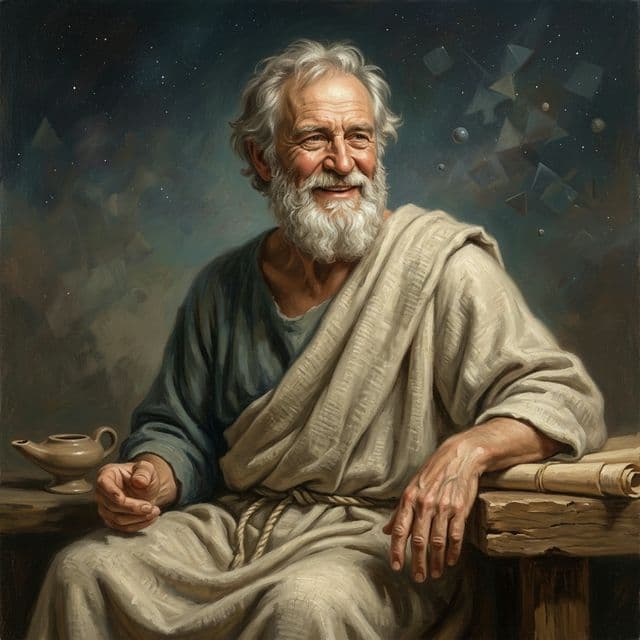
AI-assisted portrait of Democritus
The Architecture of the Unseen
Democritus looked at the world and saw beyond the appearance of things. He posited that everything was composed of tiny, indivisible particles called atoms, moving through an infinite void. This was a radical act of internal logical consistency, bypassing the physical senses to reach a structural truth.
He was known as the "laughing philosopher," reflecting his deep, detached amusement at the absurdity of human struggle against the background of eternal matter. His journey was one of intellectual isolation, seeking the underlying mechanisms of existence through pure thought and systemic mapping.
Historical Context
A contemporary of Socrates, Democritus hailed from Abdera in Thrace. He traveled extensively throughout the ancient world—Egypt, Ethiopia, and India—gathering data and observations that he would later synthesize into his unified atomic theory. While his works are mostly lost, his influence on the development of materialism and scientific inquiry was foundational, though he remained an outsider to the main Athenian schools of his time.
The Psychological Verdict
Democritus reads most clearly as INTP. He was a thinker driven by the internal mapping of systems (Ti) and the pursuit of objective, underlying structures that explain reality through expansive conceptualizing (Ne).
Ti — Dominant
Democritus’s priority was internal consistency. His atomic theory was a masterpiece of pure thought—a logical framework built to explain the whole of existence from the ground up. He did not need to see the invisible; he needed to understand how it *must* logically be. His internal logical model was more real to him than the sensory world.
Ne — Auxiliary
His mind spanned the infinite possible configurations of atoms and the void. He explored ideas across every available discipline—cosmology, biology, ethics—finding connections and possibilities that others missed. He saw the void not as nothingness, but as the field where all potential arises.
Si — Tertiary
His vast travels provided the raw data for his theories. He used his observations of the physical world as a repository of evidence to support his internal models. His "laughing" detachment suggests a certain comfort in the stability of material law, finding a secure place for the self within the eternal cycle of atoms.
Fe — Inferior
Democritus was often socially isolated and struggled with the emotional complexities of human relationship, which he often viewed through a detached lens. His inferior Fe manifested in his eventual preference for a quiet life of study over public acclaim, finding peace in the impersonal truth of the cosmos rather than the shifting values of the city.
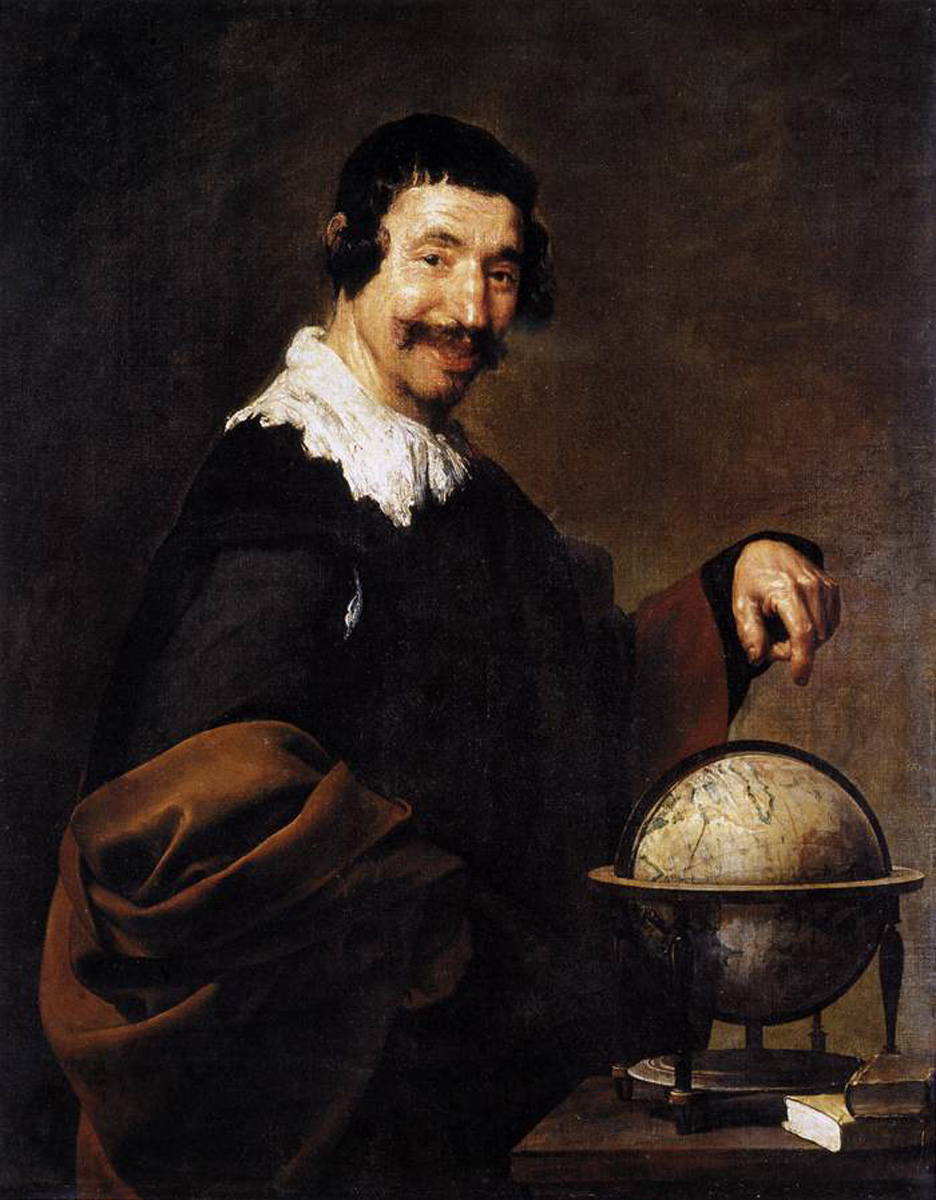
The Void That Turned Out to Be Full
Democritus died around 370 BCE having written more than seventy works — almost none of which survived. We know his atomic theory largely through people who disagreed with it. Aristotle rejected the void and spent considerable energy arguing against it; Plato reportedly disliked Democritus so intensely that some ancient sources claim he wanted his books burned, and notably never quoted him. Epicurus, working a century later, took the atomic framework and used it as the physical foundation for his entire philosophy of mind — the atoms move, they swerve unpredictably, and from that unpredictability he derived free will. Democritus did not live to see this intellectual inheritance, or to see the atomic model confirmed by modern physics roughly 2,300 years after his death. He reportedly spent his later years in voluntary semi-isolation, studying and laughing at human folly. The laughing philosopher, they called him. He had earned it.
Not the one who gathered the pieces. But the one who understood the particle.
Connected Figures
Further Reading
- The Presocratic Philosophers — G. S. Kirk, J. E. Raven & M. SchofieldThe standard scholarly collection and commentary on the fragments, including all surviving Democritean texts.
- The Democritean Atom in Ancient Physics — David FurleyFurley's 'Two Studies in the Greek Atomists' (1967) remains the clearest analysis of how Democritus's atomic theory worked mechanically.
- Greek Atomists and Epicurus — Cyril BaileyA thorough 1928 study tracing the full arc from Leucippus and Democritus through to Epicurus’s appropriation of the theory.
- The Beginnings of Western Science — David C. LindbergPlaces Democritus within the broader sweep of ancient natural philosophy and its transmission to the medieval and modern worlds.
