 Historical Figure MBTI
5 min read
#198 · 3-20-26 · Ancient Athens
Epicurus
The Philosopher of the Garden
341 – 270 BCE
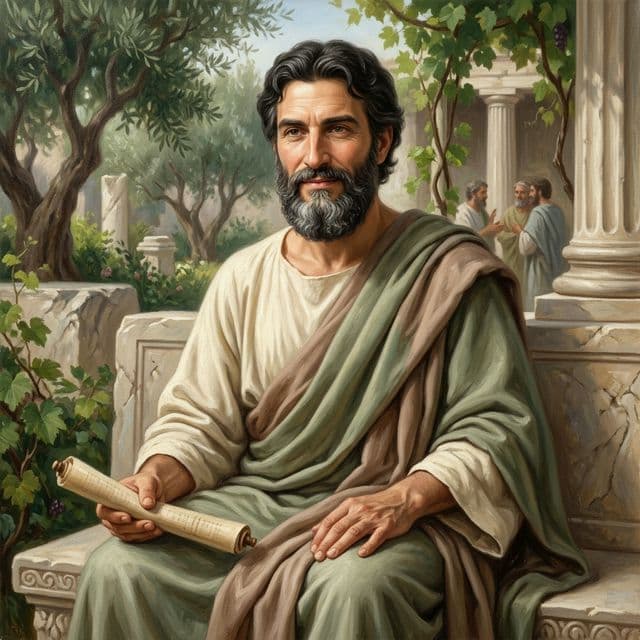
AI-assisted portrait of Epicurus
The Architecture of Tranquility
Epicurus did not seek the agora or the court. He sought the garden. In his school outside Athens, he retreated from the noise of ambition to cultivate a life centered on ataraxia—the absence of pain and the presence of inner peace. His journey was a quiet revolution against the external stresses of a turbulent age.
His philosophy was an internal refuge, prioritizing the quiet alignment of self over the loud demands of the state. He didn't want to conquer the world; he wanted to survive it with his soul and his integrity intact, defining his own parameters for a good life.
Historical Context
Epicurus lived during the early Hellenistic period, a time of immense political change as Alexander’s empire was divided. While other schools like the Stoics sought to engage with the world, Epicurus established "The Garden," a community that welcomed all—including women and slaves—to live in philosophical seclusion. His materialist view of atoms and his rejection of divine intervention offered a radical path to individual freedom.
The Psychological Verdict
Epicurus reads most clearly as INFP. He was guided by a deeply personal and internal value system (Fi), prioritizing subjective well-being and authenticity over external structures.
Fi — Dominant
At the core of Epicureanism is the individual's inner experience. Epicurus focused on personal peace as the highest good, rejecting the external validations of fame or power. His philosophy is a private alignment of values, where the individual defines their own standard of tranquility, independent of societal consensus.
Ne — Auxiliary
Despite his retreat, Epicurus was a profoundly creative thinker, imagining an atomic universe where the gods were indifferent and possibility was everywhere. He explored alternate ways of living, constantly imagining how the self could be preserved in different societal configurations.
Si — Tertiary
His retreat to the Garden was an exercise in tertiary Si—creating a stable, predictable, and sensory-soothing environment. He valued the consistency of friendship and the simple comforts of a modest life, using these physical stabilities to support his higher philosophical aims.
Te — Inferior
Epicurus fundamentally rejected the external, hierarchical systems of Te (government, military, law). His "inferior" Te manifested in the careful organization of the Garden—a small, manageable system that protected the individual’s subjective freedom from the overwhelming complexity of the world at large.
The Garden and What Grew There
Epicurus founded his school in Athens around 307 BCE, a few blocks from where Plato’s Academy and Aristotle’s Lyceum had already staked their territory. He bought a garden. He invited women and slaves as well as free men — a radical act in context. He built his philosophy explicitly in opposition to Democritus’s cold mechanism: yes, atoms, yes, void — but from that he derived not indifference but pleasure, friendship, and the relief of understanding your own mortality. Theophrastus was teaching the Peripatetic curriculum nearby; the two schools were neighbors and rivals. Epicurus survived most of them, living to 270 BCE, dying of kidney stones with, reportedly, great equanimity. His letters say he was in pain but at peace. The Stoics who came after him found the philosophy too comfortable; the Christians who came still later found it too godless. Neither could quite erase it. It keeps coming back.
Not the one who mastered the city. But the one who made a garden where the city didn't matter.
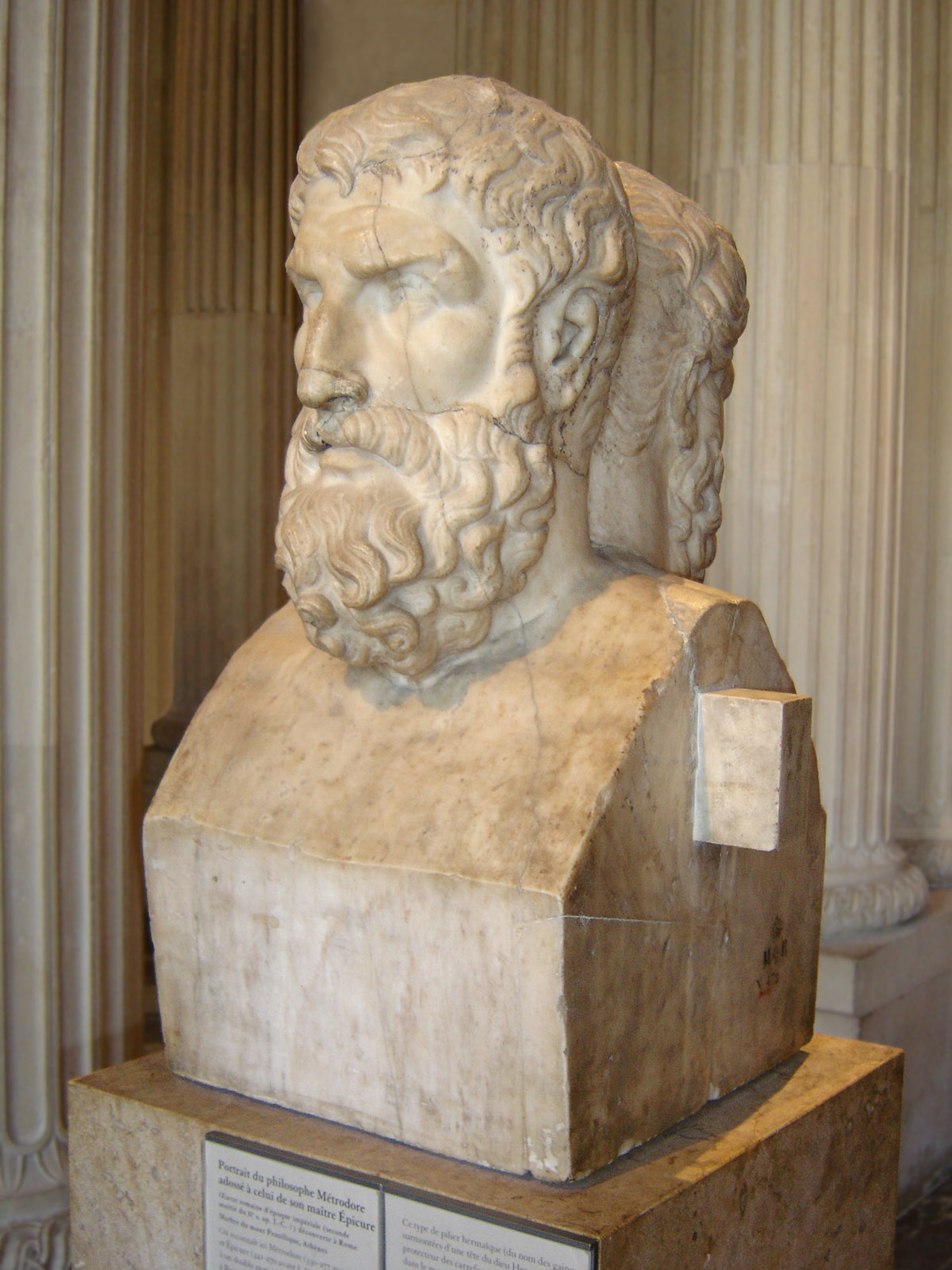
Connected Figures
Further Reading
- Epicurus: An Introduction — John RistA rigorous philosophical introduction to Epicurean ethics, physics, and epistemology.
- The Swerve: How the World Became Modern — Stephen GreenblattTraces Lucretius's Epicurean poem De Rerum Natura and its rediscovery — the best popular account of Epicureanism's long afterlife.
- The Epicurus Reader: Selected Writings and Testimonia — Brad Inwood and L. P. Gerson (trans.)Primary sources: letters, principal doctrines, and fragments in accessible translation.
- The Hellenistic Philosophers (Vol. 1) — A. A. Long and D. N. SedleyThe standard scholarly sourcebook placing Epicureanism alongside Stoicism and Skepticism in their historical context.
