 Historical Figure MBTI
#1189 · 8-30-26 · The Three Kingdoms
Deng Ai
The General Who Crossed the Impossible Mountains · Conqueror of Shu · Undone by the Jealousy of Rivals
197 — 264
7 min read
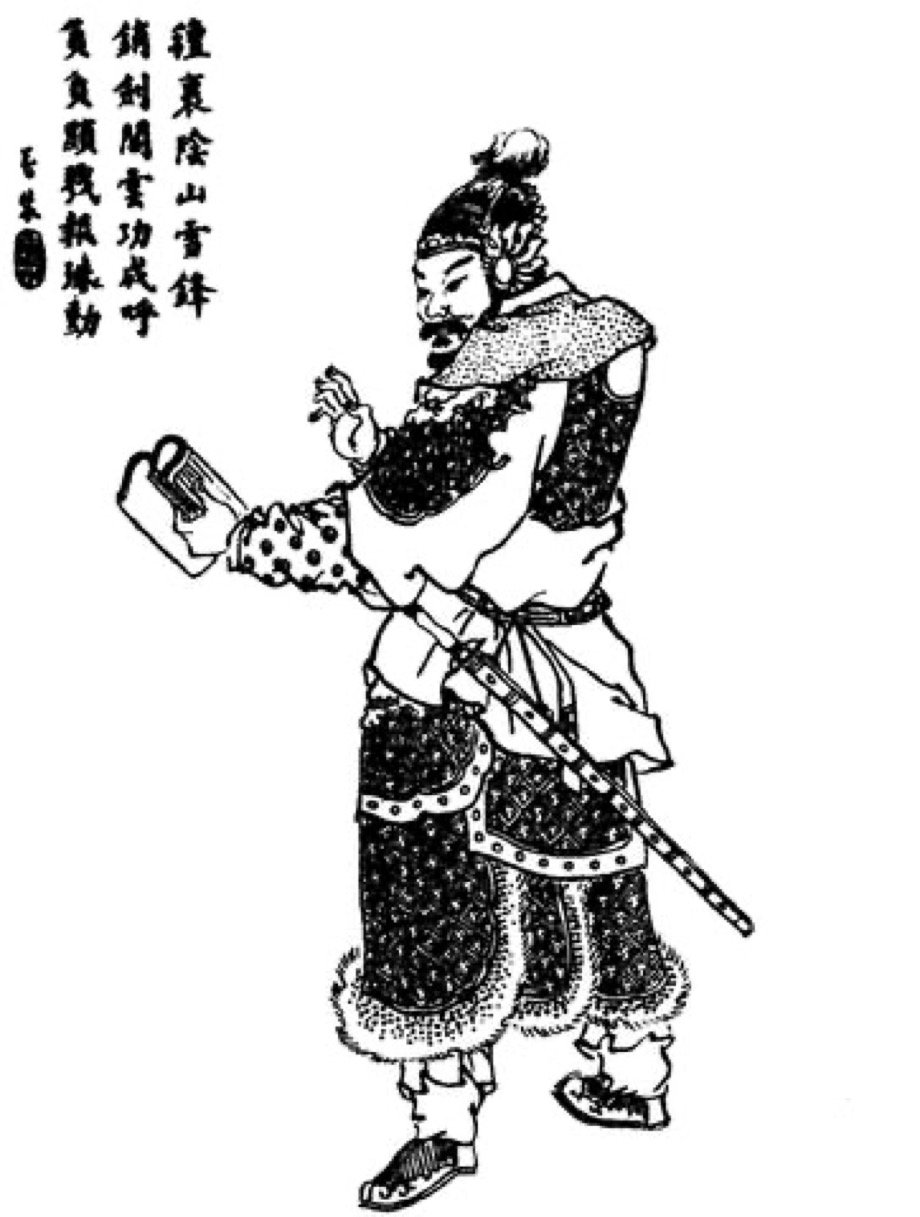
Portrait of Deng Ai
The Clerk Who Read a Mountain and Saw a Road
Deng Ai stammered when he spoke. He had grown up poor, herding cattle and working minor clerical posts, and for years his only visible distinction was an odd habit: whenever he crossed unfamiliar terrain, he stopped to survey it — measuring distances, sketching camp sites and supply lines into hills that, to everyone else, were simply scenery on the way somewhere else. It looked like an eccentricity. It was, in fact, the entire method by which an unconnected, stuttering farmer's son rose to command Wei's western frontier: not through birth, patronage, or oratory, but through the accumulated, demonstrated fact that he read physical ground better than anyone else alive.
That method produced, in 263, the single most audacious stroke of the Three Kingdoms era. With Zhong Hui's main Wei army stalled outside the fortress pass of Jiange, unable to force its way into Shu, Deng Ai proposed something closer to a dare than a plan: a roughly seven-hundred-li march through the Yinping trail, mountain country judged impassable, where his men would wrap themselves in felt and lower themselves down cliff faces because there was no path to walk. It worked. His starved, exhausted column emerged in Shu's undefended rear, broke the scratch force sent to stop him at Mianzhu, and reached Chengdu before the Shu court had finished arguing about what was happening. Emperor Liu Shan surrendered almost without a fight. A kingdom ended because one man had looked at a mountain range and calculated, correctly, that it could be crossed.
Deng Ai was an ISTP, and the Yinping crossing is dominant Ti at the scale of a kingdom — a private, exacting logic of terrain, tested silently for years, then executed once, without asking permission to be believed.
A Private Arithmetic of Slopes and Supply Lines
Deng Ai's early career reads less like a soldier's résumé than an engineer's. Sent to assess agricultural land and canal routes on the frontier, he produced detailed proposals on garrison farming and water transport that impressed no one at court but worked exactly as calculated when tried. This was Ti in its rawest form — not theorizing for its own sake, but building an internal, self-verifying model of how physical systems actually behaved, then trusting that model over the opinions of louder men. He did not need consensus. He needed the numbers to close.
That same private arithmetic is what let him see the Yinping trail as a route rather than a wall. Where Zhong Hui's staff looked at the terrain reports and saw confirmation that Jiange had to be taken by force, Deng Ai ran his own separate calculation — distance, grade, minimum survivable rations, the psychological shock of an army appearing where none was thought possible — and reached a different, harder-to-defend answer. He did not argue Zhong Hui out of his plan. He simply took his own men and proved the calculation correct in the field, which is the only kind of argument a dominant Ti thinker fully trusts.
Down the Cliff, Wrapped in Felt
Calculation alone does not cross seven hundred li of trackless mountain. Someone still has to go first, on foot, with dwindling rations, and keep going after the men behind him start to doubt the plan. That is where Deng Ai's auxiliary Se took over from his Ti: once the model said the route existed, he committed his whole body to it, personally leading the descent, wrapping himself in felt like the rest of his soldiers to slide down the cliff faces where there was no path down at all.
It is a small, physical detail — an old general, not a young scout, going over the edge first — but it is the detail that made the plan survive contact with the men who had to execute it. Se is present-tense competence, the capacity to act decisively inside a collapsing situation rather than freeze at its risk, and Deng Ai's entire western frontier career, not just the Yinping crossing, is a record of a man who preferred to be standing on the terrain he was reasoning about.
The Shock He Alone Foresaw
Beneath the terrain-reading was a narrower, quieter insight: Deng Ai understood that Shu's real defense was not Jiange's walls but its court's confidence that no army could appear anywhere else. Break that confidence and the kingdom would surrender to a rumor before it finished mustering a real defense. That is tertiary Ni working in service of Ti and Se rather than leading them — a single, compressed intuition about how a psychological collapse would cascade once the impossible became visible on Shu's own doorstep, arrived at and acted on without ever being spelled out to his men in advance.
A Man Who Never Learned to Manage a Rival
What Deng Ai never developed was the political fluency to survive his own success. Inferior Fe shows up as blindness to how his glory would read to the men around him — he accepted Liu Shan's surrender, issued pardons, and began administering conquered Shu as though the campaign's outcome spoke for itself and needed no further tending. It did not occur to him, until far too late, that Zhong Hui was reading the same triumph as an unbearable insult and building a case for treason around it. Deng Ai had solved the mountain. He had no comparable model for the court behind him, and it killed him within the year.
Why ISTP Over ESTP
Why not ESTP?
An ESTP reads the Yinping crossing as raw nerve — a gambler's instinct for a gap in the defense, seized in the moment. But Deng Ai's genius was built on years of quiet, deliberate terrain surveying and agricultural planning that had nothing to do with battlefield improvisation; the crossing was an engineered risk, computed in advance by a private internal model, not a spontaneous read of an unfolding fight. That sequence — patient Ti analysis first, decisive Se execution second — is dominant Ti leading auxiliary Se, the reverse of how an ESTP would have arrived at the same mountain.
Set the two side by side and the difference is really a difference in what came first. An ESTP is a mind built to act, which then explains itself afterward if pressed. Deng Ai was a mind built to explain terrain to himself, silently, for years, before it ever asked his body to move — and when it finally did, at Yinping, the body did not hesitate, because the calculation had already been finished.
Connected Figures
Further Reading
- Records of the Three Kingdoms — Chen ShouThe primary chronicle of Deng Ai's career and the Yinping campaign.
- A Biographical Dictionary of Later Han, Three Kingdoms and Jin — Rafe de CrespignyScholarly biographical detail on Deng Ai's frontier career and death.
- Book of Jin — Fang Xuanling et al.Later dynastic history covering the aftermath of the Shu conquest.
