 Historical Figure MBTI
#1187 · 8-30-26 · The Three Kingdoms
Sima Zhao
The Man Whose Ambition Everyone on the Street Knew · Conqueror of Shu · Architect of the Jin Dynasty's Throne
211 — 265
7 min read
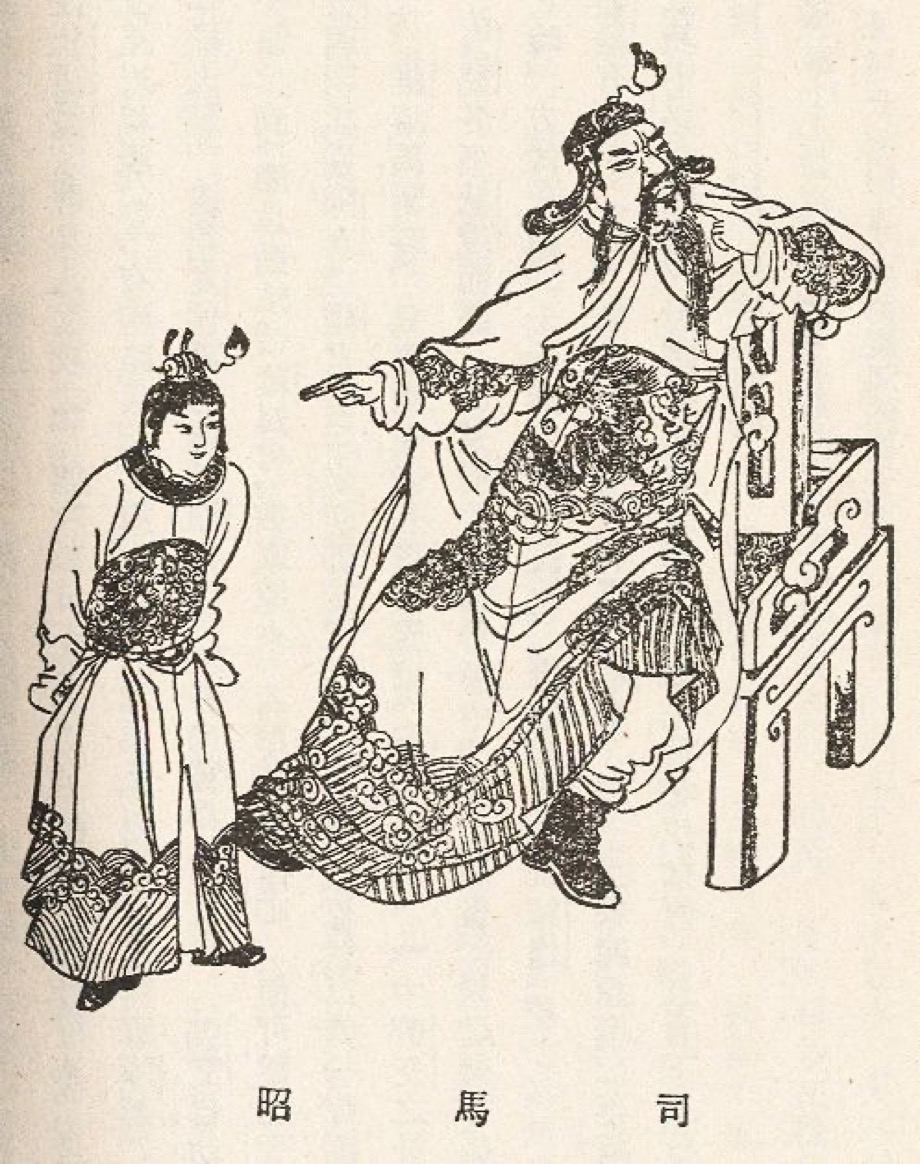
Portrait of Sima Zhao
The Ambition Everyone on the Street Could Name
No regent in the Three Kingdoms period was ever described as subtle who wasn't first compared, unfavorably, to Sima Zhao. His father, Sima Yi, had spent a career disguising ambition as loyalty, feigning illness and deference for years before striking. His brother, Sima Shi, had managed the transition from father to son without ever removing the mask. Sima Zhao didn't bother. By 260 the reigning puppet-emperor Cao Mao, a young man with no army and no real power, said aloud what every official in Luoyang already knew and none dared voice: that Sima Zhao's intentions toward the throne were plain to "every man on the street." Cao Mao then did something almost no cornered monarch in Chinese history had done — he led his own palace guard, a few hundred men armed with nothing that mattered, in a suicidal charge against Sima Zhao's soldiers. He was killed in the clash. The phrase he coined outlived him and became a permanent fixture of the language: Sima Zhao zhi xin, luren jie zhi — Sima Zhao's heart is known to everyone on the street.
That an emperor would rather die making the obvious explicit than keep pretending not to notice tells you almost everything about the kind of operator Sima Zhao was — and it is the reason his ENTJ reads so differently from his father's careful ISTJ-adjacent patience. Sima Zhao didn't need concealment because he wasn't building toward a hidden goal by increments; he was executing an already-decided outcome in the open, confident that visible momentum was itself a form of control. The three years after Cao Mao's death only confirmed the pattern: rather than linger over Wei's crumbling legitimacy, he launched the single most consequential military campaign of the entire era — the conquest of Shu Han — and finished the job his father and brother had each, in turn, declined to start.
Sima Zhao's ENTJ is a Te-Ni current running in the open — ambition so undisguised it became a proverb, and strategic patience so total it let him die one title short of the throne he had already, functionally, taken.
The Campaign His Father and Brother Wouldn't Order
Shu Han had sat on the western border for four decades as an acknowledged, permanent irritant — mountainous, defensible, and expensive to invade, which is exactly why nobody had invaded it. Sima Yi never tried. Sima Shi never tried. In 263, with Wei's court fully under his control and no emperor left capable of resisting him, Sima Zhao ordered a two-pronged invasion under Deng Ai and Zhong Hui, betting an enormous army and his own political capital on ending, once and for all, the last legitimate claimant to Liu Bei's dynasty.
It worked, spectacularly and almost by accident of his subordinate's audacity — Deng Ai's small force crossed terrain considered impassable and appeared behind Shu's defenses, forcing an immediate capitulation. But the decisive act of Te was Sima Zhao's, not Deng Ai's: the willingness to commit resources to an outcome he had judged, correctly, to be achievable now rather than merely someday. Dominant Te doesn't wait for perfect conditions; it reads the current state of the field, decides the window is open, and moves the whole apparatus of the state through it. Shu's fall left Wu isolated and doomed, and Sima Zhao had converted forty years of stalemate into a settled question inside a single campaign season.
King of Jin, Not Emperor of Jin
The strangest fact about the man the idiom accuses of transparent, undisguised ambition is that he never actually took the throne. Shortly before his death in 265, Sima Zhao accepted the title King of Jin — a step below the imperial rank that was, by then, his for the asking. He left the final, formal act of dynastic founding to his son, Sima Yan, who declared the Jin dynasty and deposed the last Wei emperor within the year.
That restraint is Ni, not modesty. Auxiliary Ni holds a long-range image of how the succession has to resolve and refuses to let the closer, more satisfying move — claiming the crown himself, mid-conquest, mid-consolidation — disrupt a sequence he could see needed one more generation to look legitimate rather than merely seized. Cao Pi had taken the throne directly from a cornered Han emperor, and the manner of that taking had shadowed Wei's legitimacy for decades. Sima Zhao's insight was that the Sima claim would land cleaner coming from a son inheriting an already-secured state than from a father visibly grasping for it — the single calculated act of patience inside a life otherwise built on open, undisguised action.
Letting the Charge Happen
Tertiary Se shows up less in what Sima Zhao did than in what he was willing to let happen in front of him. When Cao Mao gathered his palace guard for a doomed personal attack, a more image-conscious or risk-averse regent might have moved to defuse the confrontation quietly, to keep the optics survivable. Sima Zhao's household did nothing of the kind — the clash occurred in the open, the emperor died on the point of a soldier's weapon, and the fallout was managed afterward rather than prevented beforehand. Se in the tertiary slot doesn't flinch from a live, physical confrontation; it trusts that force, once applied, resolves the situation on its own terms.
The same comfort with committing overwhelming, present force runs through the Shu campaign itself — not the planning, which was Te, but the sheer scale of army he was willing to throw at a target everyone else had judged too costly to touch. Sima Zhao treated both the succession crisis and the western border as problems solvable by decisive, immediate action rather than by further waiting, and in both cases he was right.
Why ENTJ Over ISTJ
Why not ISTJ?
An ISTJ regent operates by quiet procedure — exactly the mode his father, Sima Yi, mastered for decades, feigning illness and deference while consolidating power through routine, low-visibility administration. Sima Zhao is the opposite case study: his ambition was so visible and self-generated that a proverb exists specifically to describe how undisguised it was. Launching the Shu conquest wasn't cautious institutional maintenance; it was a bold strategic gamble on an enemy every predecessor had judged too costly to engage, decided and executed inside a single season rather than accumulated through years of careful process.
Where his father's power was procedural and nearly invisible, Sima Zhao's was declarative — announced by its own obviousness, confirmed by an emperor's willingness to die naming it out loud. That is Te-Ni operating in public rather than Si-Te operating in the shadows: a man who didn't need to hide what he was doing because he had already calculated that no one could stop it.
Connected Figures
Further Reading
- Records of the Three Kingdoms — Chen ShouThe primary Chinese-language source for the Sima regency and the fall of Shu Han
- Book of Jin — Fang Xuanling et al.The official dynastic history covering Sima Zhao's later years and Sima Yan's founding of Jin
- A Biographical Dictionary of Later Han, Three Kingdoms and Jin — Rafe de CrespignyEnglish-language reference with detailed entries on the Sima family and the 263 campaign
