 Historical Figure MBTI
#1186 · 8-30-26 · The Three Kingdoms
Sima Shi
The Regent Who Ruled Without a Throne · Purger of Wei's Old Guard · Heir to His Father's Patience
208 — 255
5 min read
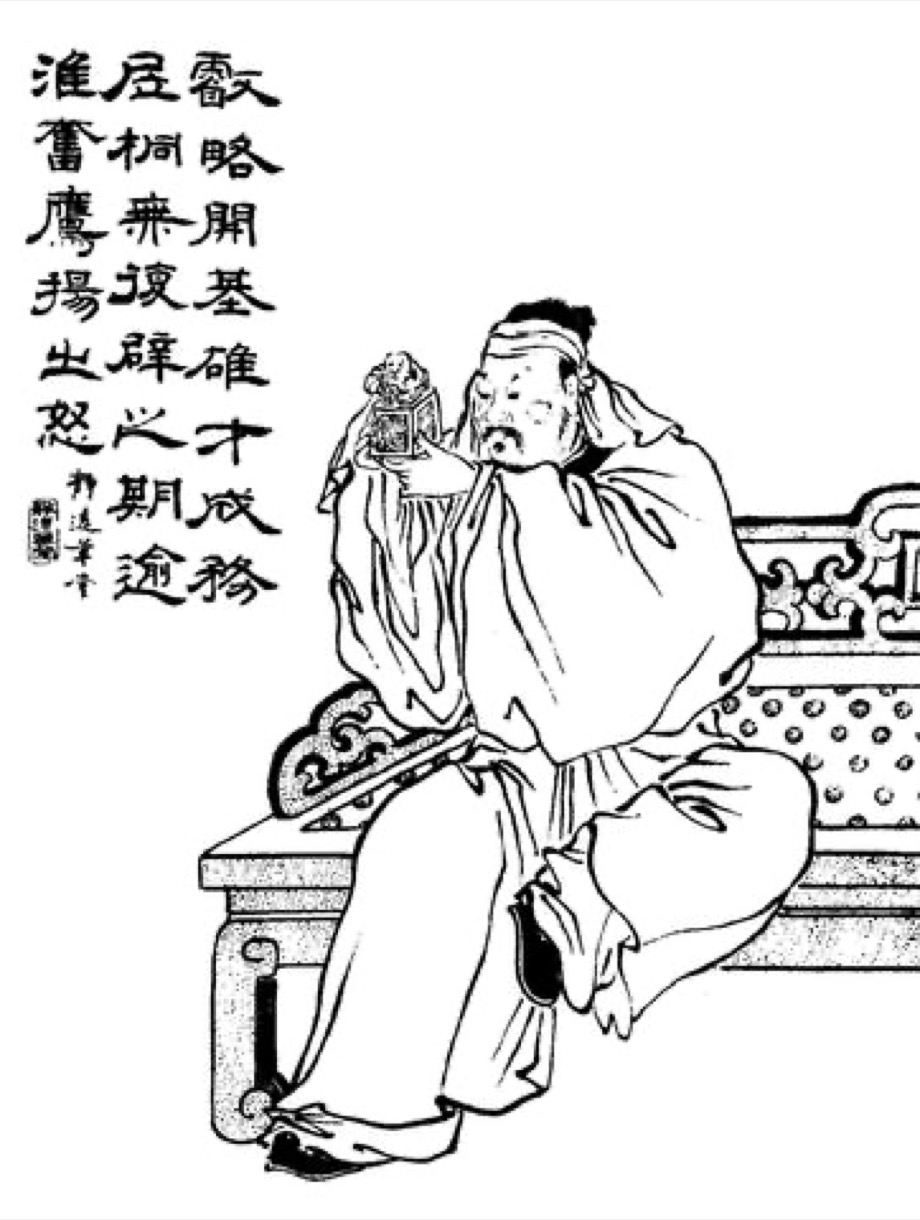
Portrait of Sima Shi
The Shadow Made Visible
For thirty years Sima Yi had built power the way a man builds a case he never expects to argue in open court — quietly, patiently, always deniably. His eldest son inherited that power in 251 and, within three years, did what his father never once risked: he removed an emperor with his own hand. In 254, uncovering a plot by Cao Fang and his circle to strip the Sima family of authority, Sima Shi simply deposed him — the first time anyone in the family had openly discarded a sitting sovereign rather than ruling quietly behind one. It was not a coup dressed as loyalty. It was a declaration that the fiction was no longer worth maintaining.
That single act, more than any other in his short life, defines him. Where Sima Yi calculated in decades and struck once, Sima Shi calculated fast and struck often — an institution builder who preferred the clean, visible exercise of authority to the endless choreography of feigned deference. He is best understood as an ENTJ, a commander whose dominant Extraverted Thinking converted his father's hoarded leverage into open, structural control, backed by a long-range Introverted Intuition that never lost sight of what the family's position actually required.
Sima Shi did not inherit his father's patience. He inherited his father's power — and spent it.
An Emperor Removed by Decree
The deposition of Cao Fang was not an assassination or a battlefield coup — it was administered. Sima Shi assembled the charges, secured the consent of the Dowager Empress, and processed the emperor's removal through the very institutional machinery Cao Fang nominally headed. That is Extraverted Thinking in its purest, most dominant form: power expressed not as violence but as procedure, bent decisively to a single will and then made to look, retroactively, like order restored rather than order seized.
The same instinct runs through his handling of the Wei court more broadly. He did not scatter his father's rivals piecemeal, as opportunity allowed; he organized the family's authority into something closer to a standing system — promotions, garrison postings, and court appointments all bent toward a single, legible chain of command. Sima Yi had ruled through ambiguity. Sima Shi ruled through structure, and structure, once built, does not need to hide.
It is this same Te that sent him to Shouchun in 255. When Guanqiu Jian and Wenqin raised open rebellion against Sima authority, Sima Shi did not delegate the response to a subordinate general and manage it from the capital, as a purely administrative mind might have. He treated the rebellion as a direct threat to the system he had just built and moved to close it out personally — swiftly, and to its conclusion.
Reading the Family's Only Real Risk
Introverted Intuition, in Sima Shi, shows up less as vision than as unusual clarity about which threats mattered. Cao Fang's plotting was not, by itself, an existential danger — a weaker or more literal mind might have simply outmaneuvered it and left the throne alone, preserving the useful fiction his father had relied on for decades. Sima Shi read further: as long as the Sima family ruled only through an emperor who could, in principle, still move against them, every gain his father had made remained reversible. Removing Cao Fang converted informal dominance into structural fact.
That same long-range reading shaped his choice of successor on the throne. Installing the young, comparatively pliable Cao Mao was not sentiment or convenience; it was a calculated bet on the shape of the next decade, not the next season — a hallmark of Ni working in service of a dominant Te that needed the ground to hold long after the immediate crisis passed.
Marching Blind to Shouchun
Sima Shi went to Shouchun in 255 while recovering from surgery on a badly diseased eye — an operation serious enough that by most reasonable accounts he should have stayed in Luoyang and let a subordinate command the field. He did not. Tertiary Extraverted Sensing, in a Te-dominant frame, tends to surface exactly like this: not as impulsiveness, but as a refusal to let physical limitation stand between the leader and the moment that actually needs deciding.
He won. Guanqiu Jian and Wenqin's rebellion was broken, and Sima family control over Wei's military apparatus was confirmed rather than merely defended. But the campaign's physical toll — travel, stress, and strain on a body that had not finished healing — accelerated a decline that killed him within weeks of the victory. It is a fittingly Se-shaped ending: a man who trusted his own direct presence at the point of crisis over every safer alternative, and paid for it with the only resource that trust could not replenish.
Why ENTJ Over INTJ
Why not INTJ?
An INTJ reading would credit the deposition of Cao Fang and the Shouchun campaign to Ni's long-range foresight alone, treating the visible action as incidental to the plan behind it. But Sima Shi's decisions read the other way around: the institutional restructuring, the public removal of an emperor, the personal march to the front — these are acts of a mind that leads with structuring the external world directly, not one that reasons privately and lets action trail behind. His strategic sense served his drive to act; it did not replace it.
Sima Yi's entry makes the same case from the other side: he was the family's INTJ, patient and indirect for thirty years because indirection suited him. Sima Shi inherited the same long-range clarity but none of his father's taste for concealment. The moment he held real power, he used it openly — which is the difference, in practice, between a mind that plans in the shadows and one that plans in order to act in daylight.
Connected Figures
Further Reading
- Records of the Three Kingdoms — Chen ShouPrimary source for the Wei court, the Gaoping Tombs coup, and Sima Shi's regency
- Book of Jin — Fang Xuanling et al.Compiled under the later Jin dynasty founded by Sima Shi's nephew, covering the family's rise
- A Biographical Dictionary of Later Han, Three Kingdoms and Jin — Rafe de CrespignyStandard modern reference for figures across the Han collapse and Three Kingdoms period
