 Historical Figure MBTI
#1179 · 8-29-26 · The Three Kingdoms
Cao Pi
The Son Who Claimed the Throne · First Emperor of Wei · Poet-King Who Ended the Han
187 — 226
8 min read
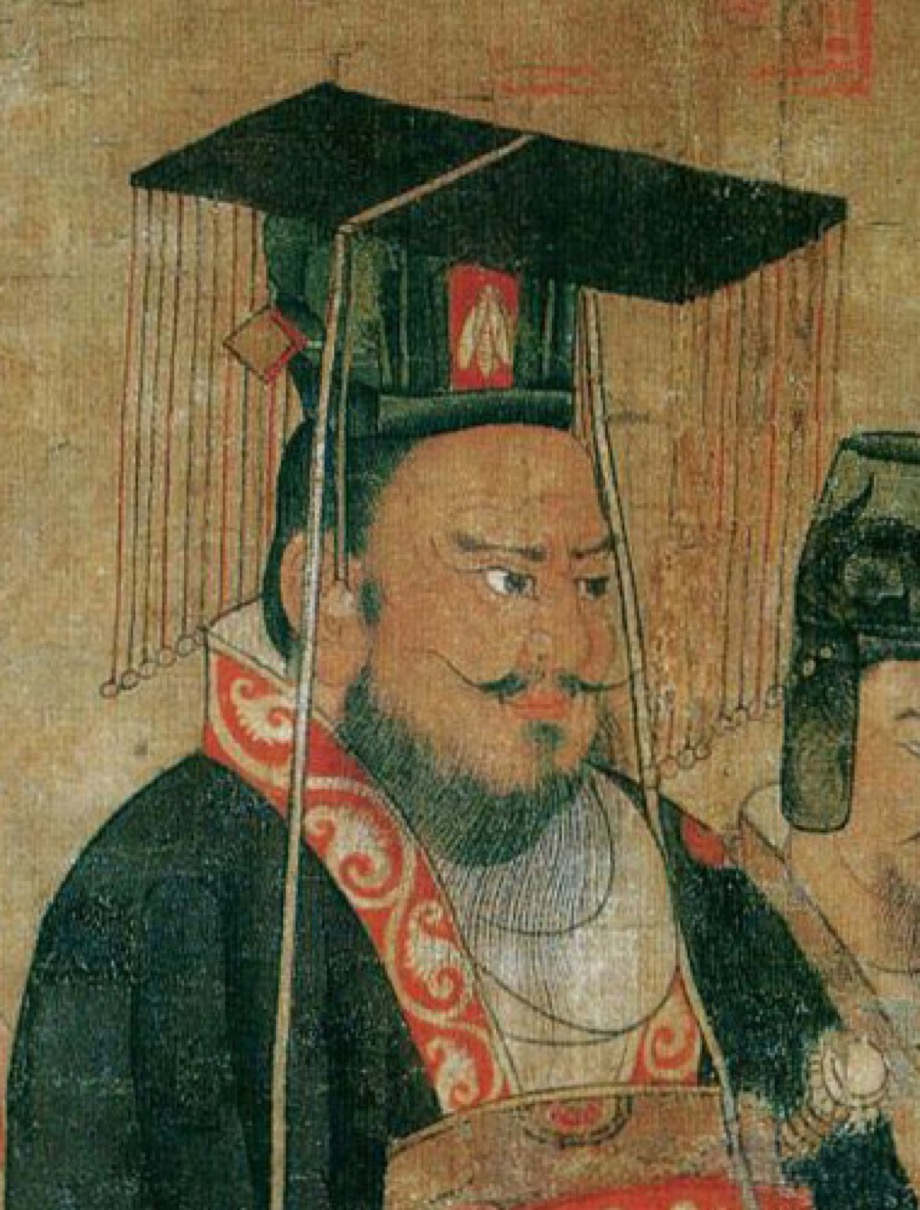
Portrait of Cao Pi
The Paperwork of Ending a Dynasty
Four centuries of Han rule did not end in a battle. It ended in a ceremony, held to the letter of ancient precedent, in which a young man declined the throne three times before accepting it — and the young man had rehearsed every step. Cao Pi took from his father a kingdom, an army, and a captive emperor, and did with them the one thing his father had spent thirty years refusing to do. He filed the paperwork.
Cao Cao had been the most powerful man in China without ever being its sovereign, content — or superstitious, or shrewd — to remain the hand behind Emperor Xian’s throne. When he died in the spring of 220, his son inherited the title King of Wei and, within months, converted it into something his father had left deliberately unclaimed. There was no coup, no assassination, no dramatic march on the palace. There were memorials, portents dutifully recorded, an abdication edict, an altar raised at Fanyang, and the three ritual refusals that the sage-king precedent required. Cao Pi did not seize the mandate. He was correctly, procedurally, and irreversibly handed it.
This is a temperament, not merely a tactic. Cao Pi won the succession against a more brilliant brother by being the reliable one; he won the empire by being the institutionally impeccable one; and once secure, he spent a decade making sure the brother never rose again. He was also, improbably, a real writer — the author of one of the earliest surviving works of Chinese literary criticism — and even there his instinct was to catalogue, classify, and rank what already existed rather than to invent.
Cao Pi is an ISTJ whose dominant Introverted Sensing made him the archive-keeper of dynastic form: he ended the Han not by breaking precedent but by executing it perfectly.
Si — The Man Who Knew the Ritual
The abdication of 220 was staged as a re-enactment. The forms Cao Pi followed were not invented for the occasion; they were drawn from the oldest story in the Chinese political canon, the sage-king Yao yielding the world to Shun on the grounds of virtue rather than blood. Emperor Xian issued the offer; Cao Pi refused. The offer came again; he refused again. Only on the third — with the omens logged, the ministers’ petitions gathered, the altar built — did he ascend and take the reign name Huangchu. Every beat of it was citation. He was not improvising a revolution; he was performing a precedent so exactly that no scholar could later say the transfer had been irregular.
That same instinct had already won him the succession. Cao Cao spent years openly weighing his brilliant younger son Cao Zhi against Cao Pi, and Cao Zhi had the better verses, the quicker tongue, and the more romantic reputation. Cao Pi answered with steadiness: he cultivated his father’s senior ministers over years rather than dazzling them in an evening, kept to protocol when his brother was drunk in the palace precinct, and made himself the candidate whose behavior could be predicted. Cao Zhi lost the contest largely by being unpredictable. Cao Pi won it by never once giving the court a story to tell about him.
Even his literary work runs the same way. The Discourse on Literature is not a manifesto but a taxonomy — genres sorted and given their proper registers, named contemporaries assessed one by one for what each did well and badly, the whole thing grounded in the claim that writing is a serious enterprise with rules worth stating. It is criticism written by a man who trusted the accumulated record more than the flash of invention, and who thought the useful act was to get the categories right.
Te — Rule First, Then Rule
Once emperor, Cao Pi legislated the shape of his dynasty with an administrator’s coldness. He formalized the nine-rank system for grading and appointing officials, turning his father’s improvised meritocracy into a standing bureaucratic machine — a machine that, in time, would harden into the aristocratic monopoly he had not intended. He barred empresses and consort clans from regency power, having read what the Later Han’s consort families and eunuchs had done to the throne he now occupied. He restricted the enfeoffed princes of his own house to tightly supervised fiefs with token guards, so that no imperial brother could raise a province against him.
His military judgment was less inspired and equally systematic. Three times he sent armies south against Sun Quan; three times the Yangtze and Wu’s river defenses stopped him, and each time he broke off rather than gamble the state on a crossing. He had accepted Sun Quan’s nominal submission as a vassal king in 220 with the same instrumental eye — a piece of paper that kept the southeast quiet while he consolidated the north, and one he was quite willing to discard when the fiction stopped paying.
He also staffed his reign for competence over sentiment, entrusting real authority to men like Sima Yi and his cousin Cao Ren, and naming Sima Yi among the regents for his heir. It was an efficient decision and a fatal one; the system he built was strong enough to be inherited whole by the family he had promoted.
Fi — The Grudge He Never Put Down
The correctness stops at his brother. Cao Zhi had been the favored son, the one the court poets adored, the humiliation Cao Pi had swallowed for a decade — and once there was no father to arbitrate, the new emperor spent the rest of his life keeping him small. Cao Zhi’s partisans were executed early. Cao Zhi himself was shuffled from fief to fief, watched, denied a command, denied a court, denied the audiences he begged for in writing. He was allowed to live and forbidden to matter.
Tradition preserves the emblem of it in a story almost certainly invented and perfectly chosen: Cao Pi orders his brother to compose a poem in the time it takes to walk seven paces, on pain of death, and Cao Zhi produces the lines about beanstalks burning to boil the beans that grew from the same root. Whether or not it happened, the anecdote survived because it names the real thing — a private wound turned into a permanent policy, carried out with the machinery of state and never once explained.
This is tertiary Feeling in its characteristic shape: not warmth expressed but a closed inner ledger of who wronged him, acted on unilaterally and rationalized after the fact as administrative necessity. He deposed his own empress, Lady Zhen, and ordered her death; he moralized in his edicts about frugality and restraint while pursuing personal scores. His values were real and entirely his own — he simply had no instinct for negotiating them with anyone else.
Ne — The Imagination He Kept on a Leash
Cao Pi wrote well, and the fact sits oddly against everything else about him. His “Yan ge xing” is among the first fully realized seven-character poems in the language, a woman waiting through an autumn night for a man who does not come — a lyric of real tenderness from an emperor who showed almost none. The gift was there. He never trusted it to lead.
Where his brother’s imagination ran ahead of him into extravagance, Cao Pi’s surfaced in short, bounded ways: an essay on why literature outlasts the body and the state, a fondness for the wit of the Jian’an circle, a collector’s appetite for strange anecdotes. The famous line from the Discourse — that writing is the great enterprise of ordering the state and a splendor that does not decay — is the closest he came to visionary language, and it is still an argument for permanence over novelty.
Inferior Intuition also shows in what he could not see coming. He built a throne proofed against every threat the historical record had already demonstrated — empresses, eunuchs, over-mighty princes — and left it wide open to the one nobody had yet performed: a trusted minister’s family quietly inheriting the machine. Within two generations Sima Yan would take the Wei throne by a ceremony of ritual refusals copied, beat for beat, from Cao Pi’s own.
Why ISTJ Over ESTJ
Why not ESTJ?
An ESTJ takes power from the front: by organizing people visibly, commanding a room, and imposing order outward until everyone can see who is in charge — his father’s method, and Sun Quan’s. Cao Pi’s method was the opposite and inward. He won the succession not by out-arguing Cao Zhi in open court but by out-lasting him in the private estimation of Cao Cao’s ministers, and he won the empire not by seizing it but by reconstructing a thousand-year-old ceremony so exactly that refusal became unthinkable. The authority he claimed was borrowed from precedent rather than projected from personality — the mark of dominant Si working through Te, not Te leading.
The distinction matters because it explains both his success and his ceiling. Cao Pi was never the most compelling man in his own hall; contemporaries who met his father or his brother remembered them, and remembered him as correct. But correctness was the scarce commodity in 220. A dynasty four centuries old could not be ended by force without permanently delegitimizing whatever replaced it, and the only person who could end it was someone patient and pedantic enough to make the ending look lawful. That was work an ESTJ might have found beneath the point. It was exactly the work Cao Pi was built for.
Connected Figures
Further Reading
- Records of the Three Kingdoms (Sanguozhi) — Chen ShouThe primary source, compiled within living memory of Wei; the Annals of Emperor Wen record the 220 abdication and Cao Pi's edicts on regency and enfeoffment.
- Imperial Warlord: A Biography of Cao Cao, 155–220 AD — Rafe de CrespignyThe standard modern account of the Wei power base Cao Pi inherited, including the succession contest with Cao Zhi and the political groundwork for the founding.
- Discourse on Literature (Dian Lun Lunwen) — Cao PiHis own surviving essay — an early work of Chinese literary theory that grades genres and assesses named contemporaries one by one.
- Generals of the South — Rafe de CrespignyCovers the southern half of the story: Sun Quan's nominal vassalage in 220 and the failed Wei campaigns across the Yangtze.
- The Poetry of Cao Zhi — Robert Joe Cutter (trans. and ed.)Useful for the literary rivalry and for what Cao Zhi's confinement under his brother's reign actually looked like.
