 Historical Figure MBTI
#1180 · 8-29-26 · The Three Kingdoms
Cao Zhi
The Poet Prince · Author of the Seven Steps Verse · The Brother Who Lost the Succession
192 — 232
8 min read
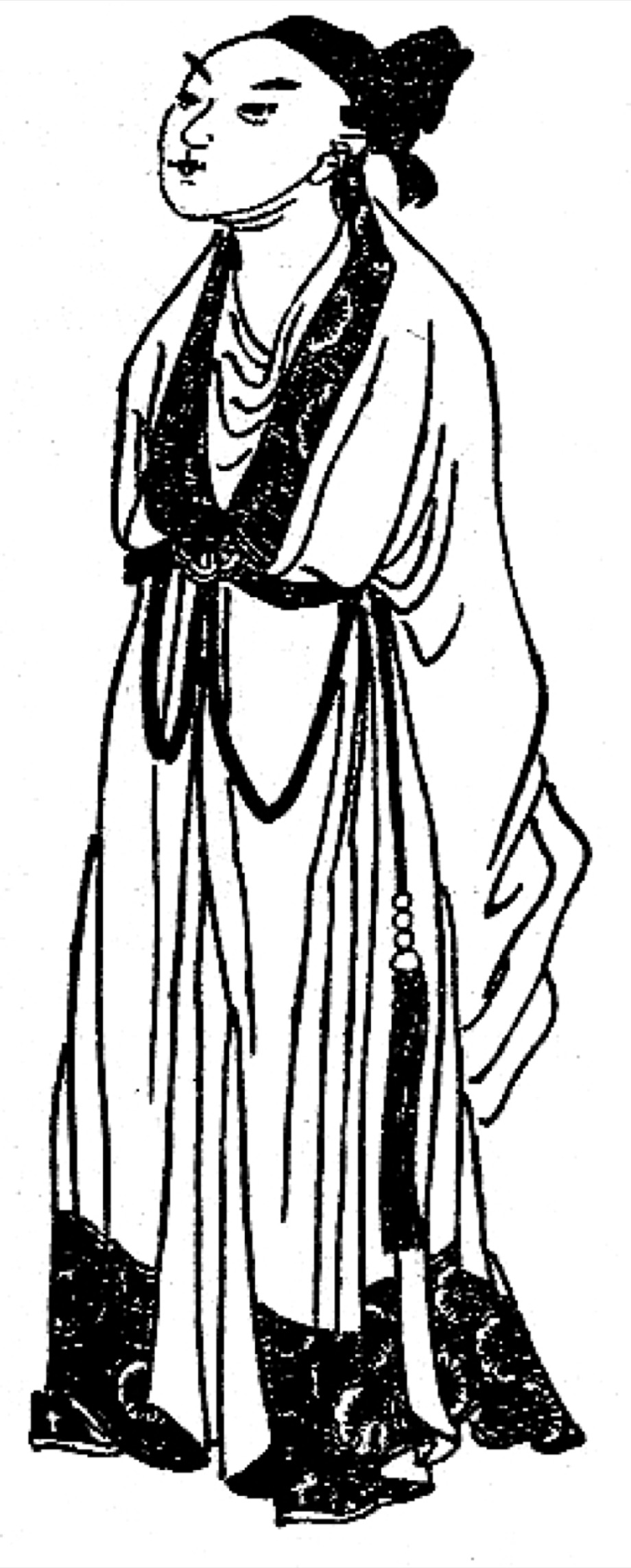
Portrait of Cao Zhi
Eight Tenths of the Talent in the World
Two centuries after his death, the poet Xie Lingyun is said to have weighed the literary gift of the whole world at one measure — and given eight tenths of it to Cao Zhi. It is a critic's joke that hardened into a verdict. In the standard account of early medieval Chinese poetry, Cao Zhi is not one great writer among several; he is the figure everyone after him is measured against, the man who took the stiff ceremonial verse of the late Han court and made it carry private grief.
He was also, by the ordinary standards of his family, a failure. He was born in 192 into the most consequential household in China, the third surviving son of Cao Cao, who spent Cao Zhi's childhood assembling the state that would become Wei. For years Cao Zhi was his father's preferred heir — the quick one, the one who could compose on command, the one courtiers quietly backed. He lost that position not to a rival's scheme but to his own conduct: drinking, indiscipline, and at last the notorious night he rode drunk through a palace gate reserved for the emperor alone. Cao Cao, who forgave a great deal in useful men, did not forgive that. The succession went to the colder, steadier Cao Pi.
What followed was not execution but something slower. After Cao Pi took the throne in 220, Cao Zhi spent the remaining twelve years of his life as a prince in name and a prisoner in fact — shuffled between minor fiefs, watched by court-appointed monitors, barred from office, barred even from easy contact with his own brother. He died in 232, aged forty, having petitioned repeatedly for some real employment and received none. Everything he is remembered for was written by a man being methodically disqualified from the world.
Cao Zhi is the archive's clearest case of the INFP as ruined prodigy: a dominant Fi that made his verse unbearably personal in an age of formal address, and an auxiliary Ne that gave him both his flights into the mythic and the impulsiveness that cost him a throne.
Fi — The Wound Set to Music
Court poetry in the Han manner was public equipment. It praised, it petitioned, it marked occasions; the "I" in it was a role. Cao Zhi's innovation — the thing that made later critics treat him as a threshold rather than a peak — was to run that inherited machinery on his own private feeling and let the seams show. His poems of the 220s do not perform sorrow at a decorous distance. They complain. They name the specific indignity: the sealed roads, the supervisors, the brother who will not see him, the journey home from a court audience that reads like a sentence.
The best-known crystallisation of this is the "Seven Steps Verse" — the poem he was supposedly ordered to compose in the time it took to walk seven paces, on pain of death, while Cao Pi watched. Beans boil in a pot; the fire beneath them is made of the bean-stalks they grew on. We sprang from the same root — why so eager to fry me? Historians from Chen Shou onward give the anecdote no support, and Robert Joe Cutter and others have shown how late the story attaches to him. It survives anyway, because it is the correct emotional summary of a life even if it is bad evidence about an evening. Fi does not argue that the treatment was politically irregular. It states, in four lines, that it was wrong, and that the wrongness is a family matter.
The same signature runs through the memorials he sent his nephew's court in the last years, begging to be given some use — documents that abandon the flattery a supplicant owed and slide into naked self-account. He could not write himself smaller to be safe. An INFP's dominant Fi is a fixed internal reading of what one is owed and what one is, and Cao Zhi kept publishing his, to the men best positioned to punish him for it.
Ne — Goddesses, Immortals, and Palace Gates
The "Rhapsody on the Goddess of the Luo River" is the clearest window onto how his mind moved. A traveller crossing the Luo sees a spirit on the water and the poem detonates: she is startled swans and coiling dragons, autumn chrysanthemum and spring pine, sun through morning mist, lotus rising from green water — image after image, none of them holding still, the description accelerating past anything a describing eye could actually collect. Then she withdraws across the water and cannot be followed. It is not observation. It is association run at full speed and pointed at something the poet has already decided he will not be allowed to keep.
That same restlessness is everywhere in his range: excursions among immortals, cosmic landscapes, roaming-transcendent verse in which a man locked inside a small fief travels the heavens. Cao Zhi wrote his way out of a geography he was forbidden to leave. Auxiliary Ne supplies exactly this — a proliferation of possibilities orbiting a fixed private feeling, mythic material recruited to say something the poet cannot say about his own circumstances directly.
Ne also explains the ruin. The behaviour that cost him the succession was not calculated rebellion; it was a chain of impulses that seemed, in the moment, like nothing. Drink at the wrong hour. A grand gesture that overshot. A chariot through the emperor's gate, because the gate was there and the night was going well. His father had spent thirty years selecting for men who could be relied upon at the specific moment reliability mattered, and his most gifted son kept demonstrating that he could not be.
Si — The Fief He Kept Being Moved Out Of
Cao Pi's method of containment was deliberately designed against a man like this. Cao Zhi was not imprisoned; he was relocated — reassigned again and again to different small fiefs, never long enough anywhere to build a household, a following, or a habit. The policy was sound statecraft. It was also, aimed at this particular temperament, unusually cruel, and his verse registers the cruelty precisely: the road, the packing, the parting, the same complaint renewed at each new posting.
Tertiary Si shows in what he reaches for when the present is unbearable — the remembered past, held with enormous fidelity and enormous ache. The banquets at Ye, the campaign years, the company of his father's court poets, brothers who were once simply brothers. He returns to that material continually, and always as something finished. His most desolate line of feeling is not that he is watched but that he was once somewhere else, among people who thought well of him, and cannot get back.
Te — The Command He Was Never Given
The succession contest between the brothers was not decided on talent. It was decided on whether a man could be trusted with an apparatus. Cao Pi built a faction, cultivated the great clans, observed protocol with an accountant's exactness, and made himself the option that carried no risk. Cao Zhi answered with brilliance, which is not the same currency. When his father finally handed him a real command late in the contest, the appointment collapsed before it began — he was found drunk and unfit to set out. Inferior Te is not incompetence; it is a function that cannot be summoned on demand at the exact hour the world requires proof.
He never stopped believing he could have done it. The petitions of his last decade are full of concrete proposals — give me a frontier post, a campaign, a border command, any office where the family name means something operational. They are earnest and, from the throne's side, entirely unpersuasive. A ruler who had watched the same man forfeit one commission already had no reason to hand him another, and every reason to keep an exceptionally well-connected brother far from troops.
Why INFP Over ISFP
Why not ISFP?
The Fi is not in question — an ISFP reading would keep the wounded, uncompromising interiority intact. What it cannot account for is where his imagination goes. An Se-supported artist works from the sensory present: this light, this body, this room. Cao Zhi's signature mode is the opposite — the Luo goddess dissolving into swans and dragons and mist, the roaming-transcendent poems that leave the earth entirely, mythic material recruited faster than any scene can supply it. And his political ruin has the same fingerprint: not a quiet man's withdrawal from court but a restless one's overreach, the big unstructured gesture and the impulsive breach of a rule he knew perfectly well. That is Ne, not Se.
INFP holds the whole shape at once. The Fi explains why his verse broke the decorum of its age and why the "Seven Steps Verse" became the poem the tradition insisted on giving him. The Ne explains both the range of the imagery and the indiscipline — the same associative, possibility-driven engine that made him the finest poet of his century made him an unacceptable heir. And the inferior Te explains why he could never convert any of it into the one thing he actually wanted, which was not literary immortality but a job.
Connected Figures
Further Reading
- Rhapsody on the Goddess of the Luo River (Luo Shen Fu) — Cao ZhiHis most celebrated fu — the clearest single specimen of how his imagination moved.
- Records of the Three Kingdoms (Sanguozhi) — Chen ShouThe primary historical account of the succession contest and Cao Zhi's later confinement.
- Chinese Rhyme-Prose: Poems in the Fu Form from the Han and Six Dynasties Periods — Burton Watson (trans.)Standard English translations of the fu tradition, including Cao Zhi.
- Essays on the 'Seven Steps Verse' tradition — Robert Joe CutterOn how the bean-stalk poem attached itself to Cao Zhi, and why its historicity is doubted.
