 Historical Figure MBTI
#1185 · 8-30-26 · The Three Kingdoms
Sima Yi
The Patient Hawk · The Man Who Outwaited the Dragon · Founder of the Dynasty That Buried the Three Kingdoms
179 — 251
10 min read
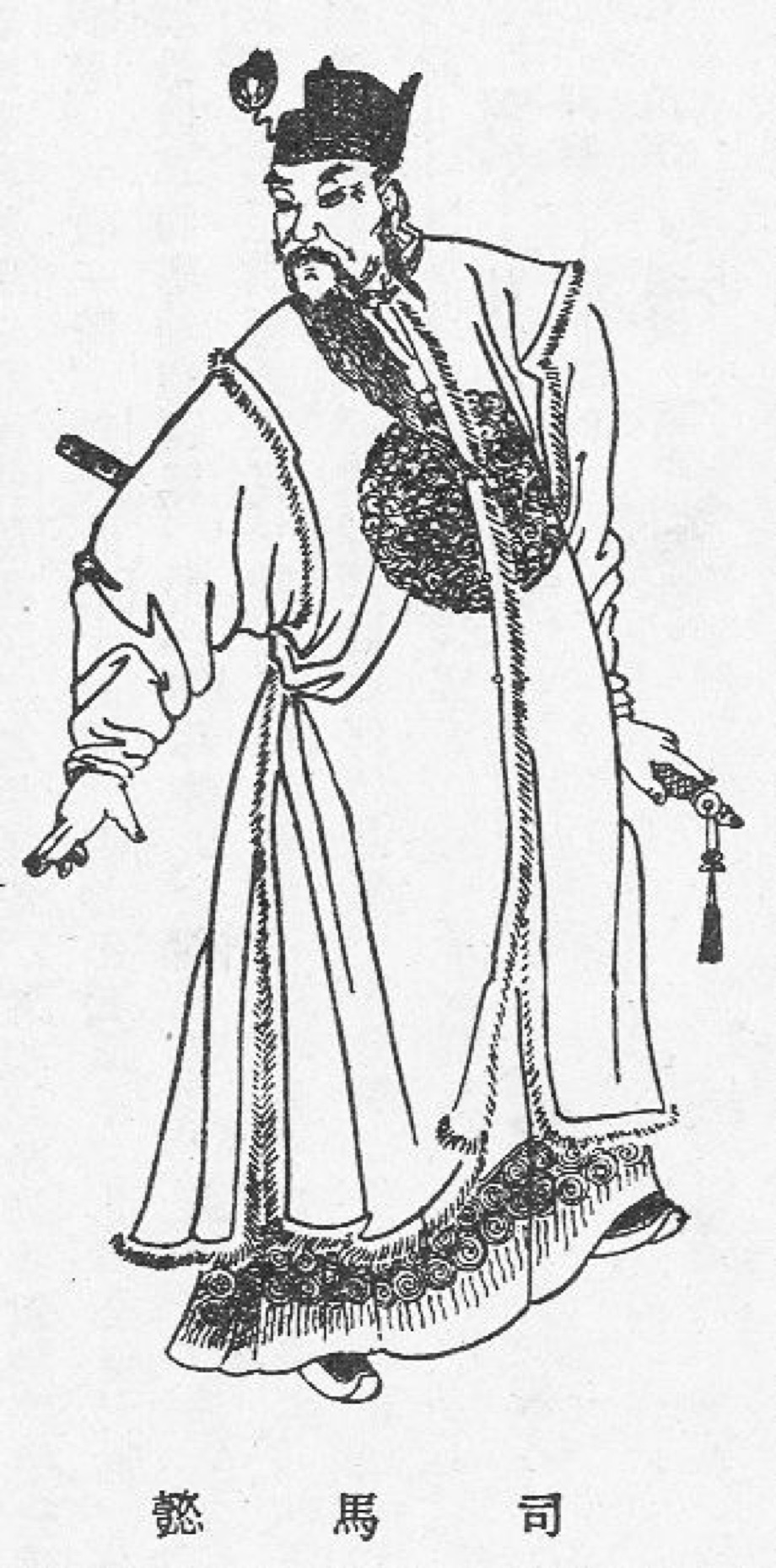
Portrait of Sima Yi
The Man Who Was Never in a Hurry
Everyone else in the Three Kingdoms wanted something now. Cao Cao wanted the north before the season turned; Liu Bei wanted a kingdom before he was too old to hold it; Zhuge Liang wanted the Han restored before his own body gave out. Sima Yi wanted something too, but he never once behaved as though the clock belonged to anyone but him. He waited out a warlord, a rival genius, and finally an entire regime — and the waiting was not passivity. It was the method. His career is the longest single held-breath in Chinese history, and it ends with his family sitting on a throne that no one had ever seen him reach for.
The pattern shows up at the very start. When Cao Cao's recruiters came for the young Sima Yi, he refused — and when refusal alone was not enough, he took to his bed and claimed paralysis, holding the fiction for years while the most dangerous man in China sent people to check. He judged Cao Cao volatile, judged the timing wrong, and simply declined to be present for it. Only when the alternative became death did he report for duty, and then he served flawlessly, rising quietly through the Wei bureaucracy under Cao Cao, then Cao Pi, then Cao Rui, accumulating competence the way other men accumulated enemies.
What makes him the archive's purest study in the long game is that his two most famous acts are both refusals. He beat Zhuge Liang by declining to fight him. He took the Wei state by declining, for years, to appear capable of anything at all. Both required him to accept being seen as a coward or a wreck — to let the world's estimate of him fall as far as it wanted — because he had already run the sequence to its end and knew what the world's estimate would eventually be worth.
An INTJ whose dominant Ni holds a single distant outcome so steadily that decades of humiliation register only as weather.
Ni — The Endgame Held in a Closed Hand
Dominant introverted intuition is not foresight in the prophetic sense; it is the conviction that events have one shape and that the shape can be waited for. Sima Yi's defense against the Shu Northern Expeditions between 228 and 234 is the cleanest demonstration of it in the era. Zhuge Liang came north repeatedly with a superb army and an impossible problem behind him: Sichuan's mountains, and the supply trains that had to crawl through them. Sima Yi saw that the problem was structural rather than tactical — that no single battle needed to be won because the terrain was already winning — and built his entire campaign around not interfering with an enemy in the act of defeating himself.
So he fortified, and he sat. His own officers raged at him; the army muttered that their commander feared the enemy more than dishonor. Zhuge Liang, understanding exactly what was being done to him, sent Sima Yi a gift of women's clothing — a public accusation of cowardice designed to make the insult unbearable in front of his own staff. Sima Yi received it, and did nothing. He did not need to be thought brave in 231. He needed Shu's grain carts to run out, and in 234 Zhuge Liang died exhausted at the Wuzhang Plains without ever having forced the battle he required. The vision had been correct, and the price of it had been years of contempt Sima Yi paid without visible discomfort.
The same faculty produced the coup of 249, only stretched further. Sidelined by the regent Cao Shuang after Cao Rui's death, stripped of real authority and left with ceremonial rank, Sima Yi did not maneuver, protest, or build a faction in the open. He got old, publicly and convincingly — feigning illness so total that Cao Shuang's own agents, sent to verify, went home reporting a drooling wreck who could not keep his words in order. Nothing about that performance pays off incrementally. It is worthless every single day until the one day it is worth an empire, which is precisely the sort of bet only a mind that lives at the end of the sequence is willing to hold.
Te — One Morning, Every Gate at Once
Vision without execution is a hermit's hobby, and Sima Yi's auxiliary extraverted thinking is what converted decades of stillness into a single irreversible act. In 249, while Cao Shuang and the young emperor were outside the capital on a ceremonial visit to the Gaoping Tombs, the invalid stood up. The city gates closed, the armories were taken, the palace was secured, and a memorial denouncing the regent was in the empress dowager's hands before the court could form an opinion. The Incident at the Gaoping Tombs was over almost before it was noticed — not a civil war, an administrative seizure carried out at the speed of a well-drilled morning.
That efficiency was not improvised. Sima Yi had spent his career in the machinery of the Wei state: logistics, agricultural colonies, frontier commands, the unglamorous infrastructure that decides campaigns. When speed was actually the correct instrument he was ruthless with it — his march on the rebel Meng Da covered the distance in roughly half the time anyone had budgeted, and the rebellion was finished before its allies could move. The patience and the sudden violence come from the same source: Te does whatever the situation costs least, and Sima Yi simply had an unusually accurate sense of which situation he was in.
He was also willing to pay the moral bill in full. Cao Shuang surrendered on a promise that his life would be spared; he and his faction were executed anyway, three clans erased. It was efficient. A rival left alive is a variable, and Sima Yi did not keep variables. The act cost the Sima name something permanent in the historical record, and he appears to have regarded that as an acceptable line item.
Fi — A Private Ledger Shown to No One
Tertiary introverted feeling explains the strangest thing about Sima Yi: how little he needed other people to agree with him. The women's clothing episode is the test case. An officer running on extraverted feeling could not have survived it — the humiliation is aimed exactly at the place where group esteem lives. Sima Yi's values were internal and unpublished, which meant that the army's contempt, the court's jokes, and Zhuge Liang's mockery were all information about other people rather than information about himself.
It also explains the one moment of warmth in the record. After Zhuge Liang's death, Sima Yi walked the abandoned Shu camp, read the layout of the fortifications and the ordering of the withdrawal, and called his dead adversary a genius of the age. There was no audience worth impressing and no advantage in the compliment. It was simply what he privately thought — the same quiet Fi that had let him rate Cao Cao as too dangerous to serve when he was a young man with nothing, and act on that judgment against every incentive.
The loyalty question follows from this. Sima Yi served three Wei sovereigns competently and, so far as the record shows, without conspiracy; Cao Rui died trusting him with the succession. Whether the coup betrayed that trust depends on whether one thinks his allegiance was ever to the Cao house or only to his own read of what the state required — and Fi never files a public answer. He kept his reasons where nobody could audit them, which is why historians have been arguing about his sincerity for seventeen centuries.
Se — The Present Tense as a Costume
Inferior extraverted sensing shows in Sima Yi as a lifelong distrust of the immediate and physical — and, remarkably, in his ability to weaponize that distrust. He does not win by seizing the moment; he wins by refusing to be inside it. Where Cao Cao read a battlefield in real time and where a commander like Zhang He pressed advantages as they appeared, Sima Yi treated the present as an unreliable narrator, something that had to be discounted against the shape of the whole campaign.
His most literal use of the inferior function is the body itself. Twice he made his own physical presence a lie: paralysis as a young man to escape Cao Cao's summons, senility as an old one to escape Cao Shuang's suspicion. Both times he understood that his enemies were reading the surface — that spies report what a body looks like — and he offered them a surface built to be believed. It is an extraordinary inversion of a weak function: unable to live comfortably in the sensory present, he made it a stage set for other people to be fooled by.
And when Se finally broke through, it came out cold rather than hot. The Gaoping Tombs coup, the annihilation of the Cao Shuang faction, the earlier massacre at Xiangping after the Liaodong campaign — the eruptions are decisive and bloody and entirely without appetite. There is no relish in them, no Cao Cao–style delight in the sweep of events. Just the vision, arriving on schedule, collecting what it was owed.
Why INTJ Over ISTJ
Why not ISTJ?
The ISTJ reading is tempting because Sima Yi looks patient, dutiful, and institutional — a career official who served three sovereigns without visible ambition. But Si-patience is procedural: it follows precedent, defers to the established order, and takes its authority from the way things have been done. Sima Yi's patience is self-generated and precedent-free. There was no rule book telling him to absorb a public accusation of cowardice from an enemy commander, and none telling him to counterfeit senility for years against his own government. Those are private architectures — a single long-range outcome maintained internally against enormous social pressure, then executed in one cold stroke. That is Ni building the plan and Te firing it, not Si keeping the forms.
The distinction sharpens at the coup. A dominant-Si official confronted with Cao Shuang's usurpation of the regency would have appealed to precedent, to the dead emperor's will, to the proper order of the Wei court — the legitimacy of the existing structure being the thing worth defending. Sima Yi used that language in his memorial, but only as an instrument; the actual operation replaced the structure with his own family and then executed a surrendered man who had been promised his life. Precedent was a tool, not a floor. What was load-bearing was the endgame he had been holding privately since he was a young man pretending he could not walk.
Connected Figures
Further Reading
- Records of the Three Kingdoms — Chen ShouThe contemporary history of the period; Sima Yi appears throughout the Wei chapters, treated with the caution of a historian writing under his descendants.
- Book of Jin (Jin Shu) — Fang Xuanling et al.The Tang-era dynastic history that opens with Sima Yi's biography as the founder-in-fact of Jin — the fullest account of the Gaoping Tombs coup.
- A Biographical Dictionary of Later Han, Three Kingdoms and Jin — Rafe de CrespignyThe standard English reference for the period's figures, useful for untangling the Wei court factions Sima Yi outmaneuvered.
- Fire over Luoyang — Rafe de CrespignyA political history of Later Han that supplies the collapsing world into which Sima Yi was born and which he declined, at first, to join.
