 Historical Figure MBTI
#1183 · 8-29-26 · The Three Kingdoms
Zhang He
The Survivor of Every Losing Side · Wei's Master Tactician · Felled Chasing Zhuge Liang
? — 231
7 min read
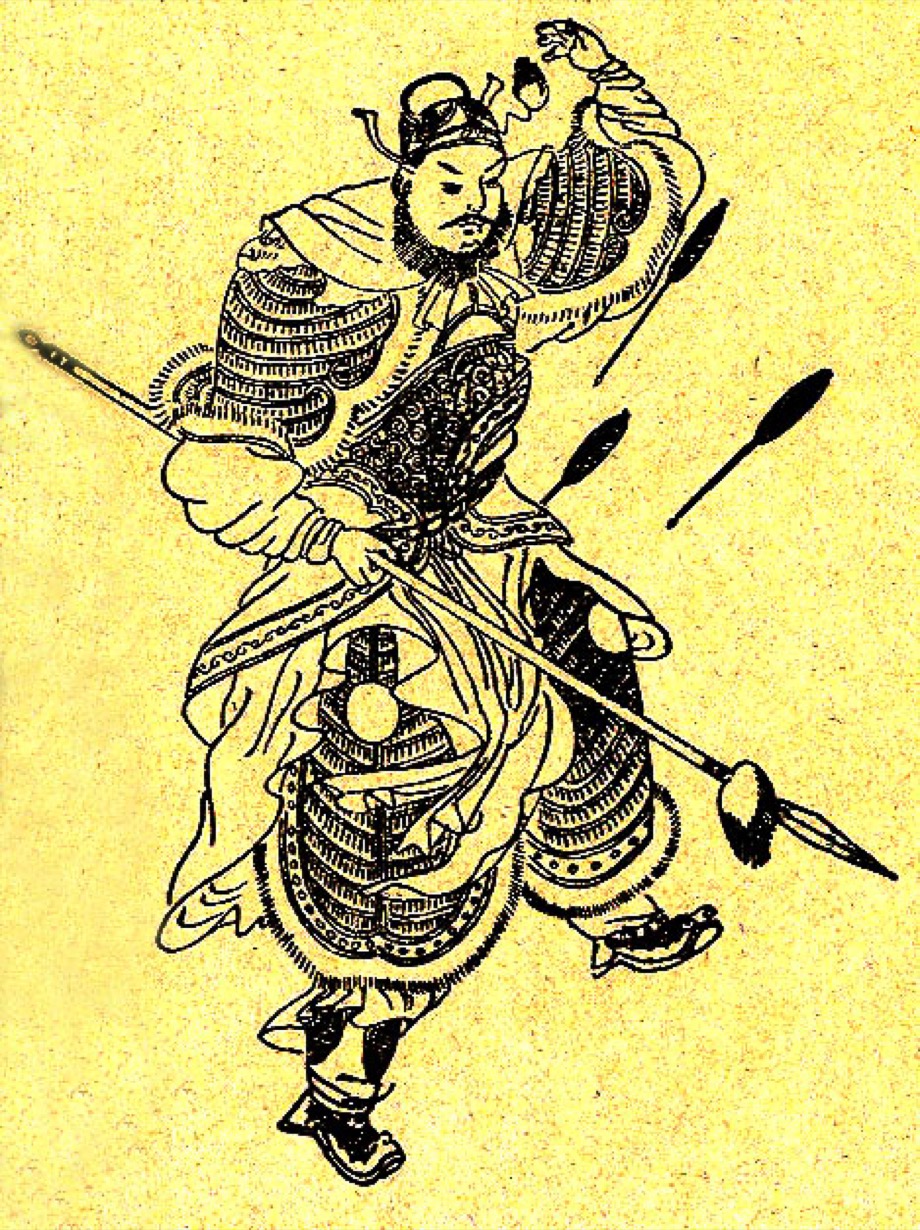
Portrait of Zhang He
The General Who Never Lost the Right Side
Zhang He served four regimes and buried nearly every commander who started a career alongside him. He began under the minor warlord Han Fu, moved to Yuan Shao when Han Fu's province was absorbed, and in the autumn of 200, at the Battle of Guandu, walked across the field to Cao Cao's camp while Yuan Shao's army was still, on paper, larger and better supplied. He read the position — not the propaganda, not the loyalty owed, the position — and moved before anyone else did. Thirty-one years later he was still moving, chasing a retreating Shu army into a mountain pass where Zhuge Liang was waiting for exactly a man like him.
Nothing about that career is explained by ambition alone. Ambitious men attach themselves to a rising star and stay attached; Zhang He reattached himself four times, each time correctly, each time on terms that cost him nothing in reputation and gained him decades of employment under men who had every reason to distrust a proven defector. That is not charisma and it is not zeal. It is a mind built to strip a situation down to its mechanics — troop counts, supply lines, terrain, morale — and act on the arithmetic regardless of what the arithmetic implies about where his sympathies had been an hour earlier.
Zhang He was an ISTP, and Ti was the blade he never sheathed — every allegiance he held was provisional, subordinate to a private, running calculation of what the facts on the ground actually supported.
The Arithmetic of a Collapsing Line
The defection at Guandu is the single act that defines Zhang He, and it rewards close reading precisely because it was not impulsive. Cao Cao had raided Yuan Shao's grain depot at Wuchao; Zhang He, commanding a relief force, argued the depot had to be saved at all costs or the whole campaign was lost. Overruled by rival advisor Guo Tu, who sent him instead against a fortified Cao Cao camp that could not be taken, Zhang He watched his prediction confirmed in real time — Wuchao burned, and Guo Tu, protecting himself, told Yuan Shao that Zhang He had wanted the failure. Zhang He did not appeal, did not protest, did not wait to see if the accusation would stick. He read the outcome, read the political trap closing around him, and crossed to the enemy the same night.
That sequence is Ti in its purest form: a private model of cause and effect, updated instantly on new information, acted on without needing external validation or emotional buy-in. Most defectors in this era needed a grievance, a betrayal, a public rupture to justify the switch to themselves and to history. Zhang He needed none of that. The facts had changed — the depot was gone, the army's logistics were broken, his own position was compromised by a rival's lie — and the model simply output a new conclusion. Chen Shou's history treats the defection almost clinically, without the moral hand-wringing later chroniclers apply to other turncoats of the age, because Zhang He himself seems to have treated it clinically.
The same detachment marked his decades as a Wei general afterward. He built a reputation, according to the Records of the Three Kingdoms, for reading terrain and enemy disposition with unusual precision — the kind of judgment subordinates trusted more than they trusted his politics, because his politics had already proven negotiable in a way his tactical eye never was.
A General Made for the Mountains
What made Zhang He indispensable to Cao Cao, Cao Pi, and then Cao Rui in turn was not the defection but what came after it: three decades of field command, most of it on the brutal, close terrain of the Wei-Shu frontier, where campaigns were won or lost on immediate, physical reads of ground that no strategy session hundreds of miles away could substitute for. He was the general Wei sent into passes and river gorges against Shu Han's armies, precisely the theater where an abstract battle plan mattered less than a commander's feel, in the moment, for where an ambush could be laid or a column could be pinned.
That comfort with immediate, sensory command is Se — not recklessness, but a competence that lives in the present tense, in the specific slope of a hillside or the specific gap in a marching line, rather than in doctrine. It is also what made him so useful across four regimes: his skill did not depend on knowing a particular lord's grand strategy, only on knowing how to win the fight directly in front of him, which travels well from one employer to the next.
It is also, in the end, what killed him. In 231, pursuing Zhuge Liang's army as it withdrew from its failed Wei campaign, Zhang He pushed the chase into the confines of Mumen Pass — against, tradition holds, his own better tactical sense, under orders from Sima Yi to press the retreat. The auxiliary appetite for direct, immediate action, so reliable for thirty years, ran him straight into a crossbow ambush Zhuge Liang had prepared for exactly the kind of aggressive pursuer Zhang He had always been.
Reading the Long Arc, Once Every Decade
Ti and Se explain the tactics; they do not fully explain the survival. Zhang He also, at intervals, seemed to sense which cause had a future and which did not, well before the battlefield made it obvious — leaving Han Fu before his province collapsed entirely, reading Yuan Shao's cause as finished at Guandu rather than merely damaged, and settling for the rest of his life under the Cao family even as rival kingdoms Shu and Wu still looked, to contemporaries, like live contests. That is Ni operating underneath the Ti-Se surface: a background, low-frequency instinct for where the larger pattern was heading, surfacing only at the handful of moments in a long career when it mattered most.
It is a thin, occasional function next to the two that ran his daily judgment, which is exactly the shape a tertiary function should take — not a constant strategic vision, but a rare, decisive flash of foresight that arrived just often enough to keep him on the winning side of history for thirty-one years, until the one time it did not arrive at all.
Why ISTP Over ESTP
Why not ESTP?
An ESTP reads a room and acts in the same instant, kinetically, with the judging function riding shotgun to the perceiving one. Zhang He's defining acts run the other way: at Wuchao and at Guandu he made an internal, analytical assessment first — of supply lines, of political exposure, of which side's arithmetic no longer worked — and only then moved, decisively but after the model had already resolved. Decades of correctly timed defections and frontier campaigns argue for a sustained private logic doing the deciding, not an ESTP's pure present-tense improvisation. The record shows a tactician who thought before he leapt, every time it counted.
Set the two side by side and the difference is where the decision actually happens. An ESTP would have been the more electrifying subordinate — bolder in the moment, better theater. Zhang He was the more dangerous one, because by the time he acted, he had already finished thinking.
Connected Figures
Further Reading
- Records of the Three Kingdoms — Chen ShouThe primary biography of Zhang He, including the Guandu defection and death at Mumen.
- Imperial Warlord — Rafe de CrespignyDetailed narrative history of Cao Cao's rise, covering Guandu and the defections that shaped it.
- A Biographical Dictionary of Later Han, Three Kingdoms and Jin — Rafe de CrespignyReference entries on Zhang He's career under successive warlords and the Wei state.
