 Historical Figure MBTI
#1182 · 8-29-26 · The Three Kingdoms
Xu Huang
The General Who Broke the Siege of Fan · One of Wei's Five Elite Commanders · Disciplined to the Last
? — 227
7 min read
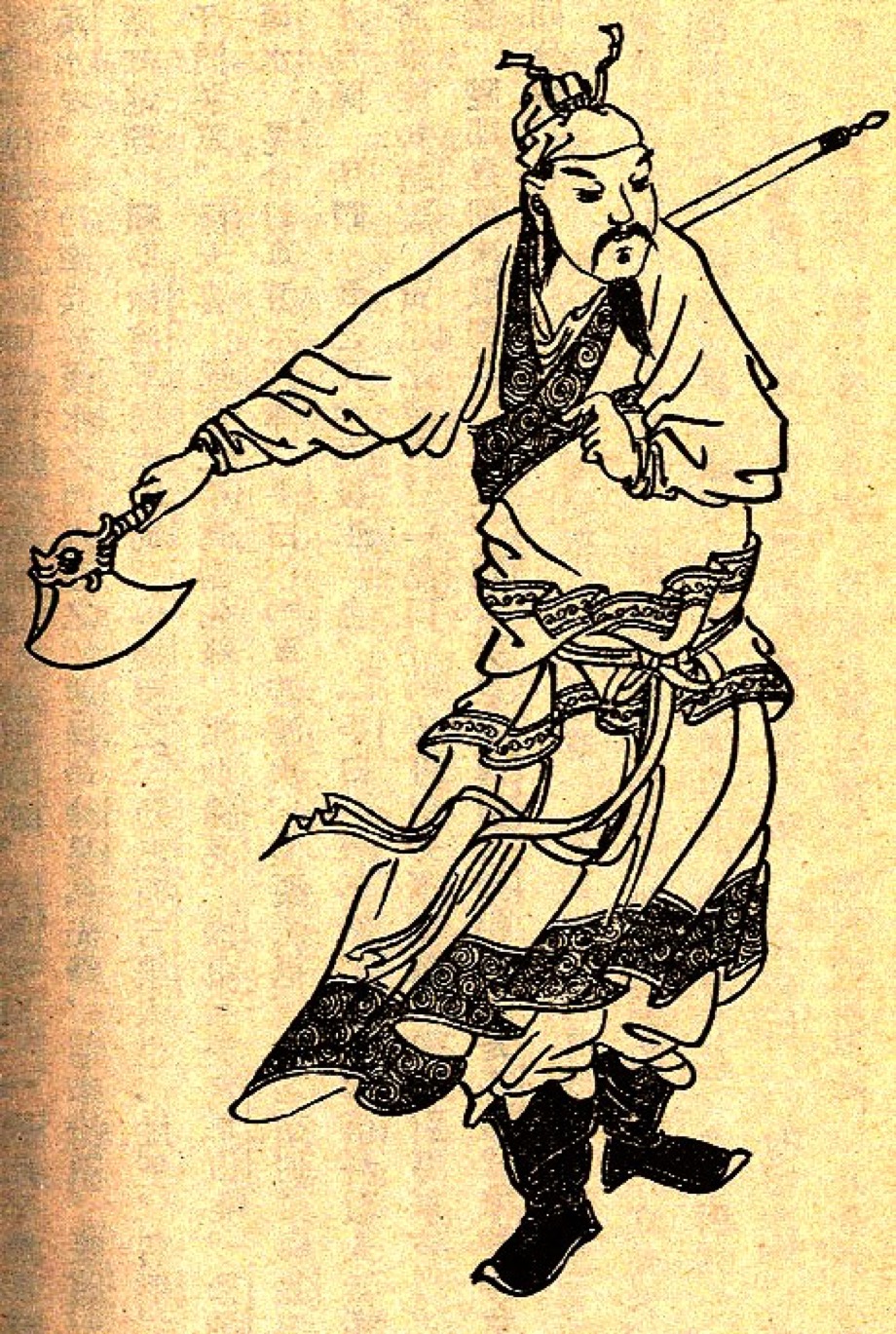
Portrait of Xu Huang
The Camp That Never Grew Slack
Of Cao Cao's celebrated "Five Elite Generals," Xu Huang is the least romantic and the most reliable. He does not appear in the record as a swordsman of legend or a schemer of court intrigue. He appears as a man whose tents stayed in ordered rows in the middle of a running campaign, whose sentries kept their posts when other units let discipline slip after a hard march, and whose solution to a battlefield problem was, again and again, to study it rather than storm it. Cao Cao is said to have singled him out for exactly this — for maintaining strict military order even under pressure, in pointed contrast to commanders whose camps grew ragged the moment vigilance became inconvenient.
That contrast is the whole man. Xu Huang's masterpiece was not a cavalry charge but an engineering problem solved under siege conditions: Fan Castle, 219, with Cao Ren trapped inside and Guan Yu's floodwaters lapping at the walls. Where lesser relief efforts had stalled and broken against Guan Yu's works, Xu Huang walked the terrain, read the siege lines like a text to be parsed, and cracked them open with trenches and feints before he ever committed his real blow. It is, among other things, one of the very few defeats Guan Yu ever suffered — inflicted not by daring but by patience.
This is the signature of an ISTJ: a mind that trusts what it has verified, that builds outward from established method rather than from impulse, and that holds a line — literal and moral — long after the excitement of the moment has worn off.
Xu Huang did not win Fan Castle by being braver than Guan Yu. He won it by being more orderly than the siege itself — the quiet, procedural triumph of an ISTJ's dominant Si working through a problem no one else had finished studying.
The Rows Stayed Straight
Dominant Si shows up in Xu Huang less as memory than as maintenance — the compulsion to keep the internal standard intact regardless of what the campaign outside is doing. Armies on the move tend to fray at the edges: watches get shortened, formations loosen, the small correctnesses that cost nothing in peacetime start to feel like luxuries. Xu Huang's camps did not fray. Cao Cao's praise of him was specific on this point — order preserved under exactly the conditions that erode it in everyone else — and it is the kind of compliment that only makes sense for a man who treats procedure as a thing worth defending for its own sake, not merely a means to an end.
At Fan Castle that same instinct became a battlefield method. Xu Huang did not improvise against Guan Yu's siege-works; he studied them, the way an Si-dominant studies anything unfamiliar — by comparing it to what has worked before, by walking the ground until its logic became legible, by refusing to act until the terrain had told him where it was weak. The multi-point feints he used to fracture the siege lines were not clever in the flashy sense. They were methodical, sequential, almost bureaucratic in their patience — dig here, threaten there, watch what breaks, then strike where it broke. That is Si turned into siegecraft.
A Solution, Not a Gesture
Auxiliary Te is what turned Xu Huang's inward discipline into results Cao Cao could actually use. Where Si supplies the standard and the patience, Te supplies the drive to execute it efficiently against an external objective — and Fan Castle again is the clearest evidence. Wei's earlier relief attempts had stalled repeatedly against Guan Yu's flood-siege; Xu Huang's contribution was not more force but a better-organized application of the force available, breaking the problem into achievable steps and committing his real strength only once the groundwork had isolated the actual point of weakness.
That same Te current explains why he remained useful across two reigns rather than one. Generals whose value is purely dominant, or purely charismatic, tend to be tied to the ruler who prized them; Xu Huang served under Cao Cao and then continued, without friction, under Cao Pi, because his usefulness was never about personal favor. It was about a demonstrated capacity to get a defined job done by the most orderly available route — the kind of competence a state can simply reassign, campaign after campaign, and trust to arrive at the same standard.
Correctness Even With a Friend Outside the Wall
Tertiary Fi rarely announces itself in Xu Huang's story, but it surfaces in the one detail that makes Fan Castle more than a tactics exercise: Xu Huang and Guan Yu are recorded as having once been on friendly terms, from earlier service, before the war placed them on opposite sides of a siege line. A man led by feeling would have let that history soften the encounter, or at least made a show of it. Xu Huang did neither. He is recorded observing strict martial correctness with Guan Yu even in that personal context — declining the informal courtesy their old acquaintance might have earned, because the field, not the friendship, defined what was owed.
That is Fi held in reserve rather than expressed outward — a private, unyielding sense of what is proper that does not perform itself in speeches but simply refuses to bend when the moment arrives. It is also, quietly, what separates Xu Huang's discipline from mere obedience: he was not just following orders at Fan Castle, he was honoring a standard of conduct he had already decided was non-negotiable, friend or no friend on the other side of the trench.
Why ISTJ Over ESTJ
Why not ESTJ?
An ESTJ commander projects authority outward — a visible, assertive command presence that organizes others through sheer forcefulness of direction. That is not what contemporaries describe in Xu Huang. He is praised for something quieter and inward-referenced: camp order maintained without spectacle, terrain studied before it was acted on, a siege cracked through careful comparison to precedent rather than through commanding will. ESTJ leads by projecting Te outward as the dominant function; Xu Huang's Te serves an Si that is doing the real work underneath — consistency and correctness under someone else's command, not a leader's assertive stamp of his own.
The distinction matters because Xu Huang was never the man giving Wei its direction — he was the man who could be trusted to execute that direction without slippage, campaign after campaign, ruler after ruler. That is an ISTJ's signature contribution: not vision, not command presence, but an unbroken standard that holds exactly as well in year one as it does in year twenty.
Connected Figures
Further Reading
- Records of the Three Kingdoms (Sanguozhi) — Chen ShouXu Huang's official biography, including the Fan Castle relief and Cao Cao's praise of his camp discipline
- Imperial Warlord: A Biography of Cao Cao — Rafe de CrespignyWei's command structure and the Fan Castle campaign in the context of Cao Cao's later career
- A Biographical Dictionary of Later Han, Three Kingdoms and Jin — Rafe de CrespignyReference entries cross-referencing Xu Huang's service record and the fall of Guan Yu
