 Historical Figure MBTI
#1188 · 8-30-26 · The Three Kingdoms
Sima Yan
Emperor Wu of Jin · The Man Who Finally Reunified China · Heir to Three Generations of Patience
236 — 290
10 min read
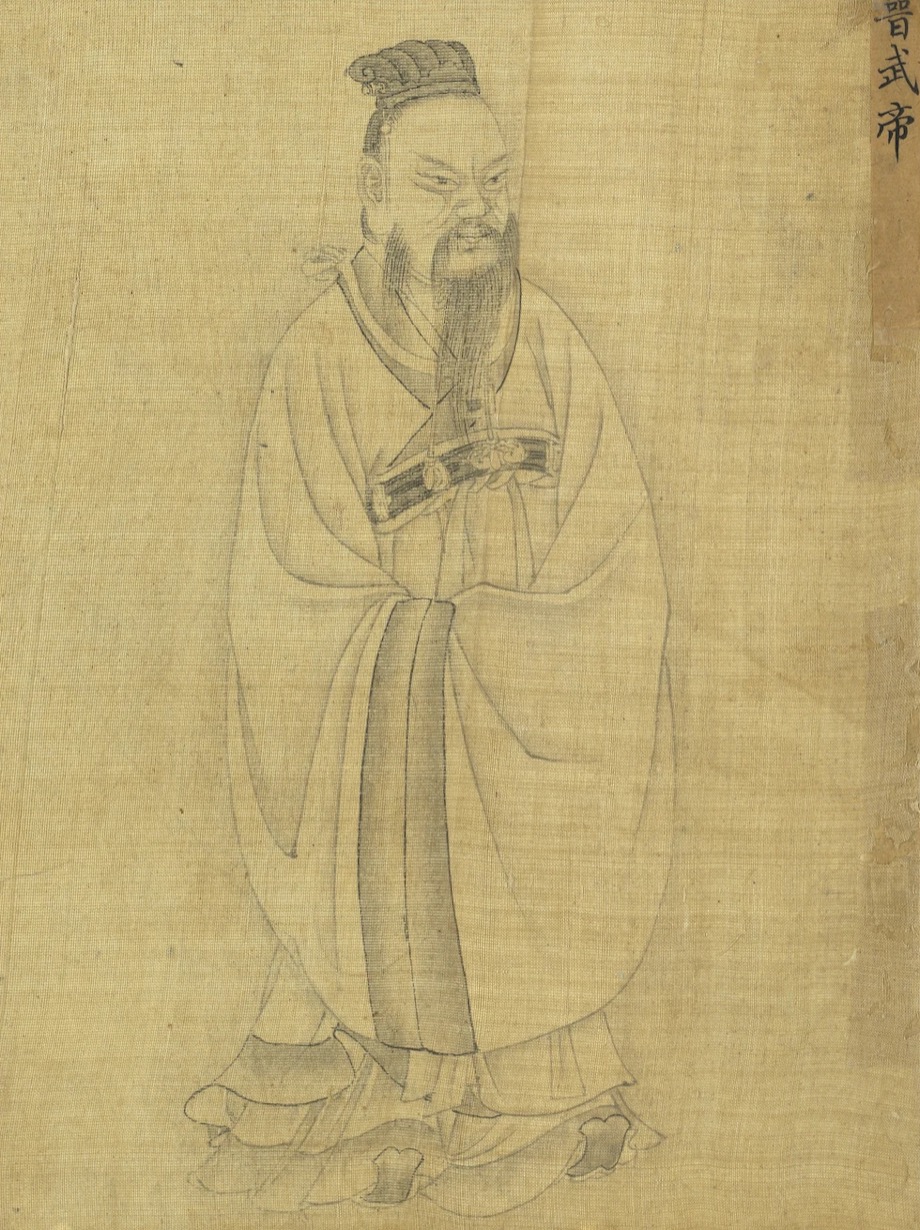
Portrait of Sima Yan
The Heir Who Cashed the Family Cheque
Three generations of Simas had been careful. Sima Yi waited out Cao Cao, outlived Zhuge Liang, and struck only once — in 249, against a rival regent who had gone hunting. Sima Shi and Sima Zhao spent the next sixteen years converting that single ambush into an administration: purging, promoting, accumulating titles, taking Shu in 263 through Deng Ai and Zhong Hui without ever quite taking the throne. The family motto, if it had one, was that the last step could always wait another year. Sima Yan is the man who stopped waiting.
In 265, months after his father’s death, he had the last Wei emperor, Cao Huan, perform a public ceremony of abdication — the identical ritual by which Cao Pi had relieved the last Han emperor of the empire forty-five years earlier, script and all. The echo was not accidental; it was the point. A usurpation staged as a precedent is not a usurpation at all but a form correctly executed, and Sima Yan understood that the Cao family’s own paperwork was the cleanest instrument available for dismantling them. The Jin dynasty was born as a piece of administrative procedure.
Fifteen years later he finished what nobody since the Han’s collapse had managed. The multi-pronged invasion of Wu in 280 was not a stroke of genius so much as an inventory correctly worked through: fleets down the Yangtze, columns on every front, no single point of failure. When Sun Hao surrendered, the Three Kingdoms period simply stopped, and China was one country again for the first time in roughly a century. Then Sima Yan, having built the machine, stopped maintaining it — and the second half of his reign is the story of how an administrator who could unify an empire could not organize his own household.
Sima Yan is an ESTJ whose dominant Te finished a project three generations in the making — and whose whole legacy turns on the one file he refused to open.
Te — The Closing of the Ledger
Extraverted Thinking is the function that cannot leave a task at ninety percent. Sima Yi had built the power; Sima Zhao had built the case; both had left the throne itself as an open item, taking the Duke of Jin and then King of Jin titles that pointed unmistakably at a conclusion nobody executed. Sima Yan executed it inside a year of inheriting the position. That is the Te temperament in its purest institutional form: an unfinished structure is a defect, and the fix is a procedure, a date, and a signature.
The conquest of Wu in 280 shows the same mind at scale. Sima Yan did not campaign as a battlefield tactician in the mold of Zhou Yu or Lu Xun; he commissioned, resourced, and scheduled. Years of preparation went into the Yangtze fleet built upstream in the old Shu territory — ships, timber, crews, a naval arm the Simas had never possessed — and the invasion moved on multiple axes simultaneously so that no single defensive success by Wu could stop it. Wu’s river chains and iron stakes, the cleverest defense available, were answered with rafts and fire: an engineering problem met with an engineering answer.
He then did what a Te dominant does with a victory — turned it into system. The occupation and land settlement that followed the conquest, the census and the land-allocation statutes of his reign, the absorption of Wu’s officials into a single bureaucracy rather than a punitive administration: these are the acts of a man whose satisfaction lies not in the triumph but in the working order that follows it. The empire was one unit again, and one unit could be run from one set of books.
Si — Precedent as Instrument
Introverted Sensing stores the correct form and reaches for it under pressure. The 265 abdication is the cleanest example in the archive of precedent used as a tool rather than obeyed as a constraint. Cao Pi’s ceremony against Emperor Xian had established a template — the reluctant refusals, the repeated petitions, the formal transfer of the mandate — and Sima Yan reproduced it beat for beat. Everyone at court knew exactly what they were watching. That recognition was the legitimacy: the Simas were not inventing a seizure, they were performing one the empire had already accepted once.
The same instinct governs his handling of Sun Hao. Wu’s last emperor had been genuinely monstrous — executions for sport, flayings, a court run on terror — and killing him would have been popular and safe. Sima Yan gave him a marquisate, a stipend, and a house in Luoyang instead. The famous exchange, in which Sima Yan remarked that he had kept this seat waiting a long while and Sun Hao replied that he too had kept one waiting in the south, is usually told as a joke about nerve. It is better read as a demonstration of what the new order was: an emperor secure enough to let a defeated rival be rude at dinner, because the form of surrender had been completed correctly and nothing further was required.
Leniency here is not warmth. It is Si-informed stabilization — the memory that Han-successor states which butchered their predecessors bought themselves decades of vendetta, and that a defeated dynasty converted into pensioned nobility stops being a rallying point. Sima Yan did the same for the Cao family, who kept their rank under Jin. He was consistently generous in exactly the way that made rebellion pointless.
Ne — The Goat Cart
Tertiary Extraverted Intuition in an ESTJ is a narrow, opportunistic thing: it notices the unconventional option and takes it when the conventional one has stalled. Sima Yan used it well when the Wu campaign was blocked politically — his own court was split, senior ministers argued the south could not be taken, and he backed the minority faction and the unorthodox upstream naval plan anyway. He also used it in the deliberate theatricality of the abdication itself, which was less an act of piety than a sharp read of what a symbol could be made to do.
After 280, with no problem left to solve, the same function turned to amusement. The palace filled with thousands of women drawn from the households of the conquered south; the anecdote that survives everything else about his later life has him touring the residences in a cart pulled by a goat, letting the animal choose where to stop, while consorts laid salt and bamboo leaves outside their doors to tempt it. Whether or not the detail is literal, the Book of Jin preserved it because it captures something true: a sovereign delegating a decision to randomness because he had run out of decisions he cared about.
This is the shape of the ESTJ’s post-victory collapse. Te needs an objective; strip the objective away and the tertiary function, unsupervised, converts an emperor’s restlessness into novelty and display. The court extravagance of late Jin — the notorious wealth contests among his ministers, the coral trees smashed to prove a point — grew in an atmosphere he set and never corrected.
Fi — The One File He Would Not Open
The great failure of Sima Yan’s reign is a succession he could not bring himself to examine. His heir, Sima Zhong — the future Emperor Hui — was widely understood at court to be incapable; the anecdote in which, told the peasants were starving for want of grain, he asked why they did not eat meat porridge, is the most quoted line of his life. Ministers raised the matter with the emperor, carefully and repeatedly. Sima Yan tested the boy with a written examination, accepted answers his wife had arranged to have ghost-written, and declared the question settled.
That is inferior Fi doing exactly what inferior functions do: a private, unargued attachment — to the eldest son, to the wife who defended him, to the idea of himself as a father who does not disinherit — that the dominant function is not permitted to audit. The man who could count Wu’s river defenses and build a navy to answer them could not run the same analysis on his own dynasty’s continuity. He hedged instead, distributing real military commands to his brothers, uncles, and cousins across the provinces so that the imperial clan would supposedly protect a weak emperor.
It was the single most destructive decision of the era. Within a year of his death in 290, the empress dowager’s family and the armed princes were at each other’s throats; the War of the Eight Princes tore Jin apart from the inside for sixteen years, and the exhausted north fell to the Five Barbarians within a generation. The unification Sima Yan spent his life completing lasted about thirty-six years. He had built the institution and declined to institutionalize himself.
Why ESTJ Over ISTJ
Why not ISTJ?
The Si-dominant reading fits his grandfather far better than it fits him. Sima Yi’s genius was the patient subordinate’s: absorb, endure, execute another man’s war, and move only when the structure above you has already cracked. Sima Yan inherited a finished apparatus and immediately turned it outward — staging a public abdication ceremony with himself at the center, overriding a divided court to launch a multi-front invasion, presiding over a new dynasty’s ritual and titulature in full view. His characteristic acts are declarations, campaigns, and commands issued from the top of the structure, not procedural discipline exercised from within it. Si supplies his instruments — precedent, form, correct treatment of a defeated rival — but Te sets the agenda, and the agenda was always to be seen finishing the thing.
The distinction matters because it explains both halves of his life. An ISTJ who had reunified China would most likely have kept grinding at the administration; Sima Yan, an extraverted Thinker with the objective achieved and no external structure left to impose himself on, went slack. The Te that had made him decisive gave him nothing to be decisive about after 280, and the one remaining problem — his heir — sat in the blind spot of his weakest function. The founder of Jin was, in the end, precisely the type who wins the war and loses the peace.
Connected Figures
Further Reading
- Book of Jin (Jin Shu) — Fang Xuanling et al.The official Tang-compiled history of the dynasty Sima Yan founded; source of the abdication account, the Wu campaign, and the goat-cart anecdote.
- Records of the Three Kingdoms (Sanguozhi) — Chen ShouWritten by a former Shu official serving under Jin — the contemporary record of the war Sima Yan finished, with Pei Songzhi's later commentary.
- A Biographical Dictionary of Later Han, Three Kingdoms and Jin — Rafe de CrespignyThe standard English reference for the period's figures, offices, and chronology.
- The History of China — David Curtis WrightConcise survey placing the Jin reunification and its rapid collapse in the long arc between Han and Sui.
