 Historical Figure MBTI
#1190 · 8-30-26 · The Three Kingdoms
Zhong Hui
The Brilliant Strategist Who Overreached · Co-Conqueror of Shu · A Rebellion That Lasted Days
225 — 264
6 min read
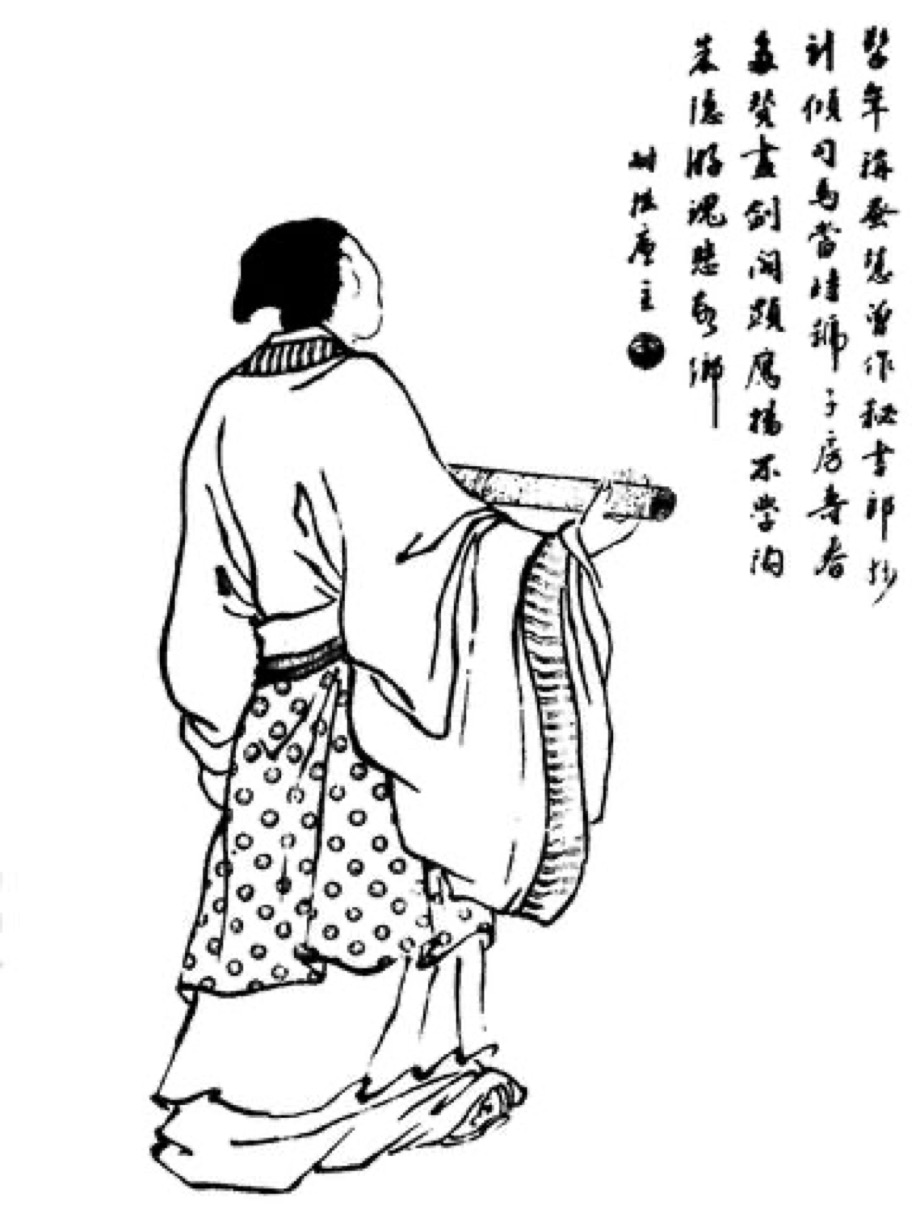
Portrait of Zhong Hui
A Prodigy Who Could Not Bear a Rival
Zhong Hui was famous before he had done anything worth being famous for. By his teens he was already celebrated at the Wei court as a calligrapher and a writer on philosophy, the kind of gifted young man other men's fathers held up as an example. That early, easy brilliance never left him — it just kept finding bigger stages. He rose to become one of Sima Zhao's most trusted strategists, and in 263 he was handed the largest command of his life: the main Wei invasion force sent to finish what decades of war had failed to finish, the conquest of Shu.
He earned that command. The siege he mounted against the mountain fortress at Jiange was patient, resourceful, and genuinely difficult work, holding down the bulk of Shu's defense while the campaign's fate was decided elsewhere. But it was decided elsewhere — by his subordinate Deng Ai, who marched a small force across terrain everyone else had judged impassable and took the Shu capital before Zhong Hui's own siege had broken anything. Zhong Hui had planned the war. Deng Ai had won it. Between those two facts sits the entire second half of Zhong Hui's life: the framing of a rival he could not out-glory, and a rebellion, conceived almost overnight, that collapsed within days.
Zhong Hui was an ENTP, a dominant-Ne mind that could generate a war plan, a conspiracy, or a secession in the same afternoon — and could never sit still long enough to ask whether it should.
From Siege to Secession, Without a Pause
Extraverted Intuition is the function of live possibility — the mind that looks at a situation and sees, instantly, the branching futures still open inside it. Zhong Hui's whole career reads as a series of those branchings, each one bigger and less sanctioned than the last. He did not merely execute the invasion of Shu; he read the strategic map and saw a war that could actually be won, at a moment when most of the Wei court still treated Shu as an entrenched, unconquerable problem. That is Ne doing what it does best — spotting the opening nobody else credits.
But the same faculty that found the war found the rebellion, just as fast. The moment Deng Ai was arrested and Zhong Hui stood alone atop the largest Wei army in the field, far from Sima Zhao's court, in newly conquered and still-unsettled territory, his mind did not pause to consolidate. It leapt straight to the next possibility: an independent state, carved out of Shu, under his own rule. Encouraged by a former Shu general eager to see Wei's occupation unravel, Zhong Hui treated the idea less as a decision to be weighed than as a door that had simply appeared, and walked through it within days of the thought first forming.
That is the tell of unchecked dominant Ne — not stupidity, but velocity. Zhong Hui never lacked for options; he lacked the discipline to stop generating them and hold still inside one long enough to test whether his own army actually wanted it. His soldiers, homesick and unconvinced, decided that question for him.
The Prodigy's Private Logic
Introverted Thinking gave Zhong Hui the rigor his intuition needed to be more than noise. It is what made him a genuine calligrapher and philosophical writer as a boy, not merely a precocious talker — Ti wants internal consistency, a system that holds together on its own terms, and Zhong Hui built one early enough to impress a court full of adults. The same faculty made him a capable campaign designer against Jiange, able to construct a siege that actually functioned as a coherent piece of strategy rather than a collection of good intentions.
But Ti in the auxiliary seat serves Ne's possibilities rather than restraining them, and that shows most clearly in how Zhong Hui handled Deng Ai. He did not simply resent his rival's greater glory — he built a case against him, assembled and shaded evidence of disloyalty into something that would hold up as an accusation. That is Ti in service of ambition: a private system of justification, constructed after the conclusion was already wanted, sturdy enough to convince Sima Zhao's court that a genuine war hero deserved arrest.
A Reputation Cultivated, Then Spent
Extraverted Feeling, tertiary and opportunistic, explains how a court prodigy turns his gifts into political capital. Zhong Hui did not merely possess talent — he cultivated an audience for it, from the calligraphy that impressed Wei's elite in his youth to the command relationships that made Sima Zhao trust him with an army. Fe of this kind reads a room accurately and plays to it: Zhong Hui knew exactly how his accusation against Deng Ai would land with a court already inclined to suspect a general who had just won more glory than his patron.
That same social fluency, though, could not survive contact with an army that did not share his ambition. Declaring rebellion, Zhong Hui expected his officers and soldiers to follow the momentum of his own conviction — a tertiary Fe assumption that enthusiasm, once projected outward with enough confidence, would simply be absorbed by the men around him. It was not. Homesick, distant from their own families, and unpersuaded that seceding from Wei was worth dying for, his troops turned on him within days, and the reputation he had spent a lifetime building bought him nothing in the room that mattered most.
Why ENTP Over INTP
Why not INTP?
An INTP prodigy withdraws into ideas for their own sake and treats an audience as incidental at best. Zhong Hui did the opposite: he cultivated his reputation as calligrapher and philosopher from boyhood as a public credential, angled for command and closeness to Sima Zhao, and staged an accusation against Deng Ai specifically calculated to persuade a watching court. His ambition was never private — it was outward, socially entangled, and opportunistic, running on Fe as much as Ti. And the leap from conquering Shu to seceding from Wei was not a quiet reconsideration of principles; it was an impulsive lurch at a newly opened possibility the moment circumstances allowed it, the signature of extraverted, not introverted, intuition.
Strip away the introversion and what remains is a portrait built entirely from outward motion — a mind that performed its brilliance for others, negotiated its way into ever-larger commands, and finally mistook a moment of maximum exposure for a moment of maximum opportunity. ENTP fits Zhong Hui not because he lacked depth, but because his depth was always in service of the next external move.
Connected Figures
Further Reading
- Records of the Three Kingdoms — Chen ShouThe primary Chinese-language source for Zhong Hui's biography and the fall of Shu.
- A Biographical Dictionary of Later Han, Three Kingdoms and Jin — Rafe de CrespignyReference biography situating Zhong Hui within the Wei court and the Shu campaign.
- Book of Jin — Fang Xuanling et al.Later dynastic history covering the aftermath of the Wei conquest of Shu and the Sima family's consolidation of power.
