 Historical Figure MBTI
#911 · 7-4-26 · The Rise of Fascism
Eva Braun
Companion · The Private Life Behind the Public Monster
1912 — 1945
5 min read
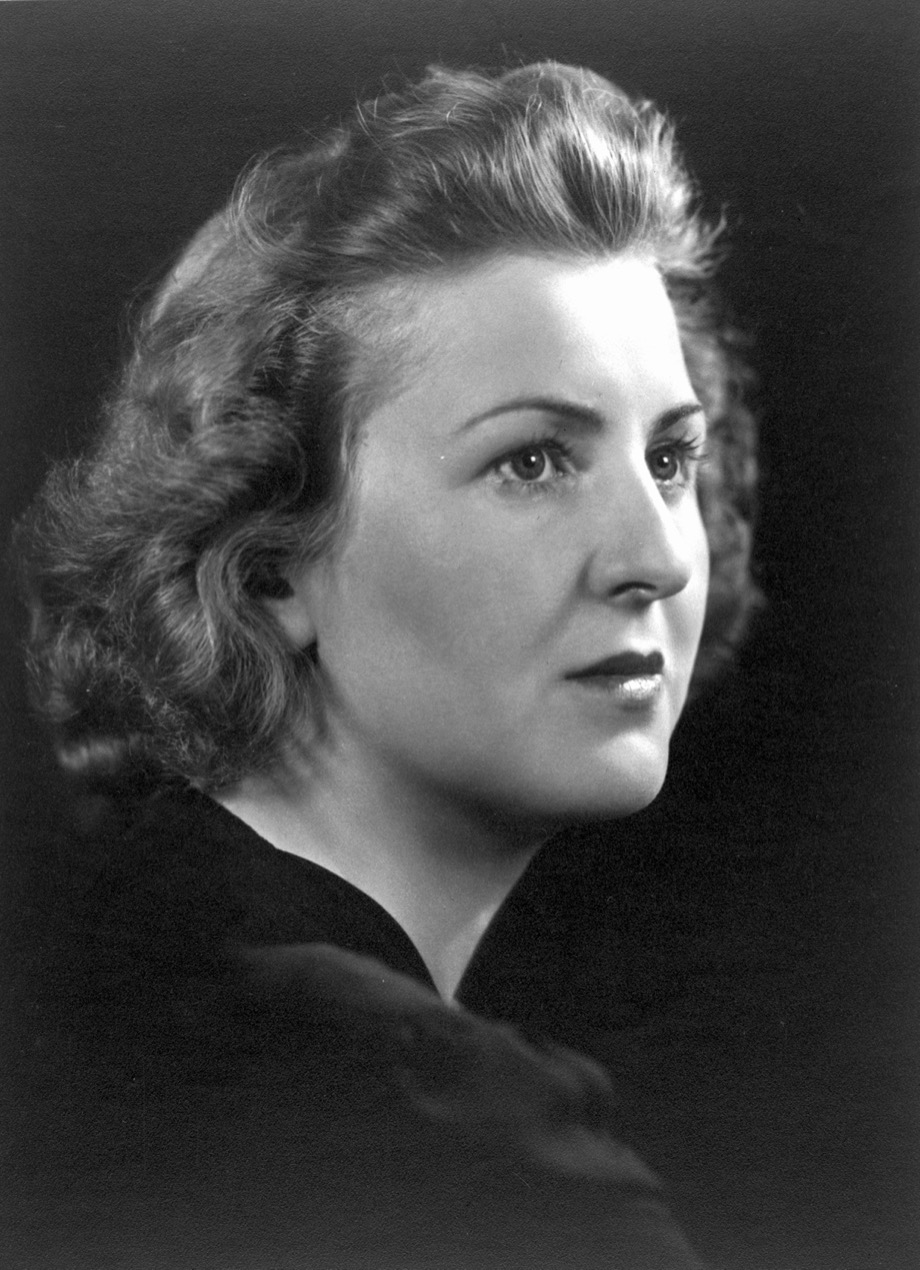
Portrait of Eva Braun (US National Archives)
The Woman Behind the Photographs
Eva Braun spent almost her entire adult life a few feet from the center of Nazi power and almost never in view of it. She met Adolf Hitler in 1929 as a seventeen-year-old shop assistant and photography apprentice in the Munich studio of Heinrich Hoffmann, Hitler's personal photographer, and within a few years had become his mistress — a relationship the regime kept carefully hidden from the German public for the whole of its existence. She was not a party official, not a public speaker, not a name most Germans would have recognized. She was, instead, the person behind the home-movie camera at the Berghof: filming skiing trips, garden parties, dogs, and the assembled inner circle of the men running a genocidal state, in vivid, mundane color.
That combination — a life saturated in sensory pleasure and image-making, married to an almost total absence of political voice — is the clearest signal of an ESFP temperament. Braun was not a cipher and not a fool; she was a woman who built an identity out of fashion, sport, performance, and personal loyalty, and who never once let that identity extend into the machinery of the state she lived inside.
Eva Braun was an ESFP whose dominant Se poured itself into fashion, film, and physical pleasure, and whose auxiliary Fi anchored an unshakeable, apolitical devotion to one man.
A Life Lived in the Frame
Braun's dominant Se shows in what she actually did with her days. She skied, swam, dove, danced, and dressed with real discipline — tailored suits, the latest fashions, a wardrobe she maintained at real expense even as the war ground on. She was an enthusiastic amateur filmmaker and photographer, not a passive subject: she staged shots, directed her sister and friends in front of the lens, and left behind hours of home-movie footage of the Berghof's inner circle, much of it in early color film that was expensive and difficult to obtain even for privileged Germans.
This was outward-facing sensation-seeking, not private reverie — she wanted to be seen, to perform, to capture the present moment on film rather than simply experience it. It is the same instinct that made her keep scrapbooks, pose for portraits, and treat physical fitness and appearance as central to her sense of self. Se dominance explains both her charm — contemporaries described her as vivacious and athletic — and her limits: she had almost no interest in ideas, reading, or the abstractions that consumed the men around her.
Loyalty That Would Not Bend
Auxiliary Fi gave Braun a private, deeply personal value system organized almost entirely around loyalty to Hitler as an individual, not as a cause. She tolerated years of secrecy, isolation, and being kept away from official functions — a relationship the regime treated as an embarrassing liability rather than an asset — without ever making it public or turning it into leverage. Her devotion was not political conviction; there is little evidence she engaged with Nazi ideology as ideology at all. It was personal attachment, held with total interior certainty.
That same Fi is what carried her into the Berlin bunker in the war's final weeks. With the Red Army closing on the city and Hitler's inner circle scattering, Braun traveled to Berlin specifically to be with him, refused chances to leave, married him in a brief ceremony on April 29, 1945, and died by suicide alongside him the next day. It was a choice made entirely on private, felt loyalty, with no larger justification offered or apparently needed.
Why ESFP Over ISFP
Why not ISFP?
An ISFP would turn Se-adjacent sensation inward — quiet, private, withdrawn from the camera rather than habitually in front of it. Braun was the opposite: an energetic amateur filmmaker and photographer who staged scenes, directed subjects, and actively documented the Berghof's social world in hours of footage. That is outward, performing Se, not introspective Fi-Se — the signature of an extravert, not an introvert.
Braun's extraversion was not loud or political — it never needed to be, given her position — but it was unmistakably outward: parties, sport, fashion, filming, performing for an audience of the inner circle even when the wider public could never know she existed. That pattern, paired with an Fi loyalty too private to ever assert itself publicly, points to ESFP rather than any more withdrawn or more idealistic alternative.
Connected Figures
Further Reading
- Eva Braun: Life with Hitler — Heike B. GörtemakerThe standard scholarly biography, drawing on newly available archival material.
- The Lost Life of Eva Braun — Angela LambertA detailed biographical account focused on Braun's private world at the Berghof.
