 Historical Figure MBTI
#668 · 5-16-26 · The Five Good Emperors
Fronto
The Tutor Who Was Outgrown
c. 100 — 166/167 CE
2 min read
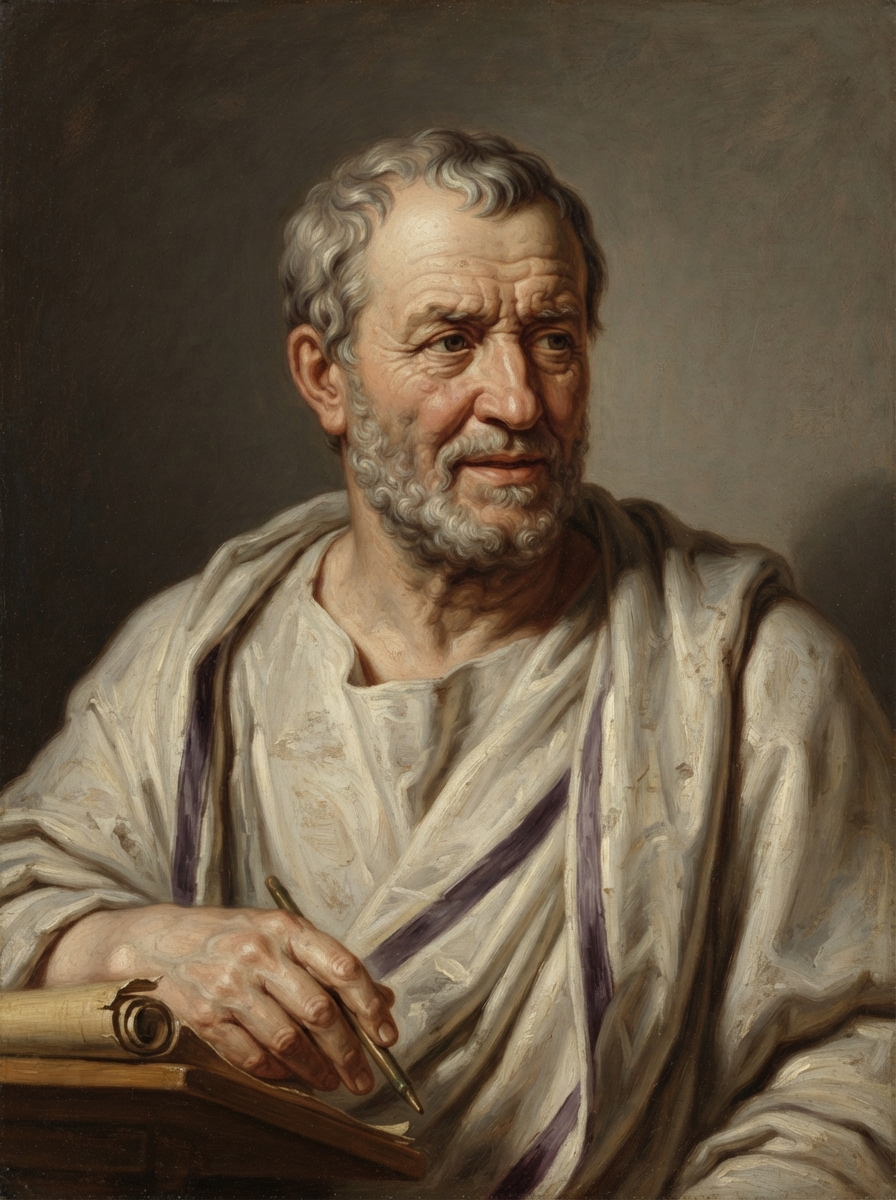
AI-assisted Portrait of Fronto
The Master of Latin Prose
In the middle of the second century, if a Roman family wanted their son to speak and write with real authority, they sent him to Marcus Cornelius Fronto. Born in Cirta, in North Africa, Fronto rose to become the most admired Latin orator of his generation — so admired that when Antoninus Pius needed a tutor in rhetoric for his adopted heir, the young Marcus Aurelius, Fronto was the obvious choice. He later taught Lucius Verus as well, and in 143 CE received the honorary consulship, the capstone of a career built entirely on the mastery of words.
What makes Fronto unusual among Roman rhetoricians is not his skill but his survival in an unexpected form. A cache of his private letters to Marcus, lost for over a millennium, was rediscovered and published only in the 19th century — and what it reveals is not a distant tutor but a man of persistent, almost fussing devotion, who worried over his student's health, missed him bitterly when they were apart, and could not stop coaching him on his sentences even after that student had become emperor of Rome.
It is also, quietly, the record of being outgrown. As Marcus matured he drifted from the ornate, archaic Latin style Fronto had spent his life perfecting toward the plain, unadorned Greek prose of Stoic philosophy — the very tradition Fronto's own craft existed to outshine. Fronto noticed, minded, said so gently and repeatedly, and never once let it curdle into withdrawal. That combination — plain-spoken hurt married to unbroken loyalty — sits at the center of the loosely inferred ISFJ reading of him.
Psychological Verdict
Fronto's letters are not the letters of a man angling for glory through his famous pupil. They are small and domestic in their concerns — a headache reported, a journey worried over, a compliment paid and then immediately qualified with another note on style — the texture of someone whose affection expressed itself as sustained, unglamorous attention rather than performance. That the great orator of his age spent his surviving words fretting over Marcus's diet and prose rhythms, rather than cultivating his own reputation, points toward a temperament oriented around service and steady personal loyalty: the marks commonly associated with ISFJ. He kept teaching, kept caring, and kept correcting Marcus's Latin long after there was any practical reason to, even as Marcus's philosophical turn made Fronto's own specialty look increasingly like a relic — a slight he registered but never weaponized. He also outlived several of his own children, and wrote about that grief with a plainness that has nothing rhetorical left in it at all, the one place in his correspondence where the ornate stylist seems to disappear entirely.
Connected Figures
Further Reading
- Correspondence — Marcus Cornelius Fronto (trans. C.R. Haines, Loeb Classical Library, 2 vols., 1919–1920)The complete surviving letters between Fronto and Marcus Aurelius, in facing Latin and English.
- Marcus Aurelius in Love — Amy Richlin (2006)A modern translation and analysis of the Fronto-Marcus letters, with attention to their emotional register.
- Fronto and Antonine Rome — Edward Champlin (1980)The standard scholarly study of Fronto's career and his place in Antonine literary culture.
