 Historical Figure MBTI
#952 · 7-13-26 · The Pacific War
Fumimaro Konoe
Prime Minister · Reluctant Drifter · Failed Peacemaker
1891 — 1945
5 min read
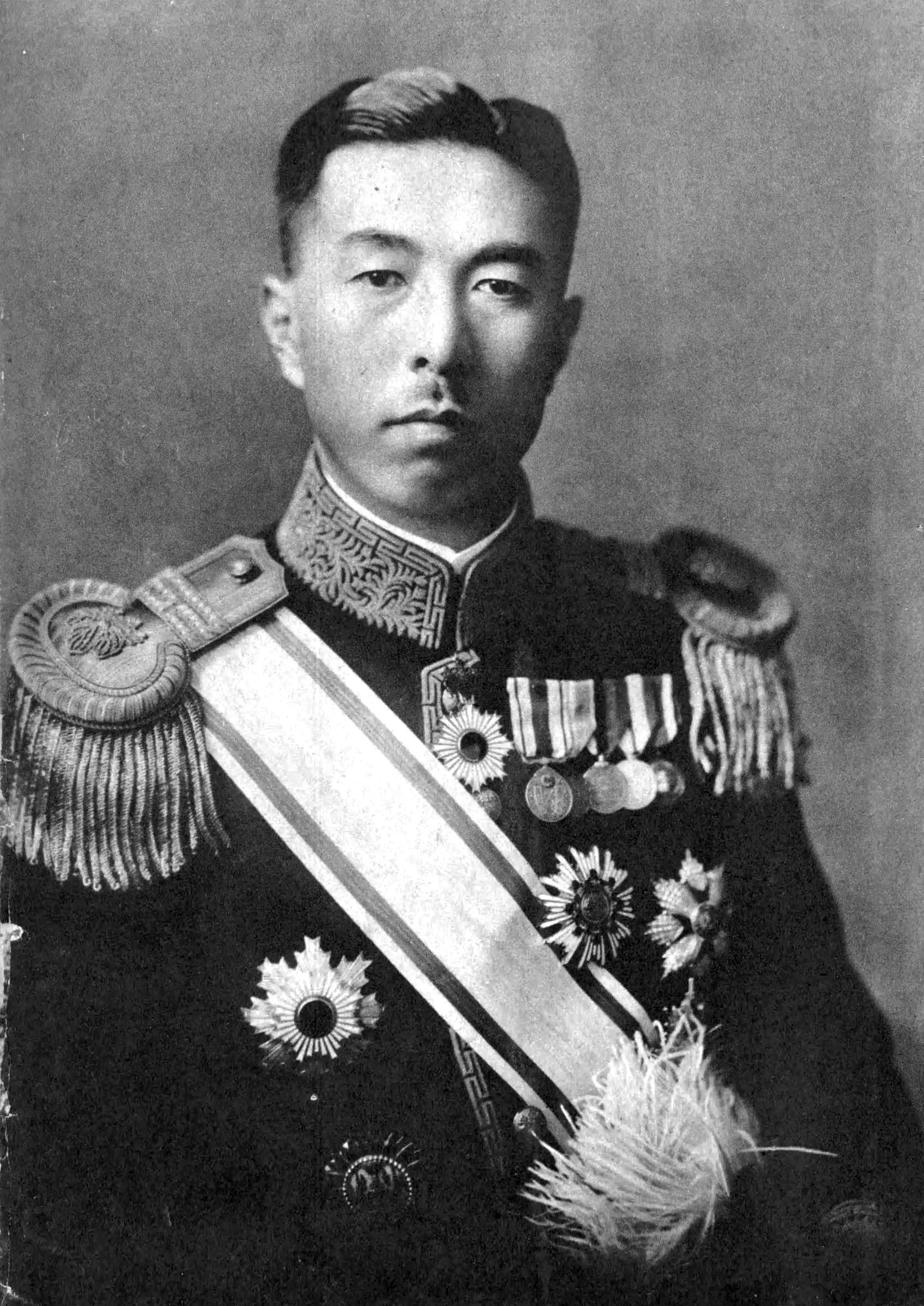
Portrait of Fumimaro Konoe
The Prince Who Hoped Instead of Deciding
Fumimaro Konoe was the most exquisitely qualified man in Japan to prevent the Pacific war, and he presided over every step that made it inevitable. Head of the Fujiwara house, a lineage older than the shogunate and second only to the imperial family itself, he was young, glamorous, widely popular, trusted by the court, and — unusually for a Japanese politician of the 1930s — not frightened of the generals in any personal sense. He served three times as prime minister: 1937 to 1939, then again from July 1940 to October 1941. In those terms Japan escalated an undeclared war in China into a national commitment, signed the Tripartite Pact with Hitler and Mussolini, moved into southern Indochina and triggered the American oil embargo, and arrived at the winter of 1941 with no exit.
Konoe wanted none of it. The private record is consistent and, in its way, pitiable: he doubted the China war could be won, doubted the German alliance served Japan, sought a personal summit with Roosevelt in 1941 in the hope that face-to-face diplomacy could break the deadlock, and warned the throne in 1945 that defeat was now less dangerous than the communist revolution he feared would follow a prolonged one. What he never did — not once, in four years of premiership — was tell the army no and stay in the room to enforce it. Confronted, he resigned. It happened again and again, and each resignation handed the initiative to men with fewer scruples and firmer nerves; the last one gave the government to Hideki Tojo.
An INFP in the one job that punishes dominant Fi hardest: a man whose values were sincere, private, and never once converted into a confrontation he was willing to lose.
Convictions Kept Indoors — Fi, dominant
Konoe's politics began in genuine moral objection. His 1918 essay rejecting the Anglo-American peace order argued that the Versailles settlement was a racket by satisfied powers to freeze their advantages permanently — a position he held sincerely and never abandoned, and which made him sympathetic to a Japanese claim to Asia while leaving him queasy about how the army pursued it. It is the classic dominant-Fi structure: a felt principle, arrived at internally, defended against the world but rarely tested by it.
The same interiority governed his conduct in office. His secretaries remembered a man who was melancholy, aloof, prone to taking to his bed at moments of crisis, and given to long private laments about the impossibility of his position. He ran back-channel peace feelers, confided his doubts to the court, and wrote memoranda explaining why the disaster was not his doing. Fi produces a very clear sense of what one is; it produces almost nothing about how to make others comply.
The Search for Another Way — Ne, auxiliary
Konoe was forever reaching for the alternative arrangement. The Imperial Rule Assistance Association of 1940 was meant to be a new political form that would absorb the parties and give the civilian state leverage against the military; it dissolved into a bureaucratic shell. The New Order in East Asia was a rhetorical construction meant to convert a brutal war of conquest into something he could live with. The Roosevelt summit was a genuine, imaginative gamble — a personal meeting in the Pacific, outside all the channels, that might reset a relationship the professionals had exhausted.
None of them survived contact. Auxiliary Ne generates possibilities; it does not supply the will to impose one against resistance. Every Konoe initiative had the same shape: an inventive opening, no second move, and a retreat when the army objected. When Washington insisted on preconditions the summit could not survive, and when the army made clear it would not accept withdrawal from China, he resigned rather than force the question — leaving his own foreign ministers, first Yosuke Matsuoka and then the men who followed, to work with a policy nobody could deliver.
A Thousand Years of Fujiwara — Si, tertiary
He carried his ancestry as both credential and burden. The Konoe were the senior branch of the Fujiwara, courtiers who had stood beside emperors for a millennium, and his instinctive frame of reference was the court rather than the cabinet: proximity to the throne as the real source of legitimacy, and personal service to Hirohito as the highest available duty. Tertiary Si also fed his deepest fear — that a long war would dissolve the kokutai, the inherited national order, under revolutionary pressure. It was the argument he finally pressed on the emperor in February 1945, urging immediate surrender specifically to save the throne from communism, and it arrived, as usual, several years after it might have mattered.
The Machinery He Never Learned to Work — Te, inferior
Konoe's failure was mechanical as much as moral. The army held a structural veto over any Japanese cabinet — it could bring a government down simply by refusing to supply a war minister — and defeating that veto would have required exactly the skills he lacked: coalition-building, patronage, the willingness to sack a general and survive the consequences. He never attempted it. He complained that the situation was impossible instead of testing whether it was.
Inferior Te also explains the ending. In December 1945, listed for arrest as a war crimes suspect and facing the prospect of standing in a dock as a common defendant, he took poison at his home in Ogikubo on the morning he was to report. He left a note arguing that he had been misunderstood and that history would judge him differently. It is the final refusal to submit his private account of himself to an external process — a man who preferred to be right in his own record than examined in anyone else's.
Why INFP Over ISFJ
Why not ISFJ?
The ISFJ reading is tempting because the visible behaviour is deference: a well-bred aristocrat who yielded to the institutions around him and let duty carry him where he did not want to go. But dutiful conformity is not what the record shows. Konoe was a restless institutional improviser — dissolving the political parties into a wholly new mass organisation, floating an unprecedented personal summit with a foreign head of state, running unofficial peace channels behind his own government's back. That is Ne generating options, not Si maintaining a known order. And his yielding was not obedience; it was avoidance. An ISFJ defers because the role requires it, and stays. Konoe deferred because confrontation was unbearable, and left.
He is the archive's sharpest case of the INFP failure mode at scale. Nothing in his values pointed toward Pearl Harbor, and every instinct he had — the doubts about China, the distrust of Berlin, the reach toward Roosevelt — pointed away from it. What was missing was any willingness to stake himself on it. Drift is not the same as complicity, but at the head of a government it produces the same result.
Connected Figures
Further Reading
- Japan 1941: Countdown to Infamy — Eri HottaThe best account of Konoe's final premiership and the resignation that produced Tojo.
- Konoe Fumimaro: A Political Biography — Yoshitake OkaThe standard life, translated from the Japanese, sympathetic but clear about his evasions.
- Hirohito and the Making of Modern Japan — Herbert P. BixPlaces Konoe within the court politics of the throne he served and appealed to.
- Japan's Road to the Pacific War — James William Morley (ed.)Translated Japanese documentary series on the decisions of 1937–41, Konoe's cabinets included.
