 Historical Figure MBTI
#954 · 7-13-26 · The Pacific War
Shigenori Togo
Foreign Minister · Reluctant Hawk · Voice for Surrender
1882 — 1950
6 min read
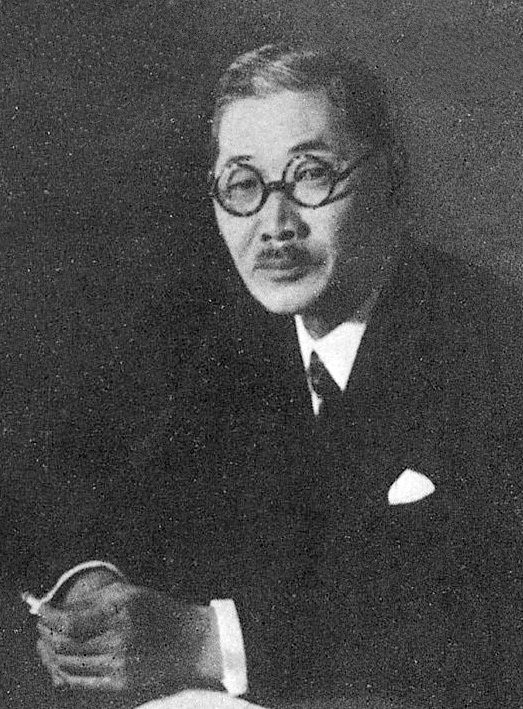
Portrait of Shigenori Togo
The Man Who Was Right at Both Ends of the War
Shigenori Togo held the Japanese foreign ministry twice, and both times at a moment when the whole weight of the state came down on a single desk. He was foreign minister in Hideki Tojo's cabinet in December 1941, when Japan went to war with the United States; and he was foreign minister again in the summer of 1945, when Japan had to find a way to stop. On both occasions he believed the war was unwinnable, and on both occasions he said so inside the room rather than outside it. Only the second time did anyone listen.
He was an unlikely fixture of the Japanese establishment: a descendant of Korean potters brought to Satsuma centuries earlier, a fact that shadowed his career; a scholar of German literature; married to a German woman; a career diplomat who had served in Berlin and, decisively, as ambassador in Moscow. He was reserved to the point of coldness, disliked by colleagues who found him abrasive and unclubbable, and constitutionally incapable of the consensus-soothing that Japanese ministerial politics ran on. What he had instead was an unusually accurate long-range read of where Japan stood.
The stain on his record is real and he never escaped it. It was his ministry's Washington embassy that was supposed to deliver the note breaking off negotiations before the attack on Pearl Harbor began, and through a chain of transcription and decoding delays the fourteen-part message arrived more than an hour late — turning an intended, if minimal, formality into what Roosevelt called a day of infamy. The Tokyo tribunal convicted Togo of waging aggressive war and sentenced him to twenty years. He died in an American military hospital in Tokyo in 1950, still a prisoner, while writing the memoir that would argue his case.
An INTJ whose dominant Ni saw the end of the war from its beginning, and who spent four years learning that being right inside a system is worthless until the system runs out of alternatives.
Seeing the Ending First — Ni, dominant
Togo took the foreign ministry in October 1941 on an explicit condition: that he be permitted to keep negotiating with Washington. He did not accept the army's article of faith that a decisive early blow would produce a negotiated settlement, and he had no confidence at all in the industrial arithmetic. Through November he pushed proposals — including a partial withdrawal from Indochina — against the resistance of colleagues who regarded any concession as surrender by instalment. When the Hull note arrived and the cabinet read it as an ultimatum, he was outvoted and stayed.
The same faculty made him uniquely clear-eyed in 1945. Back in office under Suzuki that April, he understood two things nobody else in the leadership would state together: that Japan could not fight on, and that the Soviet mediation the government was pinning its hopes on was a fantasy. He had been ambassador in Moscow; he knew the Yalta logic and had watched Stalin's diplomacy operate from the inside. He kept the Soviet channel open because his colleagues insisted, while telling the Supreme War Council it would produce nothing — a judgement vindicated on 8 August when the Red Army crossed into Manchuria.
Ni's characteristic burden is the loneliness of a conclusion reached before the evidence is public. Togo spent 1941 arguing against a war everyone expected to win and 1945 arguing for a surrender half the cabinet regarded as treason, and in both cases his position was where the facts eventually arrived.
Working the Machine — Te, auxiliary
Togo never made a public appeal in his life. He operated entirely through institutional channels — cabinet votes, ministry drafts, the composition of the Supreme War Council, the procedural question of who could put what before the throne — and his decisive contribution in August 1945 was a piece of pure procedural engineering. With the council split three to three between acceptance and continued resistance, he and Prime Minister Suzuki arranged for the deadlock itself to be laid before Hirohito, inviting the imperial decision that Japanese constitutional practice had no mechanism to refuse.
It worked twice. The seidan of 10 August produced acceptance of the Potsdam terms; when Washington's reply left the throne's position ambiguous and the hardliners reopened the argument, Togo drove the same mechanism again on 14 August, and the emperor closed it for good. That is auxiliary Te at its most effective — no speeches, no resignation in protest, just an exact understanding of which lever would move an immovable body. The same instinct explains 1941, and it is the hardest thing to defend about him: he did not resign when the cabinet chose war, reasoning that a foreign minister who walks out is replaced by someone worse. He was proved right by 1945, and it still made him the man who signed the papers for a war he did not believe in.
The Private Ledger — Fi, tertiary
Togo's convictions were held privately and defended without charm. He married Edith de Lalande, a German widow, at a time when a foreign wife was a real professional liability, and refused to treat it as one; his Korean-potter ancestry sat behind a career built entirely on examination results in a ministry that ran on connections. He did not cultivate patrons, did not flatter, and was widely described as difficult.
That inwardness is why he wrote. Imprisoned at Sugamo, he spent his remaining years on the memoir published in English as The Cause of Japan, an argument addressed less to his judges than to the record. Tertiary Fi produces exactly this — not public self-justification, but a meticulous private accounting laid down for whoever eventually reads it.
The Hour That Got Away — Se, inferior
The Pearl Harbor note is the inferior function's monument. Togo's ministry produced a fourteen-part message timed to be handed to Secretary Hull thirty minutes before the attack; the Washington embassy, short-staffed on a Sunday and dependent on a single trusted typist for a document no clerk could be shown, was still transcribing when the bombs fell. Whatever the intention behind the timetable, the man at the top of the ministry had not built the operational margin that would have made it survivable. Long-range vision, no feel for the friction of the immediate hour.
The same weakness marks 1945 from the other side. Togo had seen the end coming since at least the fall of Saipan, and yet the surrender was not moved until Hiroshima, Nagasaki and the Soviet declaration had made it physically undeniable. He needed the shock of concrete events to break a consensus that abstract argument could not touch — and, to his credit, he was ready with the mechanism the moment the shock arrived.
Why INTJ Over ISTJ
Why not ISTJ?
The surface case for ISTJ is the career itself: a lifelong civil servant, procedurally scrupulous, who stayed at his post through a decision he opposed. But Togo's guiding principle was never duty to the established line — it was an independent forecast of Japan's actual position, formed against the prevailing view and held for four years while everyone around him believed otherwise. He was arguing for withdrawal from Indochina when the government's settled policy pointed the other way, and dismissing the Soviet mediation his own colleagues had made official policy. Compare him with Hideki Tojo, the genuine ISTJ of this cluster, who executed the institutional consensus with total fidelity. Togo used the institution; he did not defer to it.
The distinction turns on where the judgement came from. An ISTJ's authority is precedent; Togo's was a projection — a picture of where the lines were going that he could not fully evidence at the time and that the evidence kept confirming. What makes him an unusually sympathetic INTJ is the patience to hold a losing position for years rather than take the clean exit Fumimaro Konoe reached for again and again. He paid for it with twenty years' imprisonment and a permanent association with a day he had argued against.
Connected Figures
Further Reading
- The Cause of Japan — Shigenori TogoHis own memoir, written in Sugamo Prison — the primary defence of his conduct at both ends of the war.
- Racing the Enemy: Stalin, Truman, and the Surrender of Japan — Tsuyoshi HasegawaThe August 1945 endgame in detail, with Togo's Soviet channel and the imperial decisions at its centre.
- Japan 1941: Countdown to Infamy — Eri HottaHis first ministry, the November negotiations, and the fourteen-part note that arrived late.
- Japan's Longest Day — Pacific War Research SocietyThe final twenty-four hours, the surrender broadcast, and the coup that nearly stopped it.
- The Tokyo War Crimes Trial: The Pursuit of Justice in the Wake of World War II — Yuma TotaniThe tribunal's reasoning, including the contested twenty-year sentence handed to Togo.
