 Historical Figure MBTI
#1145 · 8-24-26 · The Fall of the Han
Guo Jia
The Dissolute Genius · An Unerring Read on Every Rival · Dead at Thirty-Seven
170 – 207 CE
8 min read
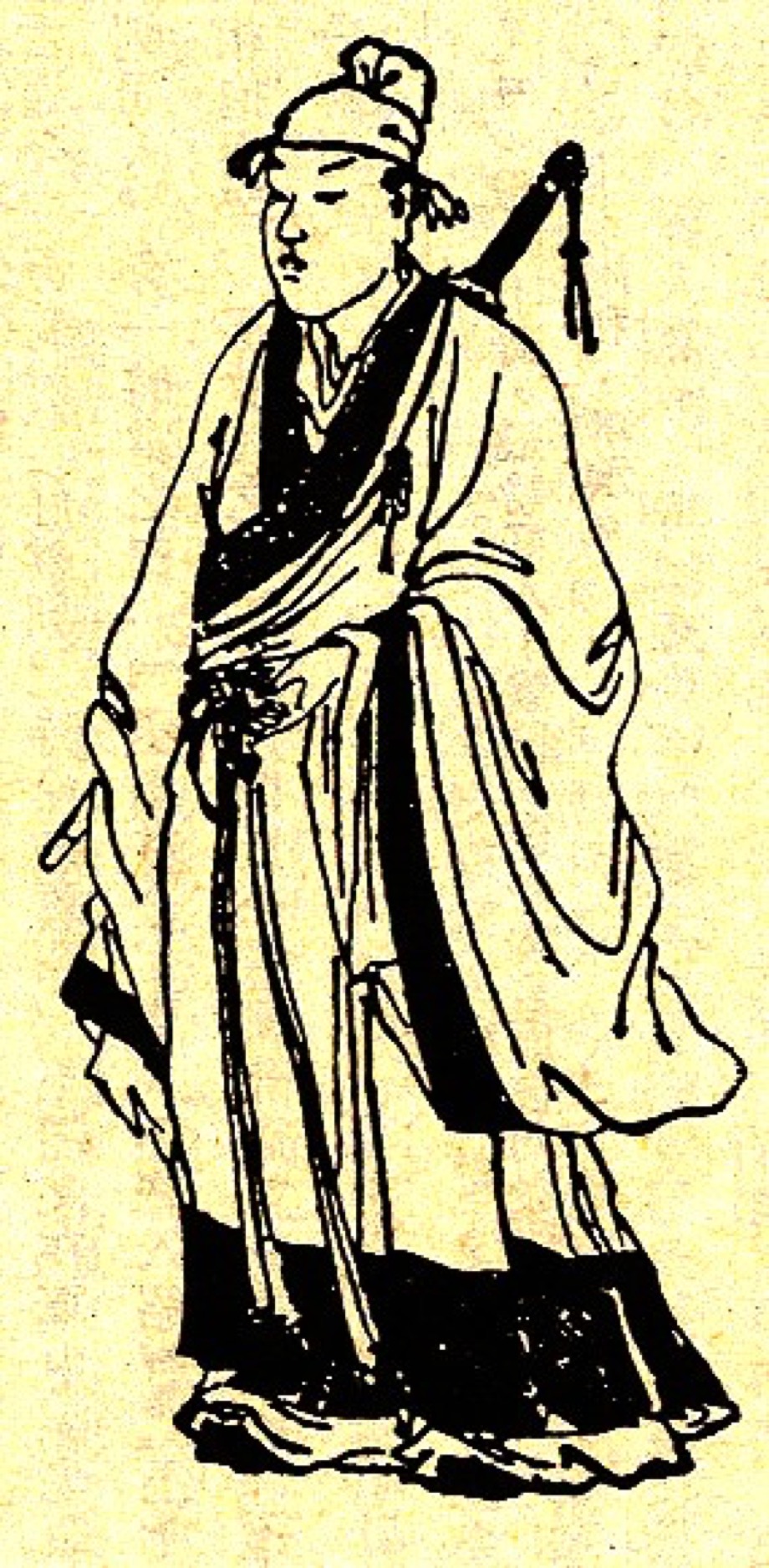
Portrait of Guo Jia
The Man Who Read Men, Not Maps
Guo Jia arrived at Cao Cao's court by way of a rejection he issued himself. He had first gone to serve Yuan Shao, the most powerful warlord in the north and, on paper, the obvious horse to back — and left within weeks, having decided the man could gather talent but not use it. That verdict, delivered years before Yuan Shao's catastrophic collapse at Cao Cao's hands, was not built from troop counts or grain stores. It was a character reading, made fast and made right.
Everything Guo Jia is remembered for follows from that same instinct. Where other strategists at Cao Cao's court modeled terrain, supply lines, and the arithmetic of armies, Guo Jia modeled people — their vanity, their patience or lack of it, the shape of the mistake a particular man was likely to make under pressure. He told Cao Cao, before any campaign confirmed it, that the young warlord Sun Ce — brilliant, fast-rising, contemptuous of his own safety — would be cut down by an assassin before he ever reached the battlefield. Weeks later, retainers of a man Sun Ce had killed did exactly that. It reads less like military intelligence than like a novelist's certainty about a character he had never met.
He was also, by the standards of Han officialdom, a mess — undisciplined, informal, repeatedly hauled before the court censors for conduct unbecoming a minister. Cao Cao shrugged it off every time. The combination — an uncanny, almost intuitive grip on other people's inner lives, paired with a private refusal to perform propriety for its own sake — is the signature of an ENFP, dominant Extraverted Intuition running loose over a fixed, quietly stubborn Introverted Feeling.
Guo Jia never modeled Sun Ce's army. He modeled Sun Ce — and that was enough. It is the tell of an ENFP's dominant Ne: intuition landing not on positions but on people, reading a man's temperament as the real terrain of the war.
The Sun Ce Prediction
The prediction about Sun Ce is the clean, famous version, but it is only the loudest instance of a pattern Guo Jia ran on nearly every rival Cao Cao faced. He read Lü Bu as a man whose subordinates would betray him before his enemies could beat him — right again. He read Yuan Shao's sons as certain to turn on each other the moment their father died, and structured his advice to Cao Cao around letting that rivalry do the army's work — right a third time. None of this came from ledgers. It came from watching how a man handled flattery, humiliation, and fear, and extrapolating forward.
That is Extraverted Intuition doing exactly what it does best: generating a field of possibilities from thin, scattered signals and trusting the pattern before the proof arrives. In most strategists this faculty is bent toward terrain and logistics. In Guo Jia it bent toward temperament — toward the recognition that Sun Ce's carelessness about his own bodyguard was, itself, the decisive fact of the coming war, more decisive than any count of soldiers.
It also explains the single boldest call of his career: pressing Cao Cao to strike deep and fast into Wuhuan territory in 206, against the caution of most of the court, who worried a long march into nomadic country while the south still burned was reckless. Guo Jia argued the opposite — that speed itself was the safety, that a hesitant approach was the one guaranteed to fail. Cao Cao took the wager. It secured his northern flank before the descent toward Red Cliffs. Ne does not wait for certainty; it moves on a strongly felt shape of the future and is right often enough to be trusted with the army.
The Censors' Complaint
Han officialdom ran on dignity — measured speech, correct dress, a public reserve that signaled fitness for rank. Guo Jia kept failing that test, repeatedly, and on the record. The court censors filed formal complaints about his conduct: undisciplined, casual, lacking the gravity a minister of his station was supposed to project. He never seems to have corrected course. He simply kept being himself, in whatever private register that was, while doing work no one else at court could match.
That is Introverted Feeling operating exactly as it operates in an ENFP — not as performed warmth or public sentiment, but as a private, load-bearing sense of what is and is not worth conforming to. Fi does not argue with the censors; it simply declines to be reshaped by them. Guo Jia's loyalty to Cao Cao was total and, by every account, personally warm — but his sense of propriety toward the institution he served was thin, held loosely, subordinate to an inner compass that answered to no office.
It is also, most likely, why Cao Cao valued him past the point of institutional sense. Cao Cao did not merely tolerate the unconventional conduct — he defended it, against his own censors, because the same inner authority that would not bow to court decorum was the source of the reads on Sun Ce and Yuan Shao's sons. You do not get the gift without the friction that comes attached to it.
Turning a Read Into an Order
A character judgment is not a strategy until someone converts it into a marching order, and this is where Guo Jia's Te did its quiet work. The Wuhuan campaign is the clearest case: knowing that Sun Ce's recklessness or a rival's indecision was likely to break a certain way is one thing; committing an army to a fast, exposed strike deep into hostile territory on the strength of that reading is another. Guo Jia did not just predict — he pressed the argument into a concrete operational plan and staked his credibility on Cao Cao executing it.
This is tertiary Te in an ENFP's stack: not a natural home, not the seat of his genius, but a competent enough tool for pushing an intuitive conviction out into the world as a decision. He did not build systems of governance or logistics the way a Te-dominant administrator would; he built single, decisive recommendations and drove them through, one campaign at a time, trusting that the read underneath was sound enough to carry the execution.
No Interest in Precedent
What Guo Jia never did is as telling as what he did. He left behind no record of appeals to established precedent, no citation of how previous ministers had comported themselves, no apparent interest in the accumulated protocol that the censors kept invoking against him. Introverted Sensing — the faculty that stores and defers to what has reliably worked before — sat at the bottom of his stack, underused and, by his conduct, faintly resented.
It shows up too in how briefly he burned. Thirty-seven years, most of them spent in motion — assessing one court and abandoning it, then serving the next through a string of fast campaigns rather than a long administrative career of the kind an Si-strong mind might have built for itself. He was not a custodian of institutional memory. He was a man who read the moment in front of him and moved, again and again, until his body — never mentioned as robust — simply stopped keeping up in 207.
Why ENFP Over INTJ
Why not INTJ?
It is tempting to file Guo Jia's foresight as INTJ-style cold calculation — a strategist quietly running the numbers ahead of everyone else. But his predictions were never abstract strategic models; they were verdicts on individual character, arrived at through something closer to intuition than analysis — Sun Ce specifically, his specific recklessness, not a general theory of warfare. And an INTJ's hallmark is disciplined self-control in service of the plan. Guo Jia's conduct was the opposite: famously loose, personally expressive, repeatedly flagged by the very institution he served. That is Ne-Fi reading human nature with real warmth, not Ni-Te building a system from detached remove.
The clinching detail is the grief. Cao Cao did not merely lose a useful officer when Guo Jia died — he mourned him, personally and visibly, and a year later, staring at the wreckage of Red Cliffs, said flatly that Guo Jia would never have let it happen. That is not the record left by a systems analyst. It is the record left by a singular, vivid personality whose specific way of seeing people turned out to be irreplaceable.
Connected Figures
Further Reading
- Imperial Warlord: A Biography of Cao Cao — Rafe de CrespignyCovers Guo Jia's role at court and the depth of Cao Cao's grief at his death.
- A Biographical Dictionary of the Later Han to the Three Kingdoms — Rafe de CrespignyReference entry on Guo Jia's career and court reputation.
- Sanguozhi (Records of the Three Kingdoms), Book of Wei — Chen ShouThe primary source biography underlying nearly everything known about Guo Jia.
