 Historical Figure MBTI
#1144 · 8-24-26 · The Fall of the Han
Xun Yu
The Idealist Who Built Wei · Then Died Rather Than Bless a Throne
163 – 212 CE
10 min read
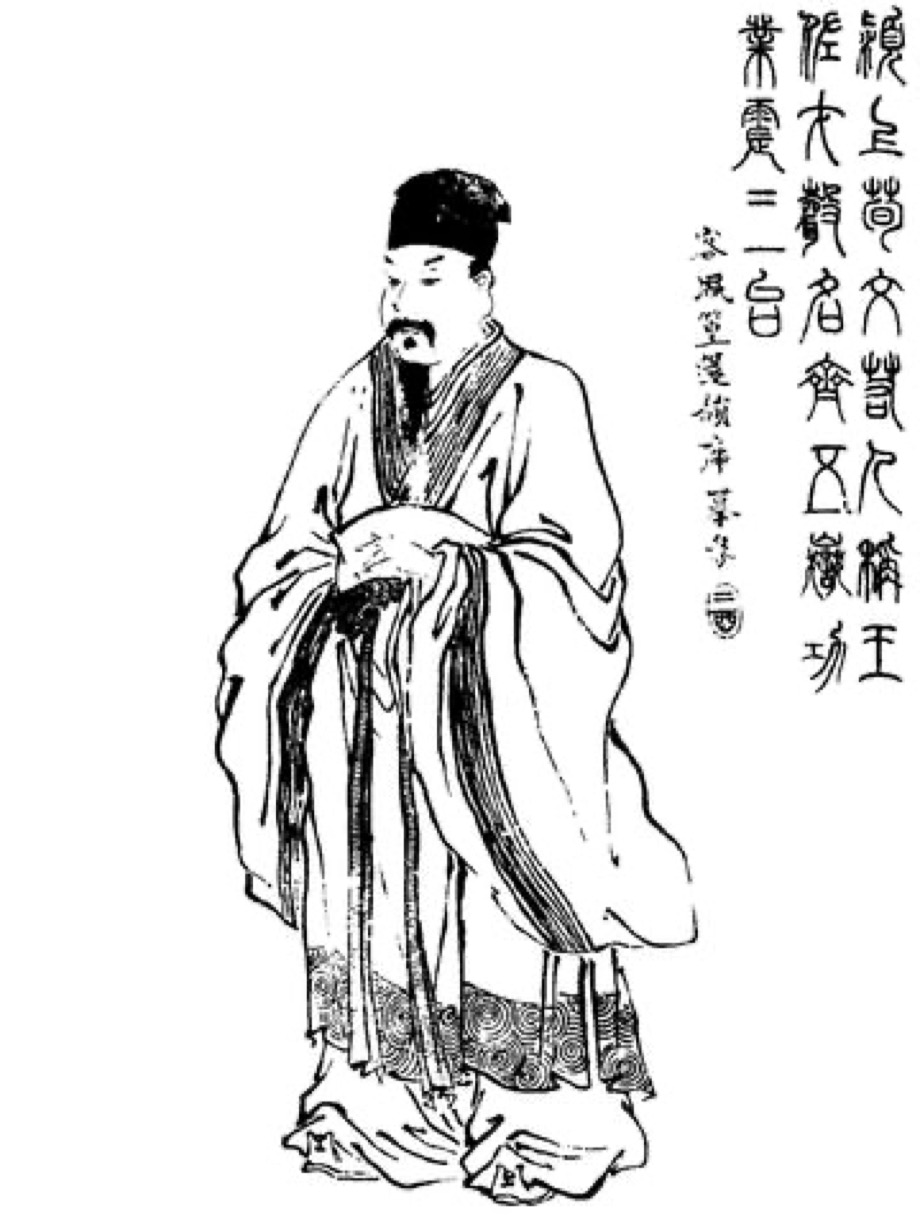
Portrait of Xun Yu
The Zifang of His Age
When Xun Yu walked away from Yuan Shao's service in the early 190s, Yuan Shao held the richest provinces in the north, the largest army, and the deepest bench of noble pedigree in the empire. On paper it was not a close call. Xun Yu made it anyway, on the strength of a judgment nobody else in the room could see: that Yuan Shao, for all his resources, lacked the decisiveness to use them. It would be nearly a decade before Guandu proved him right. He did not wait for proof. He walked out the door and offered himself instead to a comparatively minor warlord named Cao Cao — a man with less land, less pedigree, and, as it happened, exactly the ruthlessness Xun Yu had judged the moment required.
What followed was two decades in which Xun Yu became, by near-universal contemporary reckoning, the single most indispensable man in Cao Cao's rise — contemporaries called him "the Zifang of our age," setting him beside Zhang Liang, the strategist who had helped found the Han four centuries earlier. It was Xun Yu who pressed the case, in 196, for "welcoming" the fugitive Emperor Xian — homeless, starving, shuttled among warlords who mostly saw him as a liability — and installing him under Cao Cao's protection. Every other major warlord in the empire had the same opportunity and passed on it, seeing only the cost of feeding and guarding a powerless boy-emperor. Xun Yu saw what the throne would confer on whoever held it, years before anyone else grasped what that possession would be worth. It was the single most consequential move of Cao Cao's career, and it was not really Cao Cao's idea.
For the next sixteen years Xun Yu ran the rear base while Cao Cao campaigned — provisioning armies, administering captured territory, and recommending the other strategists, Guo Jia foremost among them, who would fill out Cao Cao's court. He was, by every account, entirely loyal. And then in 212, when Cao Cao's allies proposed making him Duke of Wei — a title with its own fief, its own army, its own court, and only one plausible destination — Xun Yu alone said no. He was kept from court on a pretext, and died within months, in circumstances the sources themselves treat as too clean to be entirely natural.
Xun Yu was never serving the man. He was serving what the man was supposed to become — and when the two split, the loyalty went with the ideal, not the ally. That is the signature of an INFJ running dominant Ni in service of a Fe conviction.
Reading a Decade Before It Arrived
Xun Yu's defining trait was never cleverness in the moment — it was the habit of seeing where a trajectory ended before anyone else had finished mapping the starting point. His break with Yuan Shao is the cleanest case: not a reaction to any single failure, since at the time Yuan Shao had not yet failed at anything, but a conviction, reached in advance, about a temperament that would eventually collide with a crisis it could not handle. Guandu, when it came, was simply confirmation of a conclusion Xun Yu had already filed away and acted on years earlier.
The 196 plan to bring Emperor Xian under Cao Cao's roof shows the same faculty pointed forward rather than backward. Every other warlord looked at the exiled court and saw an expense — mouths to feed, a rival claimant to legitimacy, no army worth the name. Xun Yu looked at the same starving retinue and saw the entire architecture of the next twenty years of Chinese politics: whoever held the emperor would hold the language of legitimate rule, and every other warlord would spend the rest of his career justifying himself against that fact. He was not guessing. He was extrapolating a structure from a situation nobody else had bothered to think two moves past its surface.
And in 212 the same instrument turned, one final time, on Cao Cao himself. A ducal title with its own fief and army was, on its face, an honor — that was how Cao Cao's allies packaged it, and how most of the court received it. Xun Yu did not evaluate it as an honor. He read it as a structural first step on a path with only one destination, years before that destination arrived, in exactly the way he had once read Yuan Shao and once read the vacancy around a homeless emperor. The pattern recognition that had built Cao Cao's legitimacy was the same pattern recognition that told Xun Yu, alone in that court, that the man he had built it for was no longer building toward what Xun Yu had signed on for.
Loyal to an Order, Not a Man
It is easy to mistake Xun Yu's two decades of devoted service for personal loyalty to Cao Cao, and most of Cao Cao's other lieutenants would have understood their own service that way. Xun Yu's was aimed somewhere else. He administered the rear base, provisioned the armies, and vetted the government's day-to-day business not because Cao Cao commanded it but because Cao Cao was, for as long as their aims aligned, the most capable available instrument for restoring a legitimate Han order — an institution Xun Yu served for its own sake, not for the sake of whoever happened to be its most useful champion.
That distinction is what makes his personnel choices coherent rather than merely generous. Recommending Guo Jia and the other strategists who filled out Cao Cao's court was not empire-building on Xun Yu's own behalf — he built no faction of his own, accumulated no rival power base, took no steps to entrench himself personally. He spent his influence entirely on making the institution around him function, which is the outward-directed, structure-building expression of Fe: loyalty discharged as care for the shared order, not as personal attachment to the man currently at its head.
Which is why 212 reads as consistent rather than as betrayal. The Fe that had spent twenty years building Cao Cao's government was never separable from the Han ideal that government was supposed to be restoring. When the Duke of Wei proposal arrived, Xun Yu did not calculate whether opposing it served his own position — it manifestly did not — he simply said, in effect, that this crossed the line the whole project had been justified by. The same faculty that had recommended talent for two decades now refused, publicly and at fatal cost, to bless the one act that would sever Cao Cao's power from the institution it had always claimed to serve.
The Administrator Behind the Visionary
Vision alone does not run a rear base for sixteen years while an army campaigns hundreds of miles away. Xun Yu's day-to-day work — logistics, provisioning, the ordinary machinery of a functioning government kept running in the lord's absence — required a working internal logic he could apply consistently without Cao Cao's presence to arbitrate every decision. That is tertiary Ti: a private framework of principle sturdy enough to make his judgments predictable and coherent even when he was, in practice, running the government alone.
It shows most clearly in how he argued the 212 objection. He did not simply feel that the Duke of Wei title was wrong and say so emotionally — he built the case on a stated principle, that Cao Cao had always claimed to act in loyal service to the Han, and that the title contradicted that claim on its own terms. That is a Ti move: taking a value and testing a proposed action against it as a matter of internal consistency, not merely as a matter of sentiment. It gave his objection a structure that made it impossible for Cao Cao to dismiss as mere squeamishness, which is likely a large part of why it had to be answered with removal rather than argument.
No Sword Drawn, No Confrontation Staged
What is most striking about Xun Yu's final act is what he did not do. He held, effectively, the machinery of Cao Cao's government in his hands after twenty years of running it. A more Se-comfortable operator in his position — someone at ease seizing the moment and forcing a visible confrontation — might have rallied allies, staged a public break, or moved against the proposal in the open court where the fight could actually be won or lost in real time. Xun Yu did none of that.
Instead he objected once, was quietly removed from court on a pretext, and by every credible account simply withdrew and died rather than resist further or force a physical reckoning. Inferior Se in an INFJ often surfaces exactly this way under extreme pressure — not as aggression but as its opposite, a retreat from direct confrontation into passivity, even self-destruction, when the immediate physical and political battlefield is the terrain called for. The man who had read Yuan Shao's ruin a decade out and read Cao Cao's ambition years ahead of the title itself had no comparable instinct for the raw, in-the-room contest that might have actually saved him.
Why INFJ Over INTJ
Why not INTJ?
An INTJ reading would cast Xun Yu as a pure strategic operator, optimizing throughout for Cao Cao's success as an end in itself — recommending talent, running logistics, and engineering the 196 restoration purely as moves in Cao Cao's game. But that framing cannot explain 212. A Te-driven strategist recalculating that a patron has become a liability breaks with him coolly, on cost-benefit grounds, and looks for the next advantageous position. Xun Yu did neither. He broke because a value — loyalty to the Han order itself, held for its own sake — was violated, and he then withdrew rather than maneuver. That is Fe values-conviction meeting an irreconcilable breach, not Te recalculating an investment.
The whole arc only coheres once Cao Cao is understood as the instrument and the Han restoration as the actual aim. Twenty years of devoted, brilliant service and one final, fatal refusal are not in tension under that reading — they are the same commitment, expressed first as construction and then as its opposite the moment construction turned into usurpation.
Connected Figures
Further Reading
- Imperial Warlord: A Biography of Cao Cao — Rafe de CrespignyThe fullest scholarly account of Xun Yu's role and death, published by Brill (2010).
- A Biographical Dictionary of the Later Han to the Three Kingdoms — Rafe de CrespignyEntry on Xun Yu, situating him among his contemporaries.
- Sanguozhi (Records of the Three Kingdoms), Book of Wei — Chen ShouThe primary source biography underlying every later account of his life.
- Fire over Luoyang: A History of the Later Han Dynasty — Rafe de CrespignyOn the political context of the 196 restoration of Emperor Xian, Brill.
