 Historical Figure MBTI
#726 · 5-31-26 · The Conquest of Mexico
Jerónimo de Aguilar
Castaway · Translator · Eight Years a Captive
c. 1489 — 1531
3 min read
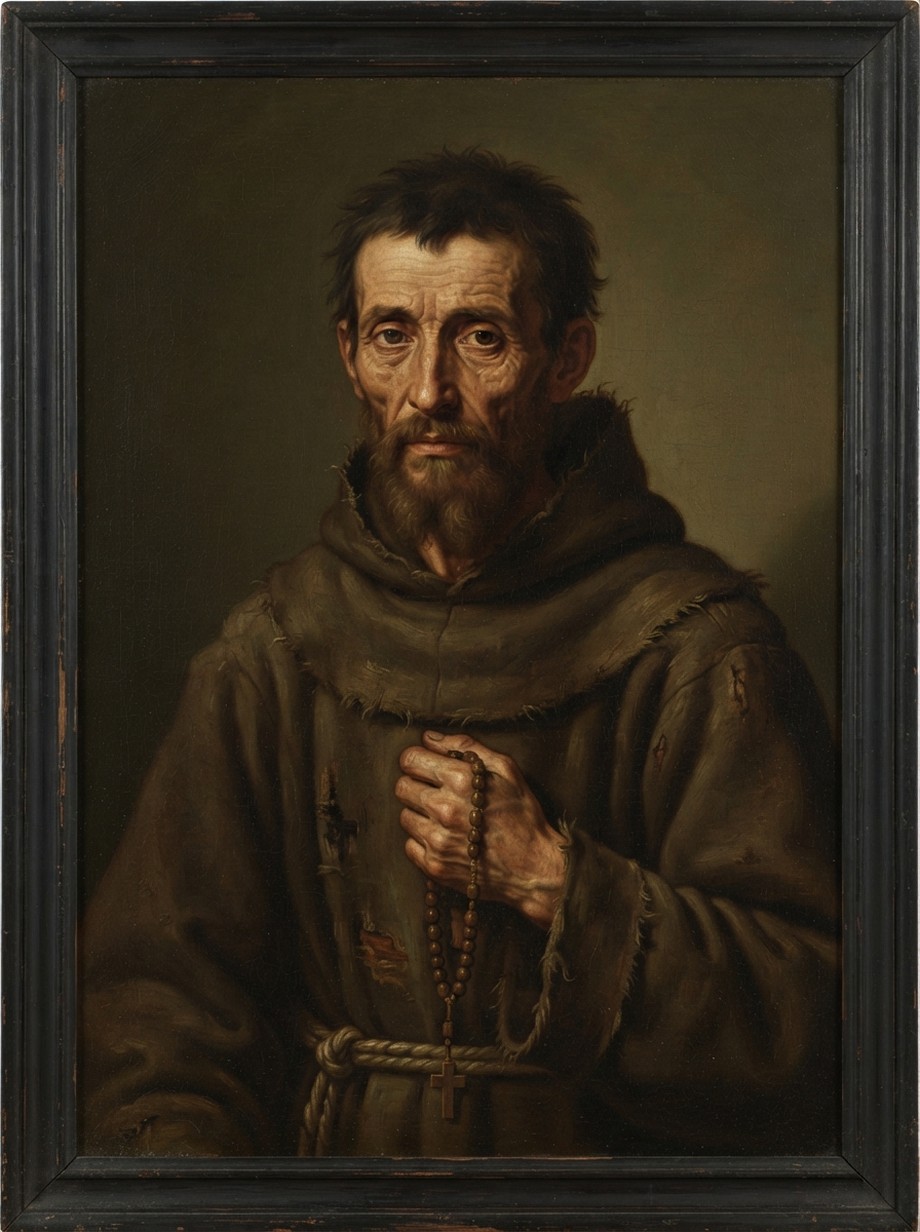
AI-assisted Portrait of Jerónimo de Aguilar
The Captive Who Kept His Calendar
In 1511 a caravel out of Panama wrecked on the reefs east of Yucatán, and its survivors drifted ashore into Maya captivity. Two of them are remembered for taking opposite roads out of that captivity. One, Gonzalo Guerrero, married in, tattooed his skin, pierced his ears, and became a war captain for a Maya lord. The other, Jerónimo de Aguilar, a friar who had taken minor religious orders before the wreck, did nothing of the kind. He was enslaved, put to hard labor, and by his own later account kept a small breviary with him and notched the days so that he could keep observing the Catholic calendar in a place that had no use for it. Eight years passed this way — not resistance exactly, nothing so dramatic as defiance, just a quiet, dogged refusal to let the details of who he was get worn away.
When Cortés's expedition reached the coast in 1519 and sent word inland asking after any Spaniards still living among the Maya, Aguilar walked out of the jungle to meet them. Guerrero, given the same chance, stayed. The difference between the two men is really the whole of Aguilar's story: not what happened to him, which mirrored Guerrero's almost exactly, but what he did with eight years of it — hold a position rather than adapt to circumstance.
Aguilar is best read as an ISTJ: a man who treated his identity as a set of obligations to be kept, not a set of options to be revised.
The First Link in the Chain
The very stubbornness that had cost Aguilar eight hard years turned out to be exactly what Cortés needed. Because Aguilar had spent that captivity paying close attention to a language he never stopped intending to leave behind, he emerged from it fluent in Yucatec Maya — a practical, almost accidental byproduct of a mind that kept careful track of its surroundings even while refusing to belong to them. He became Cortés's translator, and when La Malinche joined the expedition soon after, the two of them formed a working chain: she rendered Nahuatl into Maya, and Aguilar rendered Maya into Spanish, link by link, until she later learned Spanish directly and made him redundant. He accepted that redundancy without apparent complaint and went on serving the expedition in whatever capacity was asked of him, later settling in New Spain with a grant of land and Indigenous labor, dying around 1531 as an unremarkable colonial administrator — the same steady, procedural afterlife that swallows most men who do their job competently and are then no longer needed for it.
It is a career built entirely on reliability rather than vision. Aguilar did not seek out the role of translator any more than he sought out the shipwreck; he simply held his ground through eight years that would have reshaped most people, and the specific, concrete skill that resulted — a fluency earned through captivity rather than ambition — happened to be indispensable at the exact moment history required it.
Connected Figures
Further Reading
- Seven Myths of the Spanish Conquest — Matthew RestallReassesses the roles of Aguilar and Guerrero against the myths that grew up around the conquest's translators.
- The True History of the Conquest of New Spain — Bernal Díaz del CastilloEyewitness chronicle describing Aguilar's recovery and his work as Cortés's translator.
