 Historical Figure MBTI
#985 · 7-20-26 · The Pacific War
John Basilone
Sergeant · Medal of Honor · Hero of Guadalcanal
1916 — 1945
4 min read
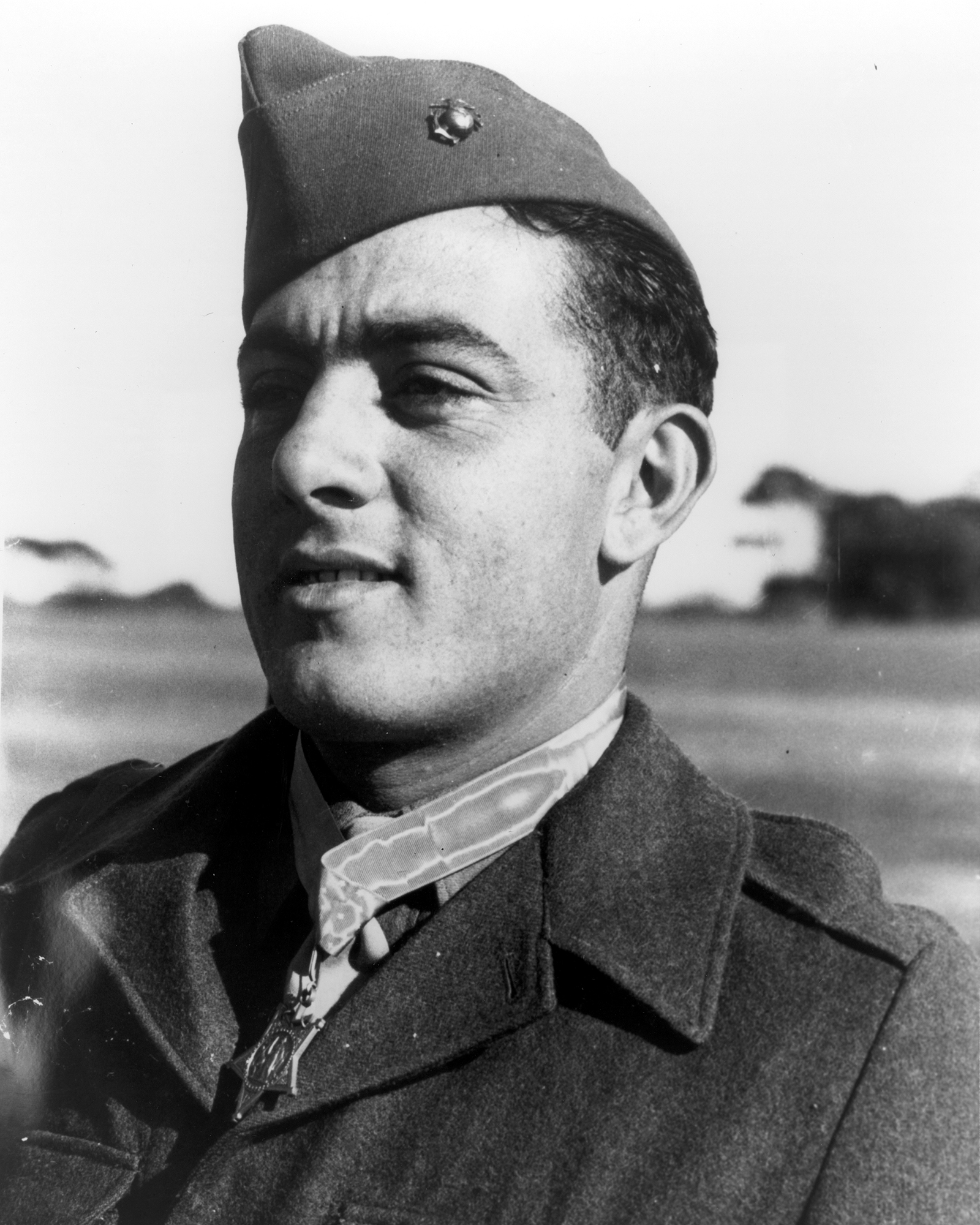
Portrait of John Basilone, USMC, 1943
A Reluctant Hero
On the night of October 24, 1942, John Basilone's machine-gun section was the only thing standing between a Japanese regiment and the airfield it needed to seize. As his guns jammed or ran dry and the men around him fell, Basilone repaired weapons under fire, ran ammunition through open ground to resupply isolated positions, and at points manned a gun alone, holding the line through a night of repeated assaults. He was awarded the Medal of Honor for it — the first enlisted Marine to receive one in the Pacific War.
What followed reveals as much about him as the battle itself. The Marine Corps sent him home to headline a war-bond tour, and Basilone hated nearly every minute of it — the crowds, the speeches, the distance from the war he still felt responsible to. He turned down a commission and repeated offers to sit the rest of the war out stateside, and pushed instead to get back to a combat unit, eventually dying at Iwo Jima in 1945, leading men under fire exactly as he had on Guadalcanal.
Basilone was ISFP at his core — a man whose dominant Fi made loyalty, not glory, the only thing worth fighting for.
Loyalty Over Recognition
Introverted feeling is a private, intensely personal value system, and Basilone's whole story runs on it. His stand on Guadalcanal was not fought for medals or headlines; it was fought because the men on either side of him needed those guns to keep firing, and he could not accept the alternative. That same value system made the celebrity that followed almost unbearable — he was visibly uncomfortable on stage at war-bond rallies, more interested in the men still fighting overseas than the applause aimed at him.
It was this same internal conviction that pushed him to insist on returning to combat rather than accept a safe, celebrated role at home. Basilone measured himself against a private standard of obligation to his fellow Marines that no amount of public honor could satisfy in its place.
Hands on the Gun
Basilone's auxiliary Se is what turned his private conviction into physical action under fire. He did not direct the defense of his section from a distance — he was in it, repairing a machine gun by feel in the dark, carrying ammunition across open, fire-swept ground, and manning a gun alone when his crew was killed or wounded around him. His courage was tactile and immediate, expressed entirely through what his hands and body could do in the moment, not through planning or reflection.
A Quiet Certainty About Where He Belonged
Basilone's tertiary Ni surfaces in the single-minded clarity with which he rejected the safe path laid out for him. Once the bond tour began, he seemed to know, with unshakable certainty, that his place was back with a combat unit — a conviction he held to despite pressure to accept a comfortable, celebrated stateside future. That quiet, settled sense of purpose, rather than any dramatic reasoning process, is what carried him back to the Pacific and to Iwo Jima.
No Interest in the Machinery of Fame
Where Basilone's type struggled was with the external, organizational world the Medal of Honor thrust him into — the tours, the publicity apparatus, the machinery of wartime propaganda. His inferior Te left him uncomfortable managing that system or working it to his advantage; he simply wanted out of it and back to a rifle company, a preference that reads as almost willful indifference to the practical benefits fame could have brought him.
Why ISFP Over ESFP
Why not ESFP?
An ESFP would have taken to the bond tour, drawing energy from the crowds and the spotlight. Basilone did the opposite — he was visibly uncomfortable with celebrity and sought the first opportunity to leave it behind. That discomfort with public attention, paired with a motivation rooted entirely in personal loyalty rather than audience or applause, is Fi, not Fe.
Basilone over ESFP comes down to what the fame revealed. Both types could have performed the same act of courage; only the ISFP would find the resulting spotlight a burden to escape rather than a stage to occupy.
Connected Figures
Further Reading
- Basilone: Legend of Guadalcanal — Jim Proser with Jerry CutterBiography drawing on the recollections of Basilone's family and fellow Marines.
- Guadalcanal: The Definitive Account of the Landmark Battle — Richard B. FrankDetailed account of the October 1942 fighting where Basilone earned the Medal of Honor.
- Helmet for My Pillow — Robert LeckieFirsthand Marine memoir of the Guadalcanal campaign's ground-level experience.
