 Historical Figure MBTI
#984 · 7-20-26 · The Pacific War
Alexander Vandegrift
General · Commander at Guadalcanal · Steady Hand in the Jungle
1887 — 1973
4 min read
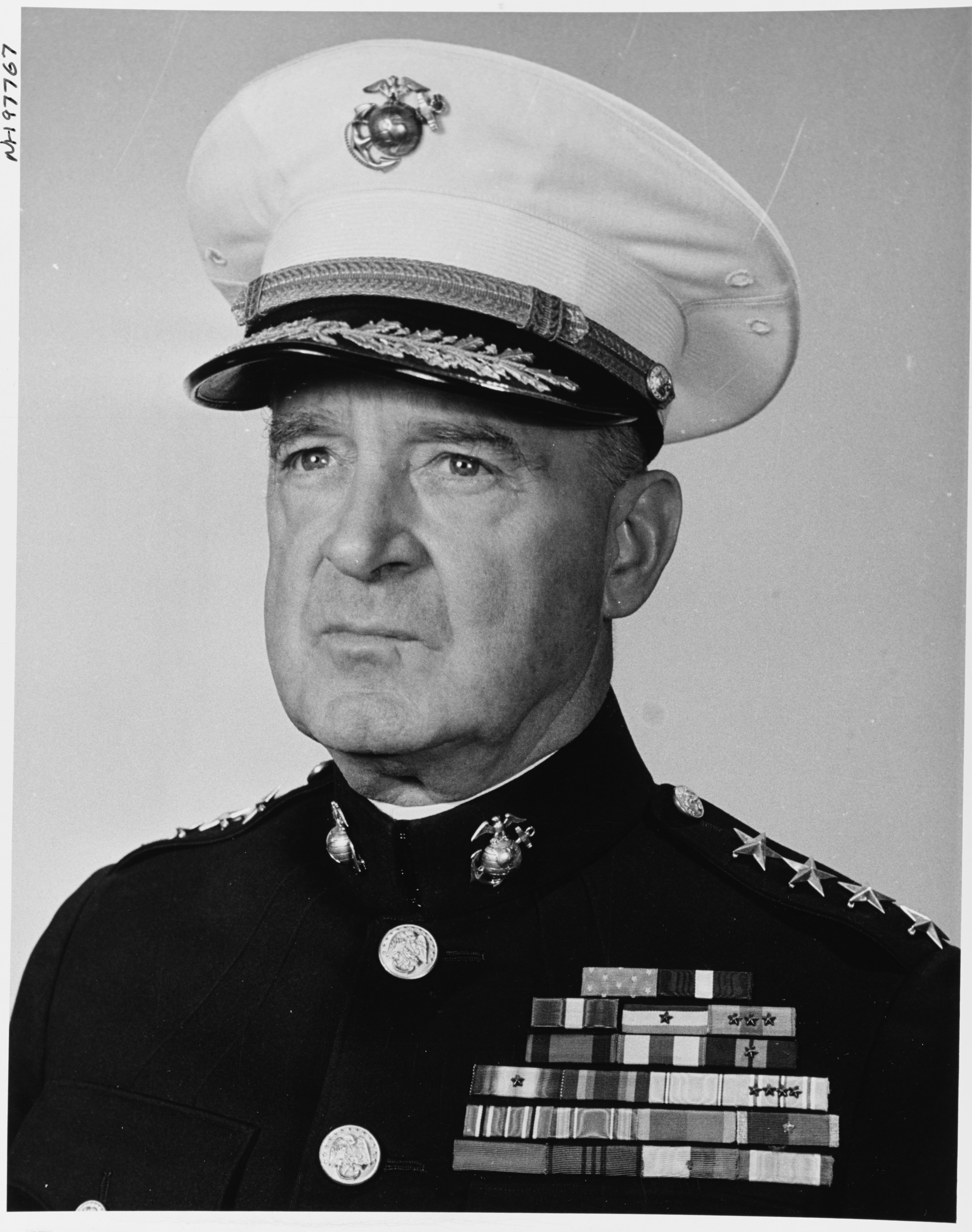
Portrait of Alexander Vandegrift, USMC
The General Who Kept the Perimeter
When the 1st Marine Division waded ashore on Guadalcanal in August 1942, it was America's first offensive of the Pacific War, and nobody — least of all the Navy, which sailed the transports away before the division was fully unloaded — was certain it would hold. Alexander Vandegrift held it anyway, for six grinding months, on captured rations, with malaria running through his ranks and a perimeter that never grew much beyond the airfield he had come to take. There was no single dramatic gesture in his command; there was instead a long, unglamorous accumulation of correct decisions, made and remade daily, that kept an under-supplied division functioning until reinforcements finally arrived.
Vandegrift's Guadalcanal is a case study in the value of dull competence under extreme pressure. He delegated the theatrics to men like Chesty Puller and reserved for himself the unglamorous work of logistics, discipline, and organization — the procedural backbone that let the flashier heroics happen at all.
Vandegrift was ISTJ to the core — a commander whose dominant Si made steadiness itself into a weapon.
Rationing the Perimeter
Introverted sensing shows up in Vandegrift as a deep respect for established procedure and hard-won precedent, applied with total consistency even as the situation around him deteriorated. When supplies ran short after the Navy withdrew, he did not improvise wildly; he fell back on rationing systems, established chains of command, and the disciplined husbanding of what little his division had, stretching captured Japanese rice and half-rations across months rather than gambling on any single dramatic solution.
That same instinct governed his defensive posture: rather than chase a decisive battle, he methodically improved and held the perimeter he already had, trusting that a position built carefully and maintained without deviation would outlast an enemy attacking it in pieces. It did.
Running the Division Like an Organization
Vandegrift's auxiliary Te is what let his dominant caution actually produce results rather than paralysis. He organized his division's chaotic early logistics into a functioning system, imposed clear lines of authority among his regimental commanders, and made hard, efficiency-driven calls about where scarce men and material went — decisions that had nothing to do with sentiment and everything to do with what would keep the perimeter intact.
He was, in this sense, an administrator of a battle rather than a battlefield performer, content to let subordinates like Puller handle the visible heroics while he managed the operational structure that made those heroics survivable and sustained.
A Quiet Loyalty to His Men
Vandegrift's tertiary Fi surfaces less in speeches than in the private conviction that his men's suffering was his personal responsibility. He fought hard, and often bitterly, with Navy and higher command for the supplies and reinforcements his division needed, driven by an internal sense of obligation to the Marines under his command rather than by ambition or reputation. He was not a public morale-builder in the mold of Puller; his loyalty ran quiet and steady, expressed through advocacy rather than charisma.
No Taste for the Speculative
Where Vandegrift's type ran thin was in open-ended possibility. His inferior Ne meant he preferred the proven method to the untested one, and Guadalcanal rewarded exactly that preference — a campaign won less by inspired improvisation than by an unglamorous refusal to abandon a sound plan under pressure. He was not the man to gamble the division on a clever hypothetical, and he never needed to be.
Why ISTJ Over ESTJ
Why not ESTJ?
An ESTJ would share Vandegrift's organizational discipline but would drive it outward, through visible, forceful command presence. Vandegrift's discipline was quieter and more inward-facing — operational and procedural (Te in service of Si) rather than an assertive, people-facing style of authority. He managed a system; he did not perform command the way an extraverted judger typically does.
Vandegrift over ESTJ comes down to register. Both types could have organized the Guadalcanal logistics; only the ISTJ would do it so unobtrusively that the men holding the line barely noticed the machinery keeping them fed and armed.
Connected Figures
Further Reading
- Once a Marine: The Memoirs of General A. A. Vandegrift — Alexander A. Vandegrift with Robert B. AspreyVandegrift's own account of Guadalcanal and his Marine Corps career.
- Guadalcanal: The Definitive Account of the Landmark Battle — Richard B. FrankThe most thorough modern history of the campaign Vandegrift commanded.
- Neptune's Inferno: The U.S. Navy at Guadalcanal — James D. HornfischerNaval context for the supply crises Vandegrift's division endured.
- Guadalcanal Diary — Richard TregaskisWartime correspondent's firsthand account of the division's early ordeal.
