 Historical Figure MBTI
#850 · 6-19-26 · The American Civil War
Julia Dent Grant
Wife of Ulysses S. Grant · First Lady
1826 — 1902
5 min read
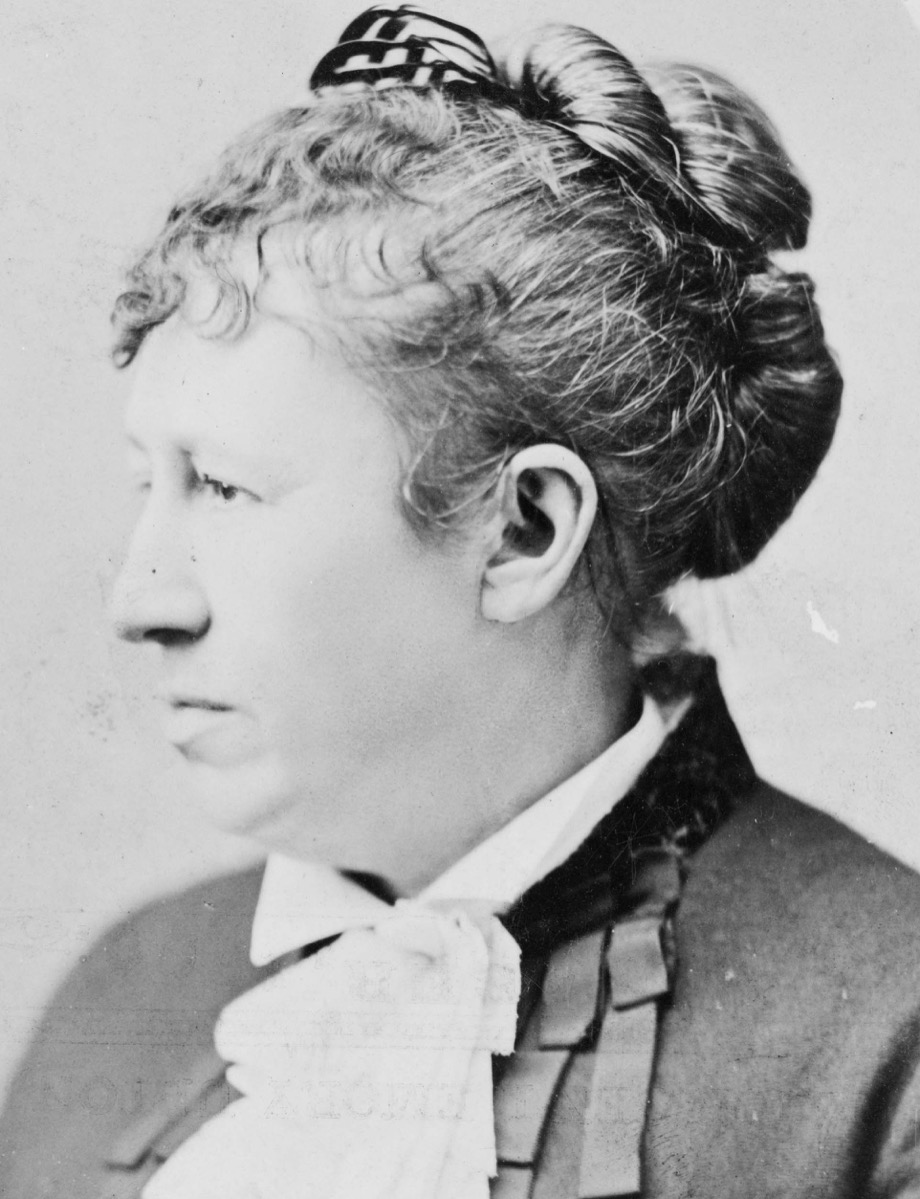
Portrait of Julia Dent Grant
The Sociable Anchor
Before he was the general who took Vicksburg or the president who sat for two embattled terms, Ulysses Grant was a failed farmer scraping at a plot he called, with grim self-mockery, Hardscrabble. Julia Dent stayed married to that man through years most wives of her class would have called ruin — through crop failures, through a stint clerking in his father's leather shop, through the quiet social humiliation of having married beneath the comfort she was raised in. She never treated it as ruin. She treated it as simply the life they were living together, and she kept the household running, kept visitors welcome, kept her husband's confidence in himself intact by never once withdrawing her own.
That same instinct — toward people, toward hospitality, toward the plain warm pleasure of company — followed her into the war and then into the White House. She rode to Grant's headquarters camps again and again, over objections, because being near him and being useful to the men around him mattered more to her than propriety. As First Lady she restored the White House's social calendar with open delight, presiding over dinners and receptions with a warmth reporters remarked on, and she said flatly, late in life, that those years were the happiest of her own.
Julia Dent Grant was an ESFJ, and her dominant Fe is the reason the most guarded man in America never had to build a public self — she built it around him, in plain sight, gladly.
The Warmth That Wasn't Strategy
Fe reads a room and tends it, and Julia did this instinctively, without the calculation that sometimes attaches to political hostessing. Officers at Grant's headquarters recalled her presence as a genuine relief — not decorative, not performed, but a real warmth that made a war camp feel briefly like a household. She wanted to be near her husband and she wanted the men around him fed, welcomed, and put at ease, and she pursued both wants with the same unembarrassed directness.
As First Lady this same instinct scaled up without changing shape. She reopened and expanded White House entertaining after the austerity of the Johnson years, hosted large receptions, and by every account enjoyed doing it rather than enduring it as duty. Where Grant was famously taciturn in company — a man who could sit through a dinner saying almost nothing — Julia supplied the social current he lacked, and their marriage worked partly because neither one asked the other to be something they weren't.
Her memoirs, written and dictated late in life, carry that same Fe voice: warm, relational, more interested in how people felt and how rooms were held together than in doctrine or abstraction. It is a document of loyalty first and analysis a distant second — exactly what a dominant feeling-and-people orientation produces when it finally gets to speak for itself.
Loyalty Measured in Years, Not Occasions
Si is memory made into loyalty — a felt attachment to what has already proven itself, held onto rather than traded away when circumstances change. Julia's devotion to Grant was exactly this kind: built during the lean Hardscrabble years and never revised downward when the war and then the presidency changed what he was to the country. She did not fall in love with the general or the president; she stayed in love with the man she had already committed to before either title existed, and the later honors were additions to that loyalty, not the source of it.
It shows too in her attachment to household continuity and tradition — she raised the couple's children with a steadiness that Grant's itinerant army postings made genuinely difficult to provide, and she carried forward, largely unexamined, the social assumptions of the Missouri slaveholding household she had grown up in even as she lived at the center of the government that ended slavery. That inconsistency was not hypocrisy so much as Si's characteristic slowness to question inherited ground — she trusted the familiar longer than events strictly justified.
The Front Was Not Where a Wife Belonged, So She Went Anyway
Ne shows up as a hunger for possibility that resists being told where the boundaries of a role are supposed to sit. Julia's repeated, controversial visits to Grant's headquarters camps — over the objections of officers who thought a general's wife belonged safely at home — were not acts of naivety about danger. They were her refusing to accept that the conventional shape of a wartime marriage was the only shape available to hers, and improvising a different one instead.
The same restlessness toward possibility carried her, late in life, into writing a memoir at all — an unusual undertaking for a woman of her generation and class, and one she pursued with evident relish rather than obligation, reaching for a new way to be useful to her husband's legacy even after his death. It is a minor key next to the dominant Fe warmth, but it is there: an appetite for the unconventional route when the conventional one felt too small.
Why ESFJ Over ISFJ
Why not ISFJ?
An ISFJ's devotion is quiet and private — loyalty proven behind the scenes rather than performed in a room. Julia's devotion was never private. She wanted to be seen at Grant's side, at the front and later at the head of the White House table, and she took visible, public pleasure in hosting, entertaining, and being part of the spectacle of her husband's rise. That comfort with the outward, social stage is Fe, not the more introverted, behind-the-scenes Si-Fe pairing an ISFJ would show.
The distinction matters because it explains why Julia thrived where a quieter temperament might have merely endured. Being First Lady during a contentious, exhausting presidency broke some of the women who held the role before and after her. Julia called it the happiest period of her life — a judgment only a genuinely extroverted, people-oriented Fe could make in earnest, rather than as a polite fiction offered after the fact.
Connected Figures
Further Reading
- The Personal Memoirs of Julia Dent Grant — Julia Dent GrantHer own account, dictated late in life and published posthumously in 1975 — the primary source for her voice and outlook.
- Grant — Ron ChernowThe definitive modern biography of Ulysses Grant, with substantial attention to Julia's role in his life.
- The General's Wife: The Life of Mrs. Ulysses S. Grant — Ishbel RossA full-length biography focused specifically on Julia's own life and social world.
