 Historical Figure MBTI
#439 · 4-10-26 · The Ilkhanate
Kitbuqa
Nestorian General · The Mongol Beaten at Ain Jalut
d. 1260
7 min read
AI-assisted Portrait of Kitbuqa
The Spear That Reached Too Far
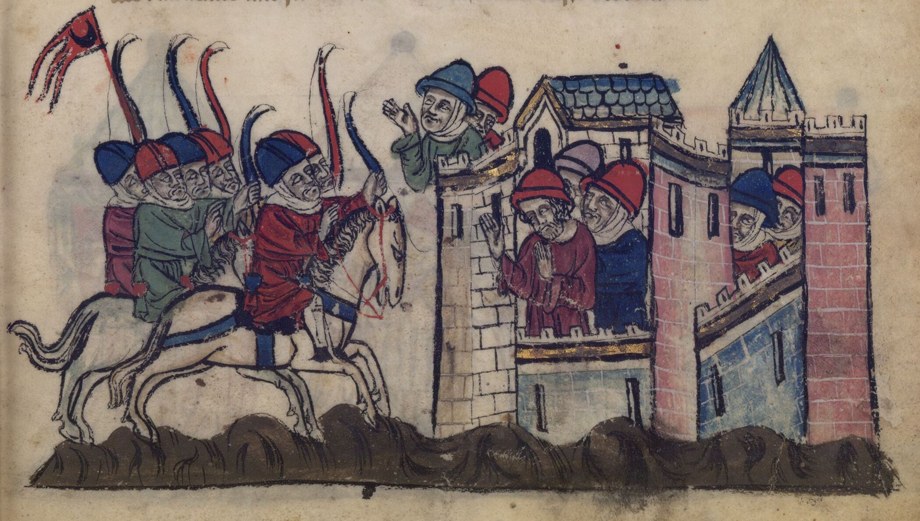
For a few months in 1260, a Nestorian Christian from the Naiman tribe held the whole of Syria in his fist. Kitbuqa had ridden at the head of the Mongol vanguard from the steppe to the Mediterranean—through the smoking ruin of Baghdad, through Aleppo, into Damascus—and Eastern Christians from Antioch to Armenia greeted his banners as deliverance, the long-prophesied turning of the tide against Islam. No Mongol army had ever been stopped. None, it seemed, ever would be.
Then Hulagu turned the bulk of his host eastward, recalled by the death of the Great Khan Möngke, and left Kitbuqa to garrison the new frontier with a fraction of the force that had taken it. The general did what generals like him always do: he pressed forward. At Ain Jalut, in the hills of Galilee, the Mamluks of Egypt under Qutuz and Baybars drew him onto ground of their choosing, sprang their ambush, and killed him. It was the first great defeat the Mongols had ever suffered—and the permanent high-water mark of their march toward the sea.
Kitbuqa was the ESTP in the saddle—a frontline fighter whose nerve and tactical instinct carried him to conquest, and whose appetite for the next blow carried him straight into the trap that stopped an empire.
The Man at the Front
Se — dominant
Dominant Se reads the world as a field of immediate, physical action—terrain, momentum, the gap in the enemy line that has to be hit now, before it closes. Kitbuqa was a warrior in the most literal sense: not a planner moving figures on a map from a distant tent, but a commander who led from the saddle and won by aggression. Hulagu trusted him with the tip of the spear—the vanguard, the first to make contact, the unit on which everything downstream depended—because that is exactly the role in which a man like this excels. He did not hesitate; he closed.
The campaign record is a study in forward motion. Through the great siege of Baghdad in 1258 he shared in the assault that ended the caliphate. The next year he drove into Syria and took it city by city—Aleppo stormed, Damascus occupied—each victory feeding the next, the pace itself a weapon that gave the defenders no time to gather. This is Se on campaign: keep the initiative, keep the enemy reacting, never let the front go cold. While he had the army and the momentum, no one could stand against that tempo.
The Soldier's Craft
Ti — auxiliary
Aggression alone does not take fortified cities. Behind Kitbuqa's drive sat auxiliary Ti—the cold, analytical competence of the professional soldier who understands how a siege actually works, how a mounted army keeps its supply, how a feigned retreat splits a defender's nerve from his line. The Mongol war machine he served was the most technically formidable of its century, and a man does not command its forward edge through the conquest of the Middle East on bravado. He does it because he has mastered the mechanics of the trade.
Ti is the quiet partner to Se here: it sharpens the instinct to strike into a working method for striking effectively. Kitbuqa knew how to assault a wall, how to time an advance, how to turn a field engagement. What auxiliary Ti does not supply is the long view—the question of whether a victory should be pursued at all, given everything beyond the immediate fight. That judgment belongs to a different function, and it was precisely the one Kitbuqa lacked.
The Christian Banner
Fe — tertiary
Kitbuqa was a Nestorian Christian, and in the Syria of 1260 that fact carried meaning far beyond his own devotion. To the Eastern Christians of the Levant—Armenians, Georgians, the Christians of Antioch—a Mongol conqueror who shared their faith read like the answer to centuries of prayer. His campaigns were hailed as a deliverance, his banners welcomed where an ordinary invader would have been feared. Tertiary Fe in an ESTP is not deep emotional attunement; it is a porous, occasionally strong responsiveness to the mood of the people around him, and Kitbuqa moved through a world that wanted to cast him as a liberator.
He seems, by the accounts, to have inhabited that role with some sincerity—showing favor to the Christian communities, letting their welcome shape how Damascus was held. It made him a figure the Eastern churches could love, and when he fell at Ain Jalut they mourned him as one of their own. But tertiary Fe is a supporting voice, not a governing one. It could win him a grateful population; it could not warn him of the army marching up from Egypt to take that population back.
The Trap He Did Not See
Ni — inferior
Inferior Ni is the ESTP's blind quarter—the weakness for the unseen pattern, the move three steps ahead, the strategic consequence that has not yet arrived. Ain Jalut is what inferior Ni looks like when it fails at the worst possible moment. Hulagu had withdrawn east with the main army; Kitbuqa was left holding a vast new conquest with a reduced force, and the prudent strategic read was that the frontier had become overextended and the situation had changed. The Mamluks, sensing exactly this, marched north to meet him.
A more strategic commander might have weighed the altered odds and declined the open battle. Kitbuqa did what dominant Se does: he advanced to fight. The Mamluks, masters of the same steppe tactics, baited him with a feigned retreat and closed an ambush around his outnumbered men in the Galilean hills. He was beaten and killed—some accounts say captured and then executed, defiant to the end. The frontline instinct that had carried him from Baghdad to Damascus carried him, finally, into a battle he should have seen coming and did not. The high-water mark of Mongol expansion was set, permanently, at the spot where Kitbuqa's blind spot met an enemy who understood it.
Why ESTP Over ESTJ
Why not ESTJ?
The ESTJ is the systematic organizer—the commander who builds a durable order, installs administration, and secures what he takes for the long term. Kitbuqa shows almost none of that. He was a field general who won by aggression and tactical daring, not a builder of lasting structures; he took Syria in a rush and held it by force of arms rather than by knitting it into a stable province. The ESTJ consolidates. Kitbuqa conquered, and then kept pushing—and died of the overreach.
The distinction is the difference between Te leading and Se leading. A Te-dominant ESTJ organizes the world into a system that will outlast him; the Se-dominant ESTP lives in the decisive moment and trusts his nerve to carry it. Kitbuqa was all moment—the bold blow, the forward ride, the front line. It made him a magnificent vanguard commander and a poor strategic custodian of an exposed frontier, and at Ain Jalut the gap between the two cost him his life and stopped an empire.
Connected Figures
Further Reading
- Mongols and Mamluks: The Mamluk-Ilkhanid War, 1260–1281 — Reuven Amitai-PreissThe definitive scholarly account of the war Ain Jalut opened — essential on the battle and on Kitbuqa's command.
- The Mongols — David MorganThe standard one-volume history of the empire; sets Hulagu's western campaign and its limits in full context.
- Ayn Jālūt: Mamlūk Success or Mongol Failure? — John Masson Smith Jr.A sharp reassessment arguing the defeat owed as much to the logistics of Mongol overreach as to Mamluk skill.
