 Historical Figure MBTI
#440 · 4-10-26 · The Ilkhanate
Abaqa
Ilkhan of Persia · Hulagu's Heir
1234 — 1282
6 min read
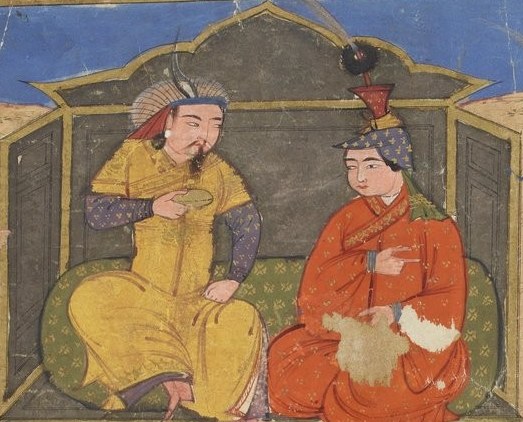
AI-assisted Portrait of Abaqa
The Man Who Held It Together
Conquest is the loud part of empire; holding the result is the hard part. When Hulagu died in 1265, he left behind a vast, raw possession stretching from the Oxus to the Mediterranean—a Mongol war machine bolted onto the wreckage of the Abbasid world, surrounded on every side by enemies and not yet a state at all. His eldest son, Abaqa, inherited that possession and spent seventeen years turning it into something that could survive him. He fought on three fronts at once, governed a population of Persians, Turks, and Arabs he could never have hoped to outnumber, and passed the realm intact to a son of his own. He is the consolidator—less celebrated than his father, more consequential than the dates suggest.
The pressures came from every direction. To the west sat the Mamluks of Egypt, fresh from halting the Mongol advance and hungry for Syria. To the north, across the Caucasus, the Golden Horde pressed the grudge their cousin Berke had opened against Hulagu—a family feud over Islam, plunder, and pasture that did not die with either man. To the east, the Chagatai and Ogedeid forces of Kaidu probed the frontier of Khurasan. Abaqa met all three. He won his sharpest victory at Herat in 1270, breaking Kaidu's eastern thrust, and held the Mamluk and Golden Horde fronts to a costly stalemate that preserved the realm's core. He is the ENTJ not as conqueror but as executive—the commander whose gift is keeping a going concern from coming apart.
Abaqa was the ENTJ in its administrative register—a ruler who treated a sprawling inheritance as a problem to be defended, organized, and made durable, and who measured himself not by what he conquered but by what he managed to keep.
The Realm as a Command
Te — dominant
Dominant Te organizes the external world toward an objective, and Abaqa's objective never changed: the realm must stand. Where a different temperament might have chosen one enemy and gambled everything on a decisive blow, he treated the Ilkhanate as a system to be defended in the round. He held the western marches against the Mamluks, garrisoned the Caucasus against the Golden Horde, and patrolled Khurasan against Kaidu—allocating force, not squandering it, keeping each front from becoming the breach that lost the whole.
Herat, in 1270, is the cleanest demonstration. Kaidu's eastern offensive was the kind of threat that decides dynasties, and Abaqa answered it with a field commander's competence—maneuvering, committing at the right moment, and converting the win into a stabilized frontier rather than mere glory. The same executive instinct shaped his peace as much as his war. He kept his father's administrative machinery running, worked through the great Persian bureaucratic families who actually made the country function, and governed a conquered population pragmatically because a wrecked tax base cannot field an army. Te does not ask whether the means are elegant; it asks whether they work and whether they hold.
The Long Game Against Egypt
Ni — auxiliary
Te wins battles; auxiliary Ni decides which war is worth fighting for a generation. Abaqa's strategic horizon ran well past the next campaign season, and it converged on a single idea: the Mamluks were the existential enemy, and the way to break them was to encircle them from outside the Islamic world entirely. So he reached for an alliance no Mongol conqueror had needed—a partnership with Christian Europe against a shared Muslim foe. He sent envoys west, opened correspondence with the Pope, and dispatched a delegation to the Second Council of Lyon in 1274, dangling the prospect of a Mongol-Latin pincer on Syria.
The diplomacy of the period reads as Ni working patiently behind the swordwork. He married a Byzantine princess, Maria Palaiologina—known at his court as Despina Khatun—binding the Ilkhanate to Constantinople and signaling his openness to the Christian world that his Buddhist and Christian sympathies already inclined him toward. None of it produced the grand crusading alliance he envisioned; Europe was too distant, too divided, and too slow. But the design itself—a continent-spanning coalition aimed at a single long-range outcome—is auxiliary Ni in service of dominant Te: the strategist sketching the shape of a victory that might take decades to arrive.
In the Saddle
Se — tertiary
Tertiary Se gave Abaqa what a purely cerebral ruler would have lacked: a real appetite for the field. He was a militarily active khan, not a sovereign who governed from a fixed capital and left the fighting to others. He rode to his frontiers, took the threat's measure on the ground, and was present where the realm was contested—the steppe inheritance of a Mongol prince raised to the war-band, expressing itself as physical engagement with the actual terrain of his defense.
In a healthy ENTJ, tertiary Se serves the dominant function as instrument rather than indulgence: it keeps the strategist tethered to the concrete, responsive to the enemy in front of him rather than only the map in his head. Abaqa's readiness to move, to campaign across the seasons and answer each front in person, is what let his Te ambitions touch reality. The grand design needed a body willing to ride to Herat and back; he had one.
The Private Creed
Fi — inferior
Inferior Fi surfaces in the ENTJ as a quieter, more personal layer beneath the public executive—a set of private loyalties and convictions that the dominant function rarely advertises. Abaqa held to his father's religious sympathies, favoring Buddhism and Christianity in a realm whose subjects were overwhelmingly Muslim. This was not the shrewdest political posture available to him; a ruler optimizing purely for the consent of the governed would have leaned the other way, as his own grandson Ghazan eventually would.
That he did not is the tell. The persistence of an inherited, personally held faith—and the Christian alliance it warmed him toward—reads as inferior Fi: a value he kept because it was his, not because it paid. It is the least strategic thing about an otherwise strategic man, and for that reason the most revealing. The empire-builder had an interior life, and it bent his foreign policy toward Lyon and Constantinople even when colder calculation pointed elsewhere.
Why ENTJ Over ESTJ
Why not ESTJ?
The ESTJ administers an existing order with diligence and command, and much of Abaqa's reign—holding three fronts, keeping the bureaucracy running—could pass for exactly that. But the ESTJ does not, on its own, reach for a continent-spanning alliance with a civilization it has never dealt with, aimed at an outcome a generation away. The embassies to the Pope and the gambit at the Council of Lyon are not dutiful administration; they are intuitive strategy, the Ni-Te signature of a ruler designing a future rather than maintaining a present.
The distinction is one of horizon. An ESTJ would have defended the realm Hulagu left and kept its institutions in good order—a worthy reign, and no small thing. Abaqa did that, but he also treated the Ilkhanate as an unfinished project whose long-range survival depended on reshaping the whole strategic map, even at the cost of a Christian alliance that ran against the grain of his Muslim subjects. That is the ENTJ motive: not the stewardship of what exists, but the engineering of what could last.
Connected Figures
Further Reading
- The Mongols — David MorganThe standard one-volume introduction in English; the clearest overview of the Ilkhanate's place in the wider Mongol world.
- Mongols and Mamluks: The Mamluk-Ilkhanid War, 1260–1281 — Reuven Amitai-PreissThe definitive study of the western front that defined Abaqa's reign — the long contest with Egypt and its failed European diplomacy.
- Early Mongol Rule in Thirteenth-Century Iran — George LaneReframes the early Ilkhanate as a period of cultural revival rather than mere devastation, with close attention to Abaqa's governance.
