 Historical Figure MBTI
#441 · 4-11-26 · The Age of Travelers
William of Rubruck
Franciscan Friar · The Skeptical Eye on the Mongol World
c. 1220 — c. 1293
11 min read
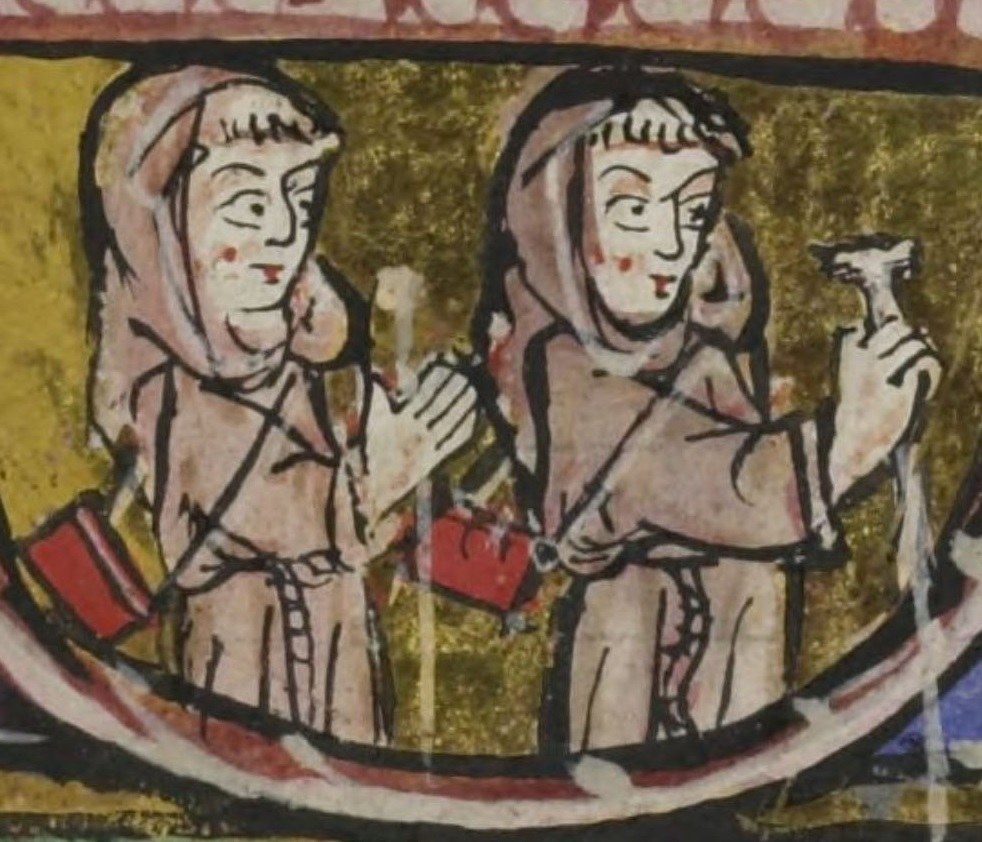
AI-assisted Portrait of William of Rubruck
The Man Who Saw the Mongols Clearly
In the spring of 1253 a heavyset Flemish friar set out from the crusader port of Acre, crossed the Black Sea, and rode east into a world no Western European had described with honest eyes. He was William of Rubruck—a Franciscan, a confessor, a man of no rank—and he was traveling on a half-formed errand from King Louis IX of France, who had heard a rumor that a Mongol prince named Sartaq had turned Christian and wondered whether the most terrifying power on earth might be turned into an ally. The errand was vague, the theology was wishful, and the rumor was false. What Rubruck brought back instead was something far more valuable: the first sober, accurate, unflinching account of the Mongol Empire ever written by a European—a report that beat Marco Polo into the field by roughly twenty years and surpassed him in precision.
He reached the camp of Batu Khan on the Volga, then was sent onward across thousands of miles of frozen steppe to Karakorum, the tent-and-mud capital of the Great Khan Möngke, where he arrived at the end of 1253. He spent the better part of a year among Nestorian Christians, Muslims, Buddhists, and shamanists; argued theology in a debate the khan staged for sport; found a homesick Parisian goldsmith building a silver fountain in the middle of nowhere; and received, for all his trouble, the standard Mongol reply— Heaven has given us the earth, so submit. Then he was sent home. He never converted anyone of consequence. But seated afterward to write his long report—the Itinerarium—he produced a document of such cold accuracy that the philosopher Roger Bacon mined it for his own encyclopedia. Rubruck debunked the Prester John legend, mapped languages and customs, and became the first European to reason out that the Caspian is a closed inland sea. He is the INTP abroad: a skeptical, analytical intelligence loosed on the largest unknown of its age.
Rubruck's gift was not faith but accuracy—the INTP signature of dominant Ti fed by restless Ne: a mind that would rather report what it actually saw, and frankly confess what it could not know, than tell its king the comforting story he had paid for.
The Accuracy Instinct
Ti — dominant
The defining feature of Rubruck's report is that it refuses to be edifying. Every European who wrote about the East before him was working from hearsay, romance, and the hunger to confirm what Christendom already believed—monstrous races, a lost Christian king, marvels at the edge of the map. Rubruck arrives carrying the same expectations and then, one by one, takes them apart. The legend of Prester John, the mighty Christian monarch of the East, he traces to its source and dismisses as the inflation of a minor Nestorian chieftain: “the Nestorians,” he notes drily, “make great tales out of nothing.” That is dominant Ti in its native posture—measuring a claim against the evidence, finding the seam where it does not hold, and reporting the collapse without sentiment.
The same logical machinery produced the single most famous deduction in the book. Received geography, inherited from antiquity, held that the Caspian was a gulf opening onto a northern ocean. Rubruck traveled its margins, weighed what he had seen against the rivers feeding it, and concluded flatly that it is enclosed on all sides by land—an inland sea, contradicting Isidore and the authorities. He was right, and he was the first European to say so. He did not have instruments or a survey; he had a mind that would not let a tidy inherited belief override what the terrain actually showed. The instinct extends to the staged interfaith debate Möngke arranged, in which Rubruck was set against a Muslim, a Buddhist, and Nestorian Christians before the khan's officials. He approaches it not as a contest of fervor but as a problem in logic—establish the shared premises first, isolate where the opponents' reasoning fails, build the argument in order. He reports, with rueful precision, that the proceedings dissolved into translators' confusion and that nobody was converted. A propagandist would have claimed victory. Ti records the result.
What makes the Itinerarium feel almost modern is the quality the dominant function supplies under pressure: intellectual honesty about the limits of one's own knowledge. Again and again Rubruck draws a sharp line between what he witnessed and what he was merely told—and then says so. He admits when his interpreter was incompetent, when a distance is a guess, when he could not verify a thing for himself. In an age of confident marvels, the man's willingness to write here is what I cannot say is the rarest move of all, and it is pure Ti: the standard is internal consistency and verifiable truth, not the satisfaction of the audience.
He was the first European to deduce that the Caspian is a closed sea—not by survey but by refusing to let an inherited authority outweigh what the ground in front of him plainly showed.
The Omnivorous Eye
Ne — auxiliary
If Ti supplied the skepticism, auxiliary Ne supplied the appetite. Rubruck was curious about everything, and the report bulges with detail no errand required him to gather. He describes the construction of the felt tents and how they are mounted on carts so wide the oxen are yoked in elevens; the fermenting of mare's milk into koumiss and the way it bites the tongue; Mongol marriage customs, funeral rites, divination by scorched shoulder-blades, the etiquette of who drinks first. He notices that the script of the Uyghurs is written in vertical columns and reasons about how the various peoples' languages relate. A diplomat sent to flatter a prince does not need to know any of this. A mind running on Ne cannot help collecting it—every custom is a new thread, every people a fresh angle on the question of how the world is actually arranged.
Ne is also what let him see connection across the patchwork of the Karakorum court without forcing it into a single frame. He grasped that the Mongols presided over a genuine plurality—Nestorians, Saracens, “idolaters” he correctly identified as Buddhists, shamans, and a homesick European or two—and he reported the mixture as it was rather than collapsing it into a crusader's binary of Christian and infidel. The exploratory function keeps him moving outward: he is the first to describe Tibetan and Chinese peoples to the West with any fidelity, the first to identify Cathay with the Seres of the ancients, the first to note that the Chinese write in characters standing for whole words. These were not assignments. They are the overflow of a traveler whose instrument was an inexhaustible interest in what lay one ridge further on—the same instinct that, paired with the dominant's rigor, turned a failed mission into the finest piece of medieval ethnography in the Latin language.
The Faithful Recorder
Si — tertiary
Tertiary Si shows up as a disciplined regard for the concrete, sequential record. For all its analytical fire, the Itinerarium is built like an itinerary: it proceeds day by day and stage by stage, naming the rivers crossed and the days ridden, anchoring every observation to a specific place and moment. Rubruck does not generalize from a haze of impressions; he reconstructs the journey in order, and that orderly retention is what makes the document usable as data rather than reverie. Roger Bacon could mine it for distances and directions precisely because Rubruck had kept faith with the particulars.
The same tertiary current runs through his loyalties. He went east as a son of the Church and of the French king, and he never stopped measuring the strangeness around him against the remembered rituals of home—noting when he could finally celebrate Mass, marking the liturgical calendar across the steppe, comparing Nestorian practice point by point against the Latin rite he carried in his bones. Si gives the analyst his ballast: a fixed body of remembered observance and obligation that keeps the omnivorous Ne from dissolving into pure relativism. He could describe a dozen faiths with fairness and still know exactly where he stood.
The Friar Who Could Not Flatter
Fe — inferior
Whatever else Rubruck was, he was not a diplomat, and the report is honest about it. He grumbles. He records his irritation at incompetent interpreters, his contempt for the hangers-on at court, his exasperation when the Mongols treated his sacred mission as entertainment. He was sent in part to charm and convert, and he had almost no gift for either—he could not bring himself to tell anyone what they wanted to hear. Inferior Fe is social calibration that never came online: the blunt, friction-generating undiplomacy of a man whose instrument is logic, not warmth, and who registers the emotional temperature of a room mainly as an annoyance interfering with the truth.
The missionary frustration is the tell. A warmer evangelist—an INFJ on the same road, building bridges and reading hearts—might have made converts where Rubruck made only an accurate map. Rubruck's few moments of evident feeling are reserved not for the souls he was supposed to win but for the homesick fellow European he stumbled on: Guillaume Boucher, the captured Parisian goldsmith laboring at the heart of Asia, in whom Rubruck plainly recognized a piece of home. That flash of fellow-feeling is the inferior function surfacing where it could—unguarded, particular, and aimed at one familiar man rather than a multitude. Toward the khan's court, the report stays cool, candid, and faintly aggrieved: a brilliant observer who would always rather be right than be liked.
Why INTP Over INFJ or INTJ
Why not INFJ?
The INFJ on this same road is Rabban Bar Sauma— the mystic monk who crossed Asia in the other direction and met Europe with warmth, vision, and a bridge-builder's instinct for shared feeling. Rubruck is the mirror-opposite. His mode is cold-eyed analysis and disputation, not numinous vision; he argues by logic and reports by evidence, and his great failure was precisely the warm, converting, heart-reading work an INFJ does naturally. He mapped the Mongols brilliantly and won almost none of them, because his strength was Ti, not Fe.
Why not INTJ?
Möngke Khan, whom Rubruck met at Karakorum, is the steppe's INTJ—a strategic planner executing a long design with an agenda. Rubruck has the introverted rigor but not the agenda. He is exploratory rather than strategic: a myth-debunking observer following his curiosity one ridge further on, not a builder driving toward a fixed objective. His auxiliary is Ne, not Te—he proliferates questions and collects anomalies where an INTJ would marshal resources toward a goal. The Itinerarium is a record of what is, not a plan for what should be.
The decisive thing is what Rubruck wanted from the journey. He did not want to convert the Mongols badly enough to flatter them (the INFJ's pull), and he did not travel to advance a design of his own (the INTJ's). He wanted to understand—to see the largest unknown of his world clearly and report it without distortion, including the parts he could not resolve. That is the INTP's governing motive: not vision, not strategy, but the truth of the thing, pursued for its own sake and confessed honestly where it ran out. It is why his report has outlasted the mission it failed to accomplish.
Connected Figures
Further Reading
- The Mission of Friar William of Rubruck — ed. Peter Jackson & David MorganThe authoritative modern English edition of the Itinerarium, with a full scholarly apparatus — the place to start.
- Mission to Asia — ed. Christopher DawsonCollects Rubruck alongside Carpine and other friar-envoys, situating his report within the wave of Franciscan missions to the Mongols.
- The Journey of William of Rubruck to the Eastern Parts of the World — trans. W. W. RockhillThe classic earlier translation, heavily annotated; still valuable for its geographic and ethnographic commentary.
