 Historical Figure MBTI
#438 · 4-10-26 · The Ilkhanate
Doquz Khatun
Christian Queen of the Ilkhanate · Hulagu's Empress
c. 1190s — 1265
7 min read
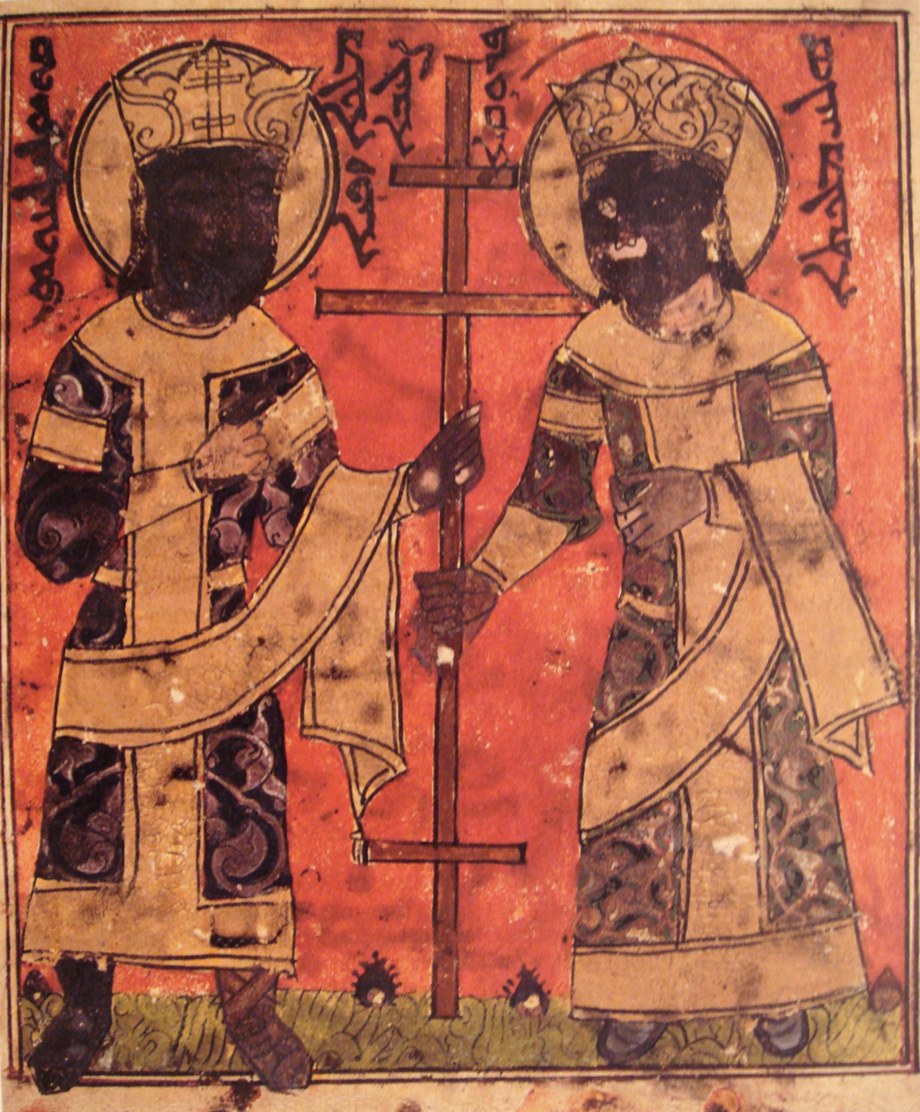
AI-assisted Portrait of Doquz Khatun
The Shield Over Baghdad
When Hulagu's armies broke the walls of Baghdad in February 1258 and put the seat of the Abbasid Caliphate to the sword—forty days of slaughter that ended five centuries of Islamic rule—one quarter of the city was spared. The Christians of Baghdad, sheltered in their churches, lived because a woman in the Mongol camp asked that they be allowed to. That woman was Doquz Khatun, a Nestorian Christian of the Kerait and the chief wife of the conqueror, and her intercession is the reason Eastern Christians would remember the destroyer of the caliphate as a deliverer.
She was born sometime in the 1190s into the Kerait, a Turco-Mongol people long touched by the Church of the East, and she was a kinswoman of Sorghaghtani Beki, the great Christian matriarch whose sons would rule from China to Persia. Married to Hulagu as his principal consort, she became empress of the new Ilkhanate that his conquests carved out of the Islamic world—and she used every inch of that position for one purpose: to protect her faith and her faith's people. She did not rule; she shielded. The distinction is the whole of her character.
Doquz Khatun was the ISFJ in the seat of empire—a steadfast Si devotion to her inherited church fused with an Fe instinct to gather the vulnerable under her protection, until private piety became state policy and a sacked city remembered her as mercy.
The Faith She Was Given
Si — dominant
Dominant Si is loyalty to what one has received—a tradition held not because it has been examined and chosen anew, but because it is hers, handed down, woven into who she is. Doquz Khatun's Christianity was exactly this kind of inheritance. The Church of the East had reached the Kerait generations before her birth; she did not convert to it, she belonged to it, and she carried it into the Mongol world with the unshakable constancy of someone for whom faith is not a position but a substance.
That constancy is what made her protection reliable rather than occasional. Across the long arc of Hulagu's campaigns—against the Assassins, against Baghdad, into Syria—her advocacy for the Church of the East never wavered or recalculated. She founded churches, she kept a chapel in the royal camp, she steadily advanced clergy and congregations wherever the Ilkhanate's armies passed. This was not the bold improvisation of a strategist seizing an opening; it was the patient, accumulating work of someone tending what she had been entrusted with, year after year, in the same direction.
Si also explains the shape of her ambition, which was conservative in the truest sense. She did not try to remake the Mongol order or to convert her husband's empire wholesale. She wanted the faith of her fathers preserved and its people kept safe—continuity, not transformation. The greatness of her position served the smallness and steadiness of that aim.
Mercy Made Into Policy
Fe — auxiliary
If Si gave Doquz Khatun a faith to keep, auxiliary Fe gave her a community to protect. Fe attends to the well-being of the group—it reads who is exposed, who will suffer, who needs sheltering—and it moves to gather them in. In a queen positioned beside a conqueror, this instinct turned into something rare: warmth with the power to act on itself, compassion that could become decree.
Baghdad is the defining instance. As the city fell and its Muslim population was annihilated, Doquz Khatun's plea spared the Christians within the walls; her protection extended over churches and congregations that would otherwise have been swept up in the carnage. The same impulse ran through the early Ilkhanate—she interceded, she favored, she sheltered, and Christians under Mongol rule enjoyed a season of safety and prestige that flowed directly from her standing. To the persecuted minority she was not a distant patroness but a living wall between them and annihilation.
Eastern Christians hailed Doquz Khatun and Hulagu as “a new Constantine and a new Helena”—and the comparison was Fe's, not history's: she was loved not as a ruler who governed them but as a mother who covered them.
It matters that her care was communal rather than universal. Fe protects its people—the in-group, the congregation, the inherited fold—and Doquz Khatun's mercy was reserved for fellow Christians, not extended to the Muslims of Baghdad whose slaughter she did not prevent. This is not a flaw in the reading; it is the reading. Her benevolence was loyal and bounded, the warmth of a woman defending her own.
The Quiet Calculation Beneath the Care
Ti — tertiary
Tertiary Ti in an ISFJ is the private, supporting logic beneath the warmth—not a cold engine of strategy, but a quiet competence that lets the Si-Fi devotion find its leverage. It is the part of Doquz Khatun that understood, without ever making the calculation showy, exactly how a chief wife's influence works and precisely when and how to spend it.
Her interventions were timed and placed with real shrewdness. To extract mercy for Baghdad's Christians at the very height of a conqueror's wrath, and to do it through persuasion rather than confrontation, required a working understanding of her husband's temperament and her own weight in his counsels. That she shielded a faith inside a still-pagan, increasingly Muslim-courted empire—and made it stick for as long as she lived—was not luck. There was a structure to her influence, even if she never named it.
But Ti sits third, in service of the warmer functions above it, and that is the right order for her. She did not reason her way to her aims; she felt them, and then found the means. The logic was a tool the devotion picked up—never the master, only the hand.
What She Could Not Hold
Ne — inferior
Inferior Ne is the ISFJ's blind side: the future of branching possibilities, the world that will not stay as it was given. Doquz Khatun's strength was constancy—the faithful tending of a fixed inheritance—and her limit lay in everything that could not be held fixed. She could protect her church in her own time, by her own presence; what she could not do was secure it against a future she would not be alive to shape.
History supplied the proof. She died in 1265, the same year as Hulagu, and the Christian favor of the Ilkhanate began to ebb almost from the moment the two of them were gone. The protection had been personal, anchored in her living intercession, and it could not outlast the person. The Mongol rulers of Persia would, within a few decades, turn decisively toward Islam, and the season of safety she had won would close. What an Ne-led figure might have built into a durable settlement—institutions, alliances, a structure designed to survive its founder—Doquz Khatun held instead in her own two hands, and it slipped when those hands were gone.
Why ISFJ Over ISTJ
Why not ISTJ?
An ISTJ in her place would have been an administrator—an impersonal keeper of order, managing the affairs of a realm through rule and precedent. But Doquz Khatun's influence did not flow from administration; it flowed from warm, protective care for her co-religionists. She was a shield for a people, not a steward of a state. The Baghdad intercession was an act of communal mercy (Fe), not the enforcement of a policy (Te)—and it is that warmth toward her fold, not impersonal duty toward an institution, that runs through everything she did.
Both types share dominant Si—the steadfast loyalty to inherited tradition that defined her devotion. The split is the auxiliary. An ISTJ pairs Si with Te and tends to keep order; an ISFJ pairs Si with Fe and tends to keep people. Doquz Khatun kept people. Her whole greatness was the gathering of the vulnerable under her protection, and the warmth that drove it is the signature of Fe, not the cool machinery of Te. She did not manage the Ilkhanate. She mothered a church inside it.
Connected Figures
Further Reading
- Voyager from Xanadu: Rabban Sauma and the First Journey from China to the West — Morris RossabiThe richest window in English onto the Nestorian Christian world of the Mongol Ilkhanate that Doquz Khatun helped shelter.
- The Mongols — David MorganThe standard one-volume history of the empire and its successor states — essential for placing Hulagu's Ilkhanate and its religious politics.
- The Martyred Church: A History of the Church of the East — David WilmshurstAuthoritative on the Church of the East under Mongol rule — the institution Doquz Khatun protected and the favor that waned after her death.
