 Historical Figure MBTI
#534 · 4-23-26 · The Hundred Years' War
La Hire
Étienne de Vignolles · The Fearless Captain Who Adored Joan
c. 1390 — 1443
8 min read
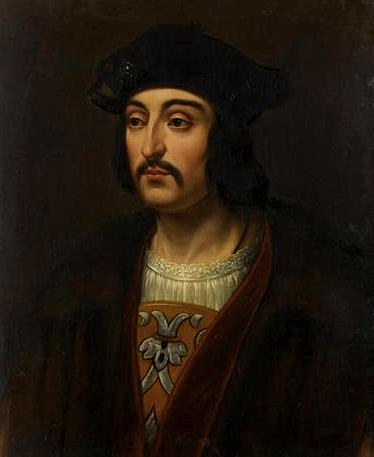
AI-assisted Portrait of La Hire
The Soldier's Prayer
Étienne de Vignolles — known to every army of his day, and to history, simply as La Hire — was the kind of man the Hundred Years' War produced in bulk and remembered in single figures. A rough, profane, hard-drinking mercenary captain from Gascony, he blasphemed as easily as he breathed, fought for whoever paid and for the pure joy of fighting, and rode into the worst of every melee as though the press of spears were the only place he felt entirely awake. He was a force of nature on a battlefield — beloved by the men who followed him, feared by the men who faced him, and utterly without the polish of the great seigneurs whose company he kept.
And yet this growling, swearing soldier of fortune became one of the most devoted comrades of a teenage peasant girl who heard saints. When Joan of Arc rode to the relief of Orléans in 1429, La Hire was among the captains who took her seriously, and more than that — who came to love her. By legend, when the Maid forbade his swearing and bade him pray before battle, he answered with the most honest prayer a fighting man ever offered: “God, I pray you do for La Hire what La Hire would do for you, if you were a captain and La Hire were God.” It is the whole man in one sentence — irreverent, plainspoken, and somehow, beneath it all, sincere. He is the ESTP in armor: all instinct, appetite, and audacity.
La Hire was the ESTP as nature made him — a man who lived entirely in the violent present, who thought with his sword arm and won with his nerve, and who loved the one pure thing he ever met more fiercely than he could ever have explained.
The Charge at Patay
Se — dominant
Dominant Se is the function of the immediate physical world — of pure reaction, bodily confidence, and total immersion in the present moment. No medieval captain embodied it more completely than La Hire. Where careful commanders studied ground and weighed odds, he read a fight the way a swordsman reads a blade, by feel, and answered before the thought had finished forming. At Patay in 1429 — the great open-field rout that broke the English army weeks after Orléans — it was La Hire and the vanguard who fell on the enemy archers before they could plant their stakes, charging headlong into the moment of advantage and refusing to let it pass. The victory belonged to whoever struck first and hardest, and striking first and hardest was the only thing La Hire knew how to do.
The same appetite ran off the field as well as on it. He drank, he swore, he plundered, he lived loud and fast and entirely in his own body. There was nothing reflective in him, nothing held in reserve for some imagined later — the Se dominant spends everything now because now is the only thing that is real to him. Comrades adored him because he was magnificently alive in the way only a man with no fear of the next hour can be. He did not plan his legend; he simply charged at the world and let the legend catch up behind him.
The Shrewdness of a Survivor
Ti — auxiliary
It would be easy to mistake La Hire for nothing but brute force, but a brute does not survive decades of one of history's longest wars. Beneath the bluster ran a sharp, practical, wholly unsentimental tactical intelligence — auxiliary Ti, the cool inner logic that tells a fighting man exactly how a fight actually works. He understood terrain, timing, and the soft places in an enemy line not as theory but as craft. He knew when archers were vulnerable, when a flank had overextended, when a feigned retreat would draw a foe onto open ground. That is why he was trusted with the vanguard and why his name appears beside the most capable captains of the Armagnac cause.
Ti in an ESTP is not the system-builder's logic of the strategist's tent; it is the gambler's instinct for odds, the duelist's read of an opponent. La Hire improvised brilliantly because his auxiliary function did the calculating in real time while his dominant Se executed it without hesitation. He won fights not by drawing up grand campaigns but by seeing, faster than anyone around him, the one move the moment actually demanded — and then making it, hard, before the window closed.
The Blasphemer Who Prayed
Fe — tertiary
The most surprising thing about La Hire is the thing that made him a legend rather than a footnote: his devotion to Joan. Tertiary Fe in an ESTP usually surfaces as easy camaraderie, the loyalty of the warband, the warmth that binds men who fight together — and La Hire had all of that. But Joan reached something deeper. This profane, ungovernable man, who would no more have softened for a bishop than for a horse, bent himself to a teenage girl's authority because he felt, in his rough way, the purity of what she was. He could not articulate it; tertiary Fe does not argue, it simply moves the heart. So he tried to stop swearing for her. He prayed before battle for her — and when even that defeated his nature, he offered the only prayer he could honestly mean.
That devotion is not a contradiction of the man but the completion of him. The Se dominant lives by what he can directly sense, and in Joan he sensed something real and good, and answered it with the whole-hearted loyalty of a soldier rather than the reasoned belief of a theologian. He followed her because being near her felt right, and he charged for her at Orléans and Patay because that was the only language of love he had. When she was taken and burned, the cause lost its center; La Hire fought on for years, but the great chapter of his life had closed with hers.
No Eye on Tomorrow
Ni — inferior
Inferior Ni is the blind spot of the Se-dominant: the long arc, the hidden meaning, the single vision toward which a life ought to bend. La Hire had almost none of it, and the contrast with Joan throws it into sharp relief. She was pure inferior's opposite — a girl consumed by a vision of crowning a king and driving out the English, who read the war as a story with a destined end. La Hire could not see the war that way at all. He saw the next battle, the next siege, the next campaign season; the meaning was always in the doing, never in the design.
This is why he was a peerless captain and never a commander of the war itself. He could win any fight you set in front of him and could not, for the life of him, tell you what the fights were ultimately for. When Joan supplied the vision, he became the perfect instrument of it — her audacity given a sword arm. Without her, he reverted to what he had always been: a magnificent professional of violence, fighting on by instinct and habit, his inferior Ni flickering only in the loyalty he kept to a cause whose meaning had walked beside him in the person of a girl he could never replace.
Why ESTP Over ESTJ
Why not ESTJ?
The ESTJ is the natural-born commander — the disciplined, order-building soldier who organizes a battle, drills a column, and runs a campaign by structure and rule. La Hire was the opposite kind of fighting man: a wild, improvising creature of the moment, all instinct and appetite, who won by reading a fight as it happened and charging before anyone could stop him. He was a force of nature in a battle, not the architect of one. The ESTJ imposes order on chaos; La Hire thrived in it.
The distinction is the difference between command and combat. An ESTJ's gift is systematizing — turning men and supplies and ground into a working machine that produces victory by design. La Hire never built that machine; he was its sharpest moving part. His genius was reactive, physical, and headlong, the dominant Se of a man who lived to strike at the decisive instant and trusted his nerve to carry him through. That is ESTP through and through: not the general who plans the war, but the captain everyone wants beside them when it finally comes to blows.
Connected Figures
Further Reading
- Joan of Arc: By Herself and Her Witnesses — Régine PernoudReconstructs Joan's campaigns through the trial testimony — the richest source for the captains, La Hire among them, who fought at her side.
- The Virgin Warrior: The Life and Death of Joan of Arc — Larissa Juliet TaylorA vivid modern military biography that situates La Hire and the Armagnac captains within Joan's brief, decisive campaign.
- The Captains of the Hundred Years War — Studies of the French commandersScholarship on the professional war-captains of the period — the milieu of mercenary skill and reckless courage that produced Étienne de Vignolles.
