 Historical Figure MBTI
#533 · 4-23-26 · The Hundred Years' War
Jean de Dunois
'The Bastard of Orléans' · Joan's Loyal Commander
1402 — 1468
6 min read
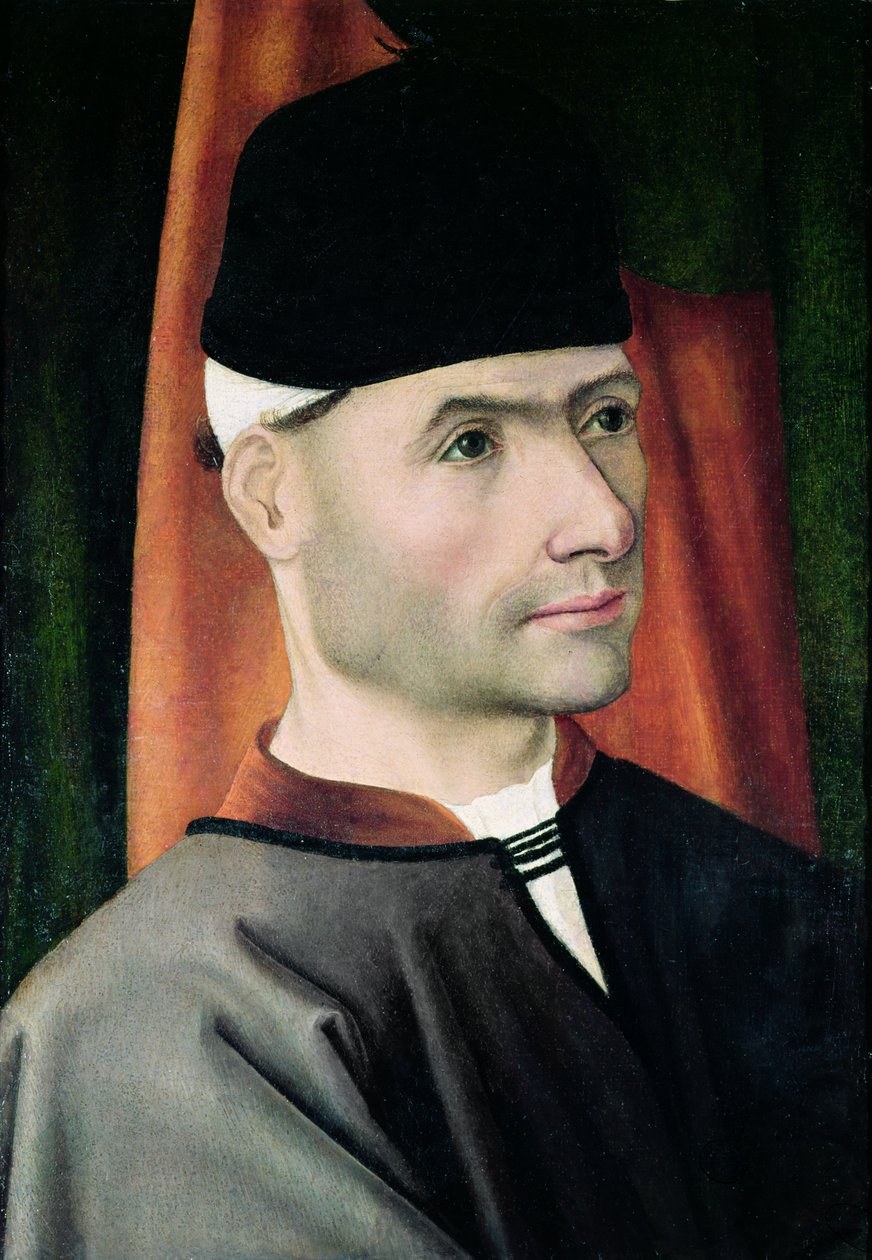
AI-assisted Portrait of Jean de Dunois
The Man Who Held the Door
History remembers the visionary who arrived at Orléans in 1429 and changed the war. It tends to forget the soldier who was already there, holding the besieged city against the English when she rode in—and who was still in the field, methodically winning France back, decades after she was ash. Jean de Dunois, called “the Bastard of Orléans,” was the illegitimate but proudly acknowledged cousin of the captive Duke of Orléans, and one of Charles VII's ablest and most loyal commanders. He carried no banner from heaven. He carried competence, and he carried it for forty years.
When Joan of Arc first reached Orléans, Dunois was skeptical—a hard-headed professional eyeing a peasant who claimed to hear saints. He became her staunchest comrade-in-arms anyway, because she got results, and results were the only argument that ever moved him. Together they broke the siege, the turning point of the Hundred Years' War, and crushed the English again at Patay. But Dunois was no one-campaign man. He went on to engineer the patient, systematic reconquest of Normandy and Guyenne that finally drove the English from France and ended a war that had lasted longer than most men's lives.
Dunois was the ESTJ as pillar of the realm: dominant Te that managed sieges, campaigns, and whole provinces like a working machine, anchored by an Si loyalty that served one crown and one cause, year after year, until the job was done.
The Competent Hand
Te — dominant
Dominant Te is the executive function—it organizes the external world into systems that work, measures success by outcome, and has little patience for anything that cannot be put to use. Dunois was its soldierly form. At Orléans he managed the defense of a city under siege not by heroics but by logistics: keeping supply lines open, coordinating sorties, marshaling men and matériel against a methodical English encirclement. When Joan's arrival turned the campaign, it was Dunois who translated her momentum into a workable plan of attack—the professional who knew which bastion to take first and how.
That same managerial intelligence defined the rest of his career. The reconquest of Normandy and Guyenne in the war's final phase was not a blaze of inspiration; it was a campaign of method—town by town, fortress by fortress, supply by supply, the slow administrative grinding-down of an occupying power. Dunois was an architect of that effort, applying the same competence to whole provinces that he had once applied to a single city wall. He commanded men, organized sieges, negotiated surrenders, and delivered results. Te does not ask whether a task is glamorous. It asks whether it is done.
The Loyal Backbone
Si — auxiliary
If Te made Dunois effective, auxiliary Si made him reliable—and in a kingdom that was forever betraying itself, reliability was rarer than genius. Si is the function of continuity and duty: it holds to the established order, remembers obligations, and serves the same cause through good years and bad without needing to be reinspired. Dunois served Charles VII across four decades of a fractured, treacherous war, when great nobles changed sides with the weather and the dauphin's cause often looked lost. He did not waver. He was the steady backbone the recovery was built on.
There is a telling fact buried in his loyalty: he fought, in part, for a cousin he could not free—the Duke of Orléans, captured at Agincourt and held in England for twenty-five years. Dunois kept the family's cause and the crown's cause alive in his cousin's absence, a dutiful steward of an inheritance and an allegiance that were not even fully his own. That is Si: the deep, almost familial attachment to what one is supposed to uphold. He was not a man who reinvented his loyalties. He kept them.
The Open Mind on the Field
Ne — tertiary
Tertiary Ne in an ESTJ is a quiet asset: a capacity, held in reserve beneath the Te-Si machinery, to recognize an unexpected opening and exploit it. It is not the function of a dreamer; it is the flexibility that lets a pragmatist seize a chance he did not plan for. Dunois's finest hour was exactly this. A lesser professional, faced with a teenage visionary claiming divine command, would have closed ranks and dismissed her. Dunois, skeptical at first, kept his mind open long enough to see what she could actually do—and then bet on her.
That willingness to back an irregular, unproven instrument against orthodox military judgment was Ne serving Te: a flash of possibility, immediately harnessed to a practical end. Patay, where the French caught and shattered the retreating English army, rewarded the same readiness to move fast on a sudden advantage. Dunois never became a visionary—Ne sat third in his stack, a tool and not a temperament—but he was open enough to let one change the war, and disciplined enough to convert her inspiration into victory.
The Conviction Beneath the Armor
Fi — inferior
Inferior Fi in an ESTJ rarely shows on the surface; it runs underground, a private set of values that the outwardly practical man does not parade but will not abandon. In Dunois it expressed itself as something close to honor—a personal code of fidelity to his cousin, his king, and his country that gave his relentless competence its direction. He was not a cold technician of war for war's sake. The machine was pointed at something he believed in: the recovery of France and the redemption of a captive house.
His attachment to Joan hints at the same buried current. He could have treated her as a useful symbol and discarded the rest; instead he stood by her as a comrade, and the bond outlasted her usefulness to the cause. That is inferior Fi surfacing—a loyalty rooted in genuine regard, not calculation, in a man whose dominant register was entirely practical. Dunois kept his feelings inside the armor. But they were there, and they were what the armor was protecting.
Why ESTJ Over ENTJ
Why not ENTJ?
The ENTJ is the strategic visionary—the commander who conceives the grand design, sees the whole war ten moves out, and reshapes the situation to fit a far-reaching plan. Dunois was not that man. He was the supremely capable executor (Te-Si), not the architect of the strategy: he carried out the recovery of France brilliantly rather than conceiving it, managing sieges and provinces with steady professional mastery instead of imposing a sweeping new vision on the war. His genius was reliability and competence over decades, not originality.
The distinction is dominant Te paired with Si versus Te paired with Ni. The ENTJ's Ni drives toward a single envisioned future and bends events to reach it; Dunois's Si bound him instead to the established cause, the inherited duty, the proven method patiently repeated. He was the backbone the visionaries leaned on—the man who held the door open so that others' inspiration could walk through, and who was still holding it, and winning, long after they had gone. That is the ESTJ: not the dreamer of the recovery, but the one who actually delivered it.
Connected Figures
Further Reading
- Joan of Arc: By Herself and Her Witnesses — Régine PernoudReconstructs the relief of Orléans through the testimony of those who were there — including Dunois, whose own words on Joan survive in the rehabilitation trial.
- The Hundred Years War — Jonathan SumptionThe definitive multi-volume narrative of the war; essential for the campaigns and the methodical French reconquest that Dunois helped engineer.
- The Captains of the Hundred Years War — Studies of the French commandersSurveys the professional soldiers — Dunois among them — whose competence, more than any single miracle, won France back.
