 Historical Figure MBTI
#746 · 6-4-26 · The Portuguese Indian Ocean
Lourenço de Almeida
Captain · Ceylon · Chaul
c. 1480 — 1508
3 min read
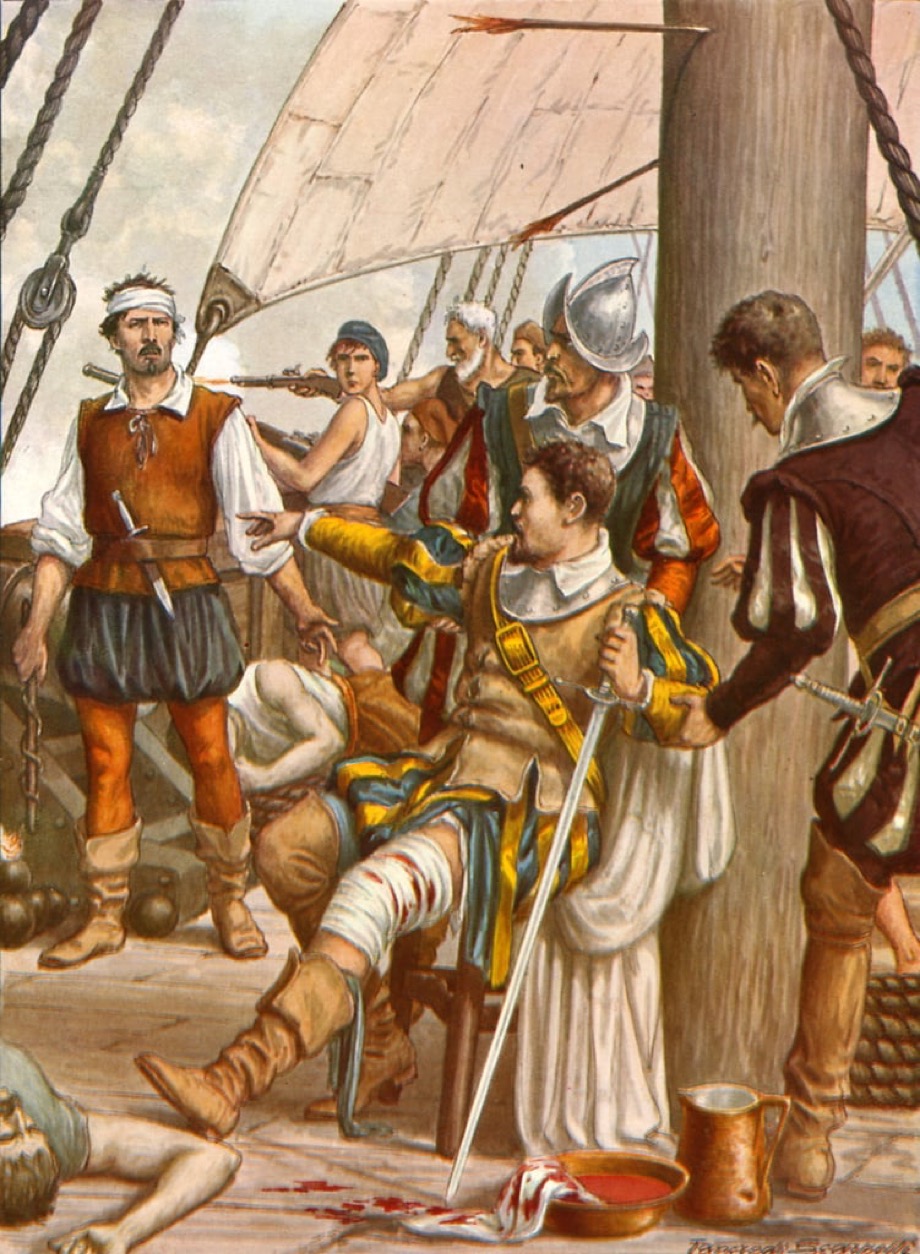
Portrait of Lourenço de Almeida
The Viceroy's Son
Lourenço de Almeida sailed east in 1505 in his father's fleet, when Francisco de Almeida left Lisbon as the first Viceroy of India. The son was given ships and sent to do what a viceroy's son with a taste for action was for: raid, scout, extort tribute, fight. He was good at it in the immediate, physical way that gets a young captain noticed — and in March 1508, off the river fort of Chaul, that same quality killed him at twenty-eight.
Storm-driven off course in 1505–06, he made landfall near Galle and became, essentially by accident of weather, the first Portuguese to reach Ceylon. He talked his way into an agreement with the king of Kotte for tribute in cinnamon — the opening move in what would become Portuguese Ceylon — and went on to raid the Maldives and fight along the Malabar coast against the fleets of Calicut. None of it required patience. All of it required nerve.
He was an ESTP, led by Se — a man who read a physical situation faster than anyone around him and acted on it before it finished forming, which made him brilliant at sea and fatal at a grounded ship.
Chaul, March 1508
A combined Mamluk Egyptian fleet under Amir Husain al-Kurdi and Gujarati forces — the coalition Malik Ayyaz belonged to — caught the Portuguese squadron in the river, the first time the Portuguese in the Indian Ocean met a fleet able to fight them on even terms. Lourenço's flagship, the São Miguel, was raked by shore guns and grounded when her rudder fouled on a fishing stake. His officers urged him to shift to a smaller vessel while the ship could still cover a retreat. He refused, saying he would not leave his men, and was hit in the thigh, then the chest.
Gaspar Correia's chronicle — the most vivid and least reliable of the sources — has him lashed upright to the mainmast so his crew would see him still standing, directing the fight until he died. It is the kind of detail a sixteenth-century chronicler loved to supply whether or not it happened: possibly true, certainly convenient, not confirmable. What is not in doubt is the consequence. Francisco de Almeida refused to surrender the viceroyalty to his appointed successor, Afonso de Albuquerque, until he had avenged his son, and in February 1509 destroyed the Mamluk-Gujarati fleet at Diu — the battle that decided who owned the Indian Ocean for the next century — then had prisoners killed and fired their remains from cannon into the city. A young man's refusal to abandon a grounded ship produced the most consequential naval victory of the Portuguese empire, driven by a father's grief.
Psychological Verdict
Lourenço de Almeida lived entirely inside the immediate physical situation, and he was superb there: quick to read a coastline, a wind, an enemy formation, and to act on it before the reading cooled into a plan. That is the ESTP reflex, dominant Se married to a blunt, practical Ti that solved problems as they arose rather than in advance. It made him a first-rate raiding captain and an accidental discoverer of Ceylon. It also left him no faculty for stepping back from a situation once inside it — no instinct for weighing the grounded ship against the larger campaign and choosing to live to fight another day. At Chaul the only decision the moment required was the one an ESTP is worst equipped to make: leave. He didn't, and the empire got Diu because of it.
Connected Figures
Further Reading
- Conquerors: How Portugal Forged the First Global Empire — Roger CrowleyThe fullest modern narrative of Chaul and its aftermath at Diu.
- Foundations of the Portuguese Empire, 1415–1580 — Bailey W. Diffie & George D. WiniusThe standard institutional history of the early Estado da Índia.
- The Portuguese Empire in Asia, 1500–1700 — Sanjay SubrahmanyamA wider, more critical framing of the campaigns Lourenço fought in.
- Lendas da Índia — Gaspar CorreiaThe sixteenth-century chronicle source for the mainmast story — vivid, and unreliable on detail.
- The Portuguese in Ceylon, 1617–1638 — Chandra R. de SilvaFor the longer arc of the Ceylon relationship Lourenço's landfall opened.
